
University of Debrecen Faculty of Engineering Celebrates 299 New Engineering Graduates in Hungary
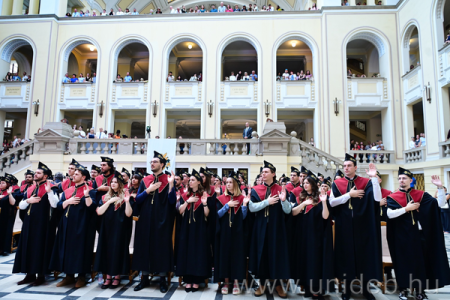
The University of Debrecen recently marked a significant milestone in its academic calendar as the Faculty of Engineering held its first summer graduation ceremony of the year. Nearly 300 students crossed the stage in the Inner Courtyard of the Main Building, ready to enter the professional world equipped with state-of-the-art, practice-oriented training. This achievement highlights the growing reputation of the University of Debrecen as a leading institution for engineering education in Hungary and across Central Europe.
Understanding the Scale of Student Success at the Faculty of Engineering
The graduation ceremony celebrated 299 candidates who successfully passed their final examinations and earned their degrees. This cohort comprised 156 full-time students and 143 part-time students, demonstrating the faculty’s commitment to accommodating diverse learning needs and schedules. The balanced distribution between full-time and part-time graduates reflects the University of Debrecen’s understanding that modern students often juggle academic pursuits with professional and personal responsibilities.
Such a substantial number of engineering graduates in a single ceremony indicates the robust capacity and appeal of the Faculty of Engineering. Prospective students evaluating their options should note that graduating within a large cohort provides distinct advantages, including extensive networking opportunities, exposure to diverse perspectives, and access to a broad alumni base upon entering the job market.
How Practice-Oriented Training Prepares Graduates for Industry Demands
Dean Géza Husi emphasized during the ceremony that these recent graduates received training grounded in practical application rather than purely theoretical instruction. This approach to engineering education has become increasingly critical as employers worldwide seek candidates who can contribute productively from their first day on the job.
The Faculty of Engineering at the University of Debrecen has earned recognition through National Excellence Awards, validating the quality of its educational programs. For prospective students, these accolades serve as external verification that the institution meets high standards of academic rigor and instructional quality. When evaluating engineering programs, students should prioritize institutions with demonstrated track records of excellence, as this often translates to better career outcomes and stronger professional preparation.
The Relevance of Industry 5.0 Knowledge
During his address to the graduating class, Dean Husi specifically referenced Industry 5.0 and cutting-edge architectural technologies as areas where rapid evolution continues to reshape the professional landscape. This acknowledgment reflects the faculty’s awareness of emerging trends and its effort to position students at the forefront of technological advancement.
Industry 5.0 represents the next phase of industrial development, emphasizing the collaboration between humans and machines, sustainability, and resilience in manufacturing and production systems. Engineering graduates who understand these concepts possess a competitive advantage in job markets that increasingly value adaptability and forward-thinking capabilities.
Why BSc Graduates Should Consider MSc Programs at the University of Debrecen
Dean Husi offered direct advice to bachelor’s degree recipients, encouraging them to pursue master’s level studies at the same institution. His rationale was clear and compelling: undergraduate programs familiarize students with current technologies, while graduate programs enable them to invent the technologies of the future.
This distinction carries significant implications for career trajectory. Engineers with BSc degrees typically enter the workforce prepared to implement existing solutions and maintain established systems. Those with MSc degrees, however, often find themselves in positions where they drive innovation, lead research initiatives, and shape the direction of their organizations. For students contemplating their next steps, continuing education at the University of Debrecen offers continuity of learning, access to familiar faculty mentors, and the opportunity to deepen expertise in specialized areas.
Submit your application today to explore the MSc engineering programs available at the University of Debrecen and take the next step in your academic journey.
Recognizing the Ubiquity of Engineering in Modern Life
The dean’s remarks included a powerful reminder about the pervasiveness of engineering in everyday existence. Without engineers, he noted, there would be no new cars, buses, clothing, or telecommunications infrastructure. This observation underscores a reality that prospective students should internalize: engineering represents one of the most fundamentally important professions in modern society.
Every product people use, every building they enter, and every communication system they rely upon exists because engineers designed, built, and maintained it. This ubiquity translates to remarkable career stability and diversity for engineering graduates. Unlike some fields where employment opportunities concentrate in specific sectors or geographic regions, engineers find demand across virtually every industry and location.
Awards and Honors Highlighting Individual and Collective Achievement
Beyond the conferral of degrees, the graduation ceremony recognized exceptional performance through various awards and commendations. These honors serve multiple purposes: they reward outstanding effort, motivate continued excellence, and signal to employers which graduates have demonstrated superior capabilities.
Notable Awards Presented During the Ceremony
Emese Béni, a master’s student in facilities engineering, received the Excellent Student of the University of Debrecen Award, recognizing her academic achievements and contributions to the university community. The Faculty of Engineering Publication Award honored 28 authors and co-authors, reflecting the institution’s emphasis on research and scholarly communication.
In the architectural domain, the József Borsos Diploma Award, established by the Hajdú-Bihar County Chamber of Architects, was presented to Ádám Kovács and Balázs Fleischer, while the Antal Puhl Diploma Award went to Gábor Máté. These specialized recognitions demonstrate the faculty’s strong connections with professional organizations and its commitment to celebrating excellence in specific engineering disciplines.
Student publication awards recognized collaborative research efforts, including work by international students such as Mohammad Talha Yaar Khan and Neamah Husam A. This international representation among award recipients illustrates the diverse and inclusive academic environment at the University of Debrecen.
International Students and Global Recognition at the University of Debrecen
Five international students received certificates of recognition from the President and Vice President of the Student Self-Government during the ceremony. Additionally, fifteen students earned DETEP Certificates from the Talent Council of the University of Debrecen, further demonstrating the institution’s commitment to identifying and nurturing exceptional talent regardless of national origin.
For international students considering studying engineering in Hungary, these recognitions provide tangible evidence that the University of Debrecen values and celebrates its diverse student body. The presence of international students among award recipients also indicates that foreign students can achieve at the highest levels when they choose to study at this institution.
Schedule a free consultation to learn more about the international student experience and application process at the University of Debrecen Faculty of Engineering.
What Prospective Students Should Know About Engineering Programs in Hungary
Hungary has established itself as an attractive destination for engineering education, combining European academic standards with relatively affordable tuition compared to Western European institutions. The University of Debrecen, as one of Hungary’s largest and oldest universities, offers prospective students a mature institutional infrastructure, extensive research facilities, and a proven track record of producing employable graduates.
Students evaluating their options should consider several factors when comparing engineering programs:
- Curriculum relevance: Does the program incorporate current technologies and industry trends such as Industry 5.0?
- Practical training components: Are students required to complete internships, laboratory work, or applied projects?
- Faculty credentials: Do instructors possess both academic qualifications and industry experience?
- Institutional recognition: Has the program or institution received external awards or accreditations?
- Alumni outcomes: Where do graduates find employment, and what positions do they typically hold?
The Faculty of Engineering at the University of Debrecen performs well across these criteria, as evidenced by the National Excellence Awards, the dean’s emphasis on practice-oriented training, and the successful graduation of nearly 300 students in a single ceremony.
Building a Long-Term Career Path After Graduation
Dean Husi’s advice to graduates extended beyond the ceremony itself, urging them to continue their education and stay current with emerging technologies. This guidance reflects a broader truth about engineering careers: the learning process does not end with graduation. Successful engineers commit to lifelong professional development, whether through formal graduate education, professional certifications, or self-directed learning.
The transition from student to professional engineer marks a fundamental identity shift, as the dean noted. Students operate within structured academic environments with clear expectations and defined evaluation criteria. Engineers, by contrast, must navigate ambiguous problems, collaborate across disciplines, and often define their own professional standards. The University of Debrecen’s emphasis on practice-oriented training helps ease this transition by exposing students to real-world challenges during their studies.
Have questions? Write to us! Our team can provide additional information about career outcomes for University of Debrecen engineering graduates.
The Role of Faculty and Staff in Student Success
The graduation ceremony also recognized the contributions of faculty and staff members who support student achievement. Teaching Assistant József Kertész and Administrative Expert Nóra Tóth received Commendations from the Dean, while Tibor Antal, Head of the Grant Administration Department, and Attila Lövei, Head of the Project Management Department, received Certificates of Honor.
These recognitions highlight an often-overlooked aspect of educational quality: the dedication of support staff who ensure that academic programs run smoothly. Prospective students should understand that their success depends not only on faculty instruction but also on the administrative infrastructure that enables effective learning. Institutions that invest in and recognize their staff often provide better overall student experiences.
Evaluating the University of Debrecen for Your Engineering Studies
For students actively considering where to pursue engineering education, the recent graduation ceremony at the University of Debrecen offers several positive indicators. The large graduating cohort suggests strong program capacity and student interest. The variety of awards presented indicates a culture that values excellence across multiple dimensions, from academic achievement to research contribution to community service.
The presence of both domestic and international students among the graduates and award recipients demonstrates an inclusive environment that prepares students for global career paths. The dean’s explicit references to Industry 5.0 and future technologies suggest a curriculum designed to remain relevant as the profession evolves.
Prospective students should conduct thorough research by reviewing program curricula, reaching out to current students and alumni, and comparing offerings across multiple institutions. However, the evidence from this graduation ceremony suggests that the University of Debrecen Faculty of Engineering merits serious consideration from anyone seeking quality engineering education in Hungary.
Explore our related articles for further reading about engineering education options and student life at Hungarian universities.
Next Steps for Aspiring Engineering Students
The success of these 299 engineering graduates represents both an endpoint and a beginning. For the graduates themselves, it marks the conclusion of their formal studies and the start of their professional careers. For prospective students, it serves as evidence of what is possible when dedicated learners engage with quality educational programs.
Engineering remains one of the most versatile and in-demand professional fields globally. The University of Debrecen’s Faculty of Engineering has demonstrated its capacity to prepare students for this dynamic profession through practice-oriented training, industry-relevant curriculum, and a supportive academic environment. As Industry 5.0 and other technological developments continue to reshape the professional landscape, institutions that adapt their programs accordingly will produce the graduates best positioned for long-term success.
Share your experiences in the comments below if you are a current or former engineering student, or if you have questions about studying at the University of Debrecen.