Evaluate International Choral Opportunities at the University of Debrecen Faculty of Music
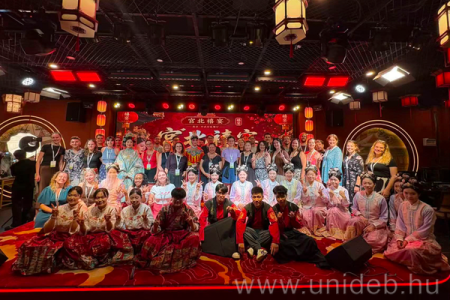
Participating in international music festivals provides vocalists and conductors with essential performance experience, professional networking opportunities, and a broader understanding of global musical traditions. Recently, the Mixed Choir and the Bárdos Girls’ Choir from the University of Debrecen Faculty of Music demonstrated these exact benefits during a highly successful Chinese tour. Their performances at the China International Choral Festival (CICF) in Beijing and subsequent concerts in Chengdu serve as a practical case study for aspiring musicians evaluating the long-term value of intensive choral programs.
The Professional Value of a Chinese Tour for Music Students
Performing on an international stage requires a level of precision, adaptability, and musical maturity that cannot be fully replicated in a standard university rehearsal room. For the ensembles from the University of Debrecen, the Chinese tour offered a chance to perform in venues with demanding acoustic standards, such as the 1,859-seat National Center for the Performing Arts in Beijing and the New Tsinghua Xuetang concert hall at Tsinghua University. Singing in these spaces forces students to master vocal control, blend, and intonation at an elevated level.
Beyond the technical aspects, touring exposes students to diverse cultural contexts. The choirs interacted with local ensembles, international peer groups from institutions like Oxford and the University of Oregon, and Chinese audiences. This type of cultural diplomacy is a critical component of modern music education. It teaches students how to communicate emotionally through music across language barriers, a skill that is increasingly important in today’s interconnected classical music industry.
Share your experiences in the comments below if you have ever performed in an international choir or attended a global music festival.
Preparing for a High-Stakes Choral Competition in Hungary
Success at an overseas festival does not happen by accident. The recent achievements of the University of Debrecen choirs were the result of decades of institutional tradition combined with highly focused, short-term preparation. According to Mónika Végh, Head of the Department of Solfège, Music Theory and Choral Conducting, the ensembles had only three months to arrange the logistics and finalize their repertoire for the Beijing invitation.
This rapid preparation cycle is an excellent example of the professional demands placed on working musicians. Aspiring choral singers can learn from this approach by adopting several best practices:
- Diverse Repertoire Selection: The choirs did not rely solely on traditional European classical pieces. They performed works by Zoltán Kodály and his disciples, but they also integrated lighter genres with entertaining elements. Crucially, they learned a Chinese piece to connect directly with the local audience. This adaptability in programming is a hallmark of professional ensembles.
- Utilizing Institutional Resources: To ensure the accurate pronunciation of the Chinese text, the choirs leveraged the diverse student body at the University of Debrecen, specifically relying on international students from China. This highlights the advantage of studying at a university with a robust international student community.
- Collaborative Rehearsals: Prior to leaving Hungary, the choirs rehearsed and performed at a level comparable to the Palace of Arts (MÜPA) in Budapest and even performed a joint concert with a German youth choir. These pre-tour performances act as essential stress tests for the main event.
Explore our related articles for further reading on how to build an effective choral repertoire for international competitions.
Teaching the Kodály Method at the China International Choral Festival
A significant portion of the Chinese tour was dedicated to education rather than just performance. Mónika Végh led a masterclass organized by the Beijing Kodály Society, attended by the touring choirs and over a hundred local music educators. The session focused on the practical applications of the Kodály method in choral conducting and how the pedagogical patterns used in Debrecen can be applied internationally.
The high attendance at this masterclass underscores a vital point for music students: the global demand for Hungarian music education methodologies. Zoltán Kodály’s concepts are deeply respected in China, and local educators view the Hungarian approach to preserving musical heritage as a model. For students studying in Hungary, particularly at the University of Debrecen Faculty of Music, this means their education has immediate, international applicability. Graduates are not just performers; they are equipped with a highly exportable pedagogical skill set that is sought after worldwide.
Understanding how to teach music is often just as important as knowing how to perform it. Participating in or observing masterclasses during international tours provides students with firsthand insight into how different cultures interpret and apply Hungarian musical traditions. This dual focus on performance and pedagogy significantly broadens career prospects.
Schedule a free consultation to learn more about how incorporating specific pedagogical methods can enhance your musical career.
Leveraging International Music Festivals for Career Advancement
For students and early-career musicians, the question is how to translate festival participation into tangible career advancement. The trajectory of the University of Debrecen choirs offers a clear blueprint. Their invitation to the CICF was a direct result of previous high-profile performances, specifically at the Bárdos Symposium and a major Budapest choir competition. Professional visibility operates on a compounding basis; each strong performance builds the reputation required to secure the next, more prestigious invitation.
Furthermore, the presence of choirs from Germany, Greece, the United States, and the United Kingdom at the Beijing festival created a unique networking environment. Music is a relationship-driven industry. The connections formed in warm-up rooms, shared stages, and post-concert receptions often lead to future collaborative projects, guest conducting invitations, and cross-border teaching opportunities. Aspiring musicians must approach these festivals not merely as singing engagements, but as professional conferences where they represent their home institutions and build their personal brands.
The logistical support provided by the University of Debrecen and the city of Debrecen also played a crucial role in making this tour possible. When choosing a music program, prospective students should evaluate the institutional backing available for off-campus engagements. A faculty that actively secures funding, manages complex international travel, and advocates for its students’ public performance opportunities provides a distinct advantage in a competitive job market.
Next Steps for Aspiring Choral Singers and Conductors
The success of the Mixed Choir and the Bárdos Girls’ Choir in China illustrates the high caliber of training available at the University of Debrecen Faculty of Music. By combining rigorous technical preparation, strategic repertoire building, and a commitment to global music education, the program prepares students for the realities of international professional music.
If your goal is to perform at top-tier venues, teach methodologies that are recognized worldwide, or simply test your musical capabilities against international standards, selecting the right academic environment is the first critical step. Look for programs that prioritize active touring, maintain strong international partnerships—such as the connection with the Beijing Kodály Society—and offer a balance of performance and pedagogical training.
Submit your application today to begin your training in a program that values both musical excellence and international professional development.