
University of Debrecen and DEAC Drive Hungary’s Women’s Saber Team to World Championship Gold
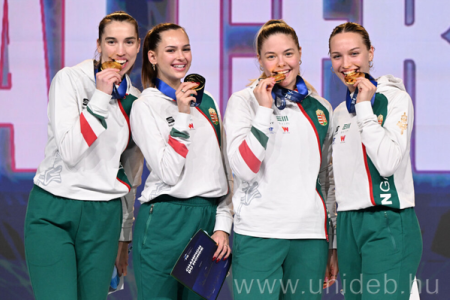
Examining the Road to Gold for the Hungarian Women’s Saber Team
Representing a nation with a profound fencing legacy, the Hungary women’s saber team recently secured the ultimate prize in the sport. At the World Fencing Championships held in Hong Kong, the Hungarian squad clinched the gold medal, finishing as the only gold medalists for Hungary at the entire event. What makes this victory particularly notable for higher education and collegiate sports is the central role played by athletes and coaches affiliated with the University of Debrecen and its Athletic Club, DEAC.
Understand the dynamics of this championship run requires looking at the specific contributions of DEAC members. The team featured Katinka Sugár Battai, a standout fencer, and was guided by László Dávid, the head coach of DEAC fencing. Their combined efforts propelled the national team through a grueling knockout stage against some of the most formidable fencing nations in the world. Submit your application today to the University of Debrecen to explore how you can pursue both academic and athletic excellence.
Individual Success Precedes Team Triumphs at the World Championship
Katinka Sugár Battai’s Historic Bronze Medal
Before the team events even began, the University of Debrecen had already made its mark on the World Championship. Katinka Sugár Battai, a student majoring in Recreation and Lifestyle at the Faculty of Economics and Business, captured an individual bronze medal. This achievement marked a historic milestone for her career and set a positive, confident tone for the Hungarian delegation heading into the team relay matches.
Securing an individual medal on the global stage requires years of rigorous training, tactical refinement, and mental fortitude. For a student-athlete balancing the demands of a university curriculum with the pressures of international competition, this bronze medal stands as a testament to the supportive infrastructure provided by DEAC. The club ensures that elite athletes do not have to choose between their education and their sport, fostering an environment where both can thrive simultaneously.
Breaking Down the Match Results for the Hungary Women’s Saber Team
Analyze the progression of the Hungary women’s saber team through the tournament reveals a squad that adapted to pressure, overcame early deficits, and executed under the most intense circumstances. The team, composed of Sugár Battai, Luca Szűcs, Renáta Katona, and Anna Spiesz, faced a gauntlet of top-tier opponents.
Dominating the Early Rounds: Azerbaijan and Japan
In the round of 16, the Hungarian team faced Azerbaijan, securing a decisive 45–32 victory. In team fencing, the objective is to be the first team to reach 45 touches across a series of relay bouts. Sugár Battai was the top performer in this match, scoring a +10 touch differential, meaning she outscored her direct opponents by 10 touches across her three bouts. This dominant performance gave Hungary a comfortable buffer early in the tournament.
The quarterfinals presented a rematch against Japan, a team that had recently bested Hungary by a single point in the bronze medal match at the World Cup in Athens. Seeking redemption, the Hungarian squad approached this bout with renewed focus. They controlled the pace from the start, ultimately winning 45–36. Once again, Sugár Battai led the charge with a +5 touch margin, proving her ability to consistently generate offense against international defenses.
A Semifinal Showdown Against the French Rivals
Fencing matchups between Hungary and France are historically charged, and the semifinal in Hong Kong lived up to the hype. The bouts on the piste were incredibly tight, with the lead shifting back and forth. After the first three relays, Hungary held a narrow 15–14 lead. However, the French fencers gained momentum, flipping the score to 18–20 in their favor.
Trailing by two points going into the seventh relay, the DEAC fencer stepped onto the piste. Facing Sarah Noutcha, Sugár Battai delivered a critical performance, swinging the momentum back and handing the anchor, Anna Spiesz, a 30–28 lead. The match remained deadlocked in tension, ultimately tied at 44–44. As the final fencer for Hungary, Sugár Battai had to face Sara Balzer—the individual silver medalist of this very World Championship. In a high-stakes, sudden-death scenario, Battai landed the final touch, sending Hungary to the gold medal match.
Overcoming a Deficit in the Final Against China
The gold medal match against China tested the resilience of the Hungarian women’s saber team. The start of the final was unfavorable for Hungary; Sugár Battai fell behind 0–3 in her opening relay against Pan. Despite closing the gap slightly, China led 5–2 at the first break and extended that lead to 11–3. In a sport where momentum is everything, an eight-touch deficit requires immediate and drastic tactical adjustments.
Luca Szűcs provided the necessary spark, mounting a massive comeback that shifted the entire complexion of the match. By the end of the ninth relay, Hungary had flipped the deficit into a 15–13 lead. Anna Spiesz maintained this advantage, pushing the score to 20–18. Sugár Battai then rediscovered her offensive rhythm, extending the lead to 25–20. From that point forward, the Hungarian team fenced with composure and determination, denying China any realistic chance of a comeback and securing the gold medal with a 45–41 final score.
The Strategic Impact of DEAC on University of Debrecen Athletics
Review the success of the women’s saber team highlights the strategic importance of university athletic clubs in Hungary’s sporting ecosystem. DEAC (Debreceni Egyetem Atlétikai Club) is not merely a recreational outlet for students; it functions as a high-performance training ground that contributes directly to national team success. Having László Dávid, the DEAC head coach, at the helm of the World Championship-winning national team illustrates the caliber of expertise housed within the University of Debrecen.
This integration benefits both the university and the national sports infrastructure. DEAC provides state-of-the-art training facilities, sports science support, and a structured environment that allows athletes to train like professionals while completing their degrees. For the national teams, university clubs serve as vital developmental pipelines, identifying and nurturing talent until they are ready for the international stage. Schedule a free consultation to learn more about DEAC athletic programs and how they support elite-level competitors.
Balancing Academic Life and Elite Sports at the University of Debrecen
Consider the daily schedule of a World Champion who is also a full-time university student. Katinka Sugár Battai’s enrollment in the Recreation and Lifestyle program at the Faculty of Economics and Business is highly relevant to her athletic career. Student-athletes often pursue degrees that offer flexibility or directly relate to their physical pursuits, such as sports management, kinesiology, or recreation.
The University of Debrecen recognizes that elite athletes require customized academic pathways. Flexible exam schedules, personalized academic advising, and online course options are just a few of the accommodations that make it feasible for a fencer to train for hours a day, travel to international World Cups, and still progress toward a valuable degree. This dual-focus approach ensures that when an athlete’s competitive career eventually concludes, they possess a robust academic foundation to transition smoothly into the professional world.
Why Student-Athletes Choose Hungary for Competitive Fencing
Evaluate the global landscape of collegiate sports, and Hungary consistently emerges as a premier destination for fencers. The country’s historical dominance in saber fencing—both in men’s and women’s divisions—creates a culture of excellence. Young fencers training in Hungary are surrounded by Olympic and World Championship medalists, gaining access to a depth of tactical knowledge that is hard to replicate elsewhere.
For international students considering studying abroad, the combination of affordable, high-quality education at institutions like the University of Debrecen and access to top-tier fencing coaching is highly attractive. The success of the DEAC-affiliated athletes on the world stage serves as the ultimate proof of concept: the system works. Athletes do not have to sacrifice their academic goals to achieve athletic glory, nor do they have to abandon their sport to earn a respected degree. Explore our related articles for further reading on the intersection of academics and athletics in Hungary.
Take the Next Step in Your Athletic and Academic Career
The journey of the Hungary women’s saber team to the World Championship gold medal in Hong Kong is a powerful case study in resilience, tactical execution, and the efficacy of university-backed athletic programs. The contributions of DEAC fencer Katinka Sugár Battai and DEAC coach László Dávid demonstrate that the University of Debrecen is a formidable force in the realm of elite sports.
Whether you are an aspiring fencer looking to compete on the world stage or a student seeking a university that genuinely supports high-performance athletics, the model established by DEAC offers a proven pathway. Achieving a balance between rigorous academics and elite-level sports is challenging, but with the right institutional support, it is entirely possible. Have questions about balancing sports and studies? Write to us! We can provide the guidance you need to make an informed decision about your future.
Share your experiences in the comments below if you have ever trained at a university athletic club or competed in collegiate fencing. Your insights help build a stronger community of student-athletes.