
Review the Hungarian University of Sports Science Women’s Handball Team Success at the European University Games
Examining Hungary’s Dominance in University Handball
Handball holds a deeply rooted place in the sporting culture of Hungary. The country has consistently produced world-class talent, rigorous coaching methodologies, and highly competitive domestic leagues. When examining the structural foundation of this success, the Hungarian University of Sports Science (HUSS) frequently emerges as a critical incubator for athletic talent. The recent performances at the European Universities Games (EUG) serve as a clear, measurable indicator of how effectively the institution translates academic sports science into competitive results on the international stage.
The European University Games represent the highest level of student-athlete competition in Europe. Organized by the European University Sports Association (EUSA), these games bring together thousands of athletes from across the continent to compete in a multi-sport event format. For a university to consistently medal across multiple disciplines requires more than just recruiting talented individuals; it demands a systematic approach to athlete development, recovery, and tactical preparation.
Schedule a free consultation to learn more about the academic and athletic programs at HUSS.
Breakdown of HUSS Performances at the 2026 European University Games
Held in Salerno, Italy, from July 17 to August 1, the 2026 edition of the European University Games provided a platform for HUSS to demonstrate its broad athletic capabilities. While the women’s handball team rightfully captured the headlines, the overall results across various teams highlight the depth of the university’s talent pool.
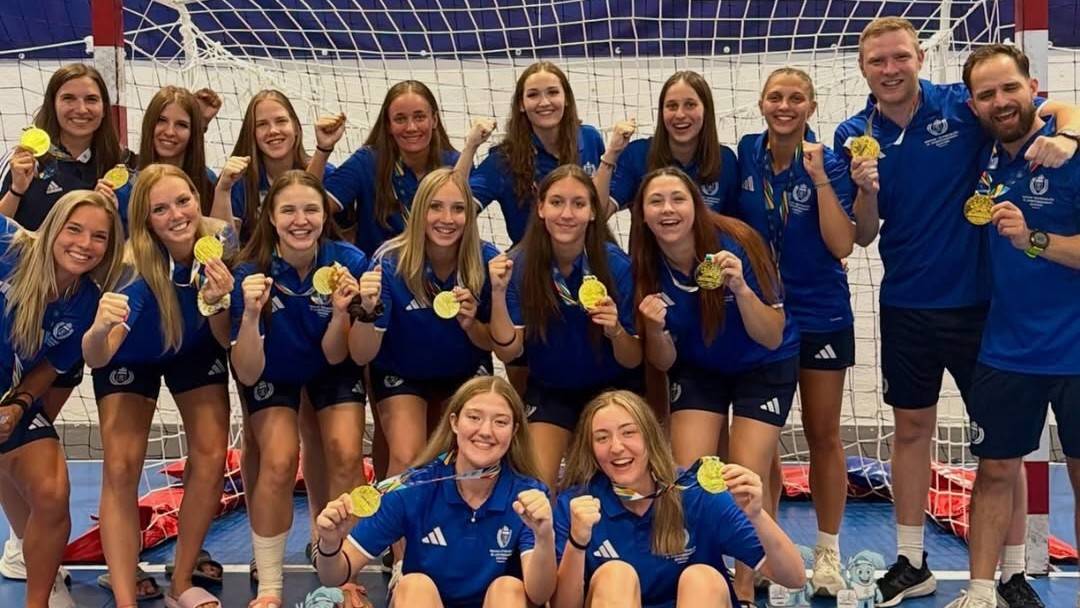
The Undefeated Women’s Handball Squad
Arriving in Salerno as the defending champions, the HUSS women’s handball team faced the unique psychological pressure of maintaining their status at the top of European university sports. They navigated this pressure flawlessly, remaining unbeaten throughout the entire tournament. Defending a title is notoriously more difficult than winning it initially, as opponents are highly motivated to dethrone the reigning champions. The team won every match in a convincing fashion, demonstrating tactical discipline, physical endurance, and technical proficiency.
A defining moment of the tournament was the individual recognition of Lilla Puskás, who was named the tournament’s Most Valuable Player (MVP). In a team sport like handball, where synergy and collective execution are paramount, an individual MVP award highlights a player who not only excels in their specific role—whether scoring, defending, or facilitating—but also elevates the performance of the entire roster. Puskás’s recognition underscores the high caliber of players that HUSS attracts and develops.
Men’s Beach Handball Secures Silver
The success of HUSS in Salerno extended beyond the indoor court. The men’s beach handball team delivered a strong campaign that culminated in a silver medal. Beach handball requires a distinct set of physical and technical skills compared to the indoor game, relying heavily on explosive speed, acrobatic shots, and adaptability to outdoor conditions. The HUSS squad successfully navigated the group stages and knockout rounds to reach the final.
In a testament to the strength of Hungarian university handball, the final was an all-Hungarian affair. HUSS faced the Budapest University of Technology and Economics (BME). BME secured a narrow 2–1 victory, resulting in a well-deserved silver medal for HUSS. While the gold medal narrowly eluded them, the fact that two Hungarian universities contested the final speaks volumes about the national infrastructure supporting student-athletes in this sport.
Volleyball Teams Show Resilience on the International Stage
The HUSS women’s volleyball team entered the tournament with a relatively less experienced squad compared to the team that won gold at the previous year’s European Universities Championship in Budapest. Despite this transition phase, the team demonstrated remarkable resilience by advancing to the semi-finals. Although they suffered defeats in both the semi-final and the subsequent bronze-medal match to finish in fourth place, their ability to remain competitive at the continental level with a developing roster is a positive indicator for future seasons.
Similarly, the HUSS men’s volleyball team achieved its primary objective by finishing the tournament in 11th place. In a highly competitive European landscape, securing a top-tier placement provides valuable international experience for the roster, building a foundation for upcoming domestic and international competitions.
The Significance of the EUSA Medal Winner Award for HUSS
Athletic achievements at the European University Games are not the only metrics of success for HUSS. During the event, the university was formally presented with the European University Sports Association (EUSA) Medal Winner Award. This prestigious recognition was awarded because HUSS topped the overall medal table at the previous year’s EUSA European Universities Championships.
This award is particularly significant because it measures sustained, institutional excellence rather than isolated tournament success. Topping a multi-sport medal table requires a university to field competitive teams across various disciplines—from combat sports to ball games and individual track and field events. It reflects a comprehensive sports system that effectively manages training schedules, coaching assignments, medical support, and logistical planning for a large number of diverse athletes. For prospective students evaluating sports universities, this type of institutional award demonstrates a proven track record of supporting athletic success.
Submit your application today to join a legacy of athletic and academic excellence.
How the Hungarian University of Sports Science Develops Elite Athletes
The sports achievements of HUSS teams at the European University Games are the visible results of a rigorous, science-backed development process. As a specialized institution, the university integrates high-performance athletics directly into its educational framework.
Supporting the Dual Career Pathway
One of the most challenging aspects of being a student-athlete is managing the dual demands of rigorous academic coursework and high-level athletic training. HUSS addresses this challenge through structured dual-career pathways. The university understands that athletic careers have a finite timeline, making academic preparation essential for the long-term success of its students.
By offering flexible scheduling, tailored academic advising, and a curriculum that often overlaps with sports science and coaching, HUSS allows athletes to train at professional levels without sacrificing the quality of their education. This dual-career focus is a core reason why top-tier athletes choose to study in Hungary, as it provides a realistic and sustainable balance between their immediate competitive goals and their future professional careers.
Furthermore, HUSS actively participates in international projects focused on dual careers, such as the Dual Career for Athletes (DC4AC) initiative. These programs ensure that the university remains at the forefront of European best practices for student-athlete support, sharing knowledge and strategies with partner institutions across the continent.
The Broader Impact of University Sports Competitions in Europe
Events like the European University Games play a critical role in the broader European sports ecosystem. For many athletes, university competitions serve as a crucial stepping stone between youth leagues and fully professional or national team setups. The EUG provides a highly structured, intensely competitive environment that mimics the pressures of major international tournaments.
For the host nation and the participating universities, these games drive international visibility. The success of the HUSS women’s handball team and other squads acts as a powerful marketing tool, showcasing the quality of Hungarian sports education to a global audience. It facilitates international networking among sports scientists, coaches, and university administrators, fostering an environment of continuous improvement and cross-border cooperation.
Moreover, university sports competitions emphasize the educational value of sportsmanship, fair play, and cultural exchange. Athletes compete fiercely on the court or field, but they also share accommodations, dining halls, and cultural events with peers from different countries. This environment builds soft skills, cultural awareness, and international friendships that benefit the athletes long after their competitive days are over.
Conclusion
The performance of the Hungarian University of Sports Science at the 2026 European University Games in Salerno reinforces the institution’s status as a leader in European university sports. The women’s handball team’s successful title defense, highlighted by Lilla Puskás’s MVP performance, stands as a testament to the tactical and physical preparation of the squad. The silver medal won by the men’s beach handball team and the resilient performances of both volleyball squads further illustrate the comprehensive strength of the university’s athletic programs.
Coupled with the EUSA Medal Winner Award, these results confirm that HUSS provides a systemic, well-supported environment where elite sports achievements are consistently realized. For aspiring athletes and sports professionals looking to combine high-level competition with a robust academic education, HUSS represents a proven and highly effective model.
Explore our related articles for further reading on university sports programs and athlete development.
Have questions about the dual-career pathways or specific sports programs? Write to us!
Share your experiences or thoughts on university sports in the comments below.