
Advancing Surgical Robotics: Highlights from the Óbuda University Medical Robotics Seminar in Hungary
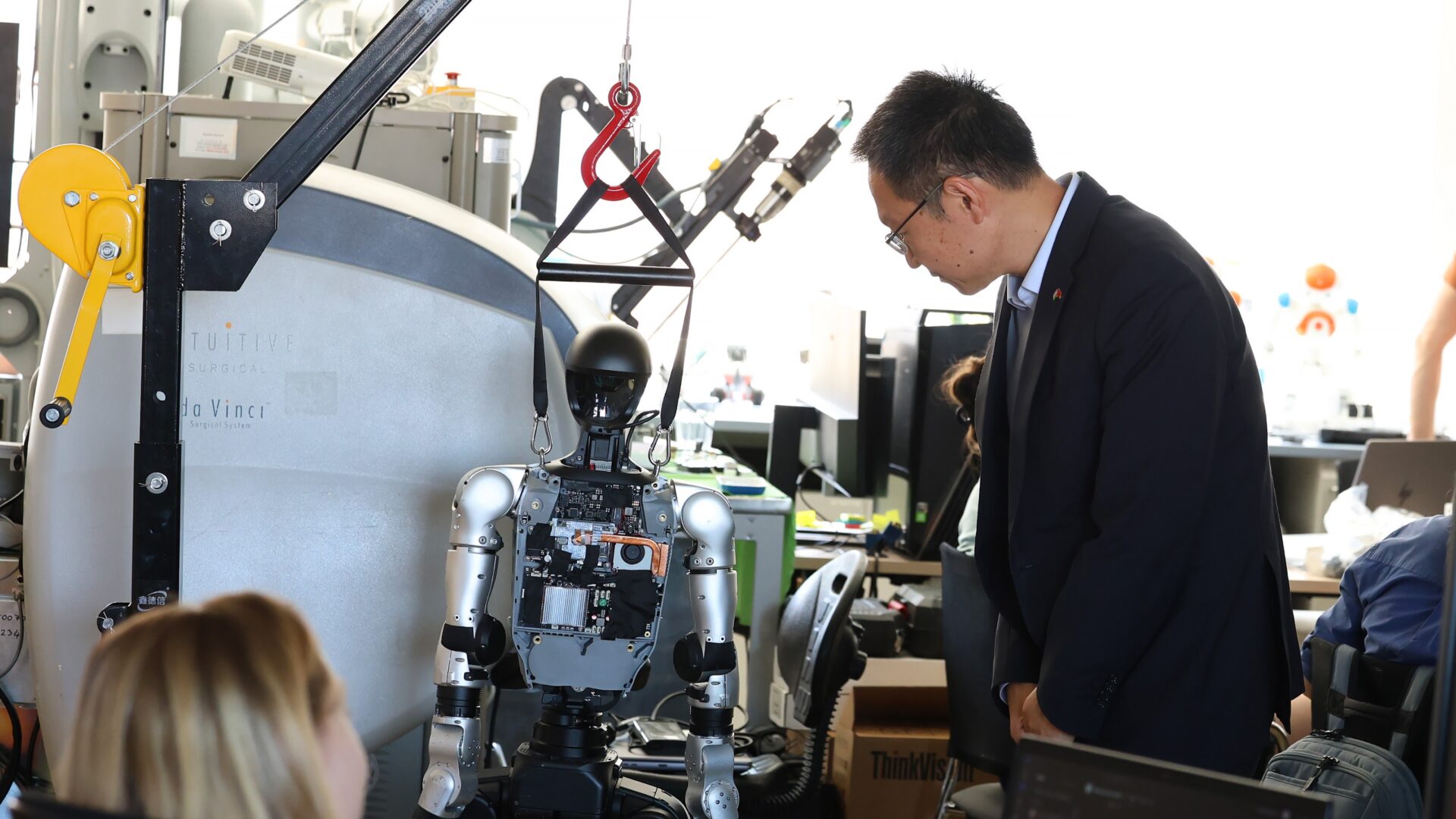
The field of healthcare is undergoing a significant shift driven by precision engineering and advanced computational models. At the center of this evolution is the integration of machines into clinical environments, a subject that recently took the spotlight at a dedicated international seminar in Budapest. Hosted at the EKIK Research Center, this event gathered leading minds to discuss the current state and future trajectory of surgical robotics, reinforcing Hungary’s growing role in global technological development.
How Hungary is Becoming a Hub for Medical Robotics Innovation
Historically known for its strong engineering foundations, Hungary has steadily carved out a specialized niche in the medical robotics sector. Central to this progress is the Bejczy Antal iRobotics Center (BARK), operating under the University Research and Innovation Center (EKIK) at Óbuda University. The recent international seminar held in the BARK Main Laboratory serves as a clear indicator of the institution’s strategic focus.
Led by Prof. Dr. Tamás Haidegger, the head of the medical robotics group at Óbuda University, the event attracted a diverse audience. Engineering professionals, medical practitioners, and high-ranking representatives from the Chinese Embassy in Budapest convened to analyze the latest international development trends. The presence of diplomatic and cross-disciplinary stakeholders highlights how medical robotics is no longer a solitary engineering pursuit, but a collaborative effort requiring input from clinical, technical, and political spheres.
For students and professionals considering where to focus their research or career, Óbuda University represents an active, connected environment rather than a purely theoretical institution. Explore related research programs at Óbuda University.
Keynote Insights: Endoluminal Robotics and Embodied AI
One of the primary highlights of the international seminar was the presentation by Prof. Hongliang Ren from the Chinese University of Hong Kong (CUHK). His lecture, titled ‘Endoluminal Robotics & Embodied AI in vivo,’ addressed some of the most complex challenges in modern minimally invasive procedures.
Endoluminal robotics refers to the development of robotic systems designed to navigate and operate within the lumens of the body, such as the gastrointestinal or respiratory tracts. Unlike traditional surgery, which often requires external incisions to reach internal organs, endoluminal approaches push robotic instruments through natural openings. This methodology drastically reduces patient recovery times and minimizes the risk of surgical site infections.
Prof. Ren’s research extends into the realm of embodied artificial intelligence in vivo. This concept involves creating robotic systems that do not merely execute pre-programmed movements, but actively perceive and adapt to the dynamic, soft-tissue environments inside the human body. By integrating multi-sensory learning, these systems can process tactile, visual, and spatial data in real time, allowing for safer navigation around delicate anatomical structures.
The Role of Soft Continuum Robots in Modern Medicine
A critical component of Prof. Ren’s discussion centered on soft continuum robots. Traditional robotic arms used in manufacturing are rigid and operate in highly structured environments. Inside the human body, however, tissues are deformable, curved, and constantly shifting due to respiration and cardiac cycles.
Soft continuum robots are constructed from flexible materials that can bend and twist along their entire length, mimicking the movement of biological appendages like elephant trunks or octopus tentacles. When combined with intelligent control algorithms, these robots can conform to the complex geometry of human organs. The integration of bio-robotics and multi-sensory learning allows these flexible systems to ‘feel’ their way through the body, adjusting their path and force based on tissue resistance. This technology is particularly promising for procedures in areas that are difficult to reach with standard rigid instruments.
Augmented Reality and the Evolution of the da Vinci Research Kit
The second keynote was delivered by Prof. Peter Kazanzides, a research professor from Johns Hopkins University (JHU), one of the most respected institutions in biomedical engineering globally. His presentation, ‘Augmented Reality for Robotic Surgery,’ explored how visual data overlays are changing the way surgeons interact with robotic systems.
In a standard robotic surgery setup, the surgeon operates from a console, viewing a 3D camera feed of the patient’s internal anatomy. Prof. Kazanzides discussed the integration of augmented reality (AR) to project critical data—such as tumor margins, blood vessel locations, and safe resection boundaries—directly onto the surgical video feed. This allows the surgeon to see ‘through’ tissue, combining pre-operative imaging (like MRI or CT scans) with the live endoscopic view. The result is a heightened spatial awareness that can reduce accidental damage to surrounding healthy tissue.
A significant portion of his talk detailed the development experiences related to the da Vinci Research Kit (dVRK). The da Vinci surgical system is the most widely used robotic platform in operating rooms worldwide, but its proprietary software limits academic research. The dVRK is an open-source hardware and software interface that allows researchers to bypass commercial restrictions and test their own algorithms on clinical-grade hardware. Schedule a free consultation to learn more about research opportunities in surgical systems.
Prof. Kazanzides highlighted a specific historical connection: it was through a collaboration with JHU a decade ago that BARK at Óbuda University acquired its own da Vinci Research Kit. This acquisition marked a pivotal moment for the institution, allowing Hungarian researchers to conduct hands-on, high-level surgical robotics research without relying solely on simulations. Having access to the dVRK enables local teams to contribute directly to the global open-source robotics community, testing new control strategies and AR integrations in a realistic setting.
Strengthening International Academic Partnerships
Beyond the technical lectures, the seminar served a vital structural purpose: strengthening international academic relations. The development of medical robotics requires massive capital investment and highly specialized knowledge, making isolated research increasingly unviable. Partnerships between institutions like Óbuda University, CUHK, and JHU facilitate the pooling of resources, shared access to expensive equipment like the dVRK, and the cross-pollination of ideas.
The attendance of representatives from the Chinese Embassy underscores the geopolitical and economic importance of these technological ties. As nations compete and cooperate in the high-tech sector, academic seminars act as grassroots foundations for broader scientific and economic agreements. For researchers and students, these international networks provide pathways for exchange programs, joint publications, and access to a broader job market.
The TÉT Grant and Collaborative Research
A concrete outcome of these strengthening ties is the launch of a joint bilateral TÉT (Science and Technology) grant between Óbuda University and the Chinese University of Hong Kong. This funding mechanism specifically targets collaborative research projects, providing the financial backing necessary for joint experiments, researcher mobility, and the development of new prototypes. The TÉT grant ensures that the discussions held at the seminar will translate into measurable research outputs, rather than remaining purely theoretical exchanges.
Looking Ahead: The ICRA 2026 Surgical Robotics Competition
The momentum generated by the seminar is set to continue on a highly visible stage. The partnering institutions are currently preparing a joint surgical robotics competition for the IEEE International Conference on Robotics and Automation (ICRA) 2026, which will take place in Vienna.
ICRA is the premier robotics conference globally, and hosting a competition there provides an unparalleled opportunity for researchers to benchmark their technologies against the best in the world. These competitions typically involve specific surgical tasks—such as needle threading, tissue cutting, or suturing—performed autonomously or semi-autonomously by robotic systems. Preparing for such an event drives teams to solve practical engineering problems under strict time and performance constraints, rapidly accelerating the development cycle. Share your experiences in the comments below regarding international robotics competitions.
Why Aspiring Engineers Should Follow Óbuda University’s Research
For aspiring engineers, computer scientists, and medical professionals, keeping a close eye on institutions like Óbuda University provides a distinct advantage. The university’s active involvement in organizing international seminars, securing bilateral grants, and participating in flagship events like ICRA demonstrates a commitment to applied, cutting-edge research.
Students who choose to study in environments with active research centers like BARK gain more than just textbook knowledge. They are exposed to the practical challenges of integrating hardware and software in safety-critical applications. They learn how to collaborate across disciplines—working alongside physicians to understand clinical needs, while partnering with computer scientists to develop the underlying AI. Furthermore, the international nature of these projects provides students with direct exposure to global standards and practices, making them highly competitive in the international job market.
Whether you are a prospective student evaluating universities or a professional looking to pivot into the medtech sector, understanding the specific focus areas of leading research centers is crucial. The shift toward endoluminal procedures, the integration of augmented reality in the operating room, and the development of soft continuum robots represent the immediate future of surgical robotics. Submit your application today to join the next generation of robotics innovators.
Conclusion
The international medical robotics seminar held at the EKIK Research Center at Óbuda University was more than a standard academic meeting; it was a demonstration of Hungary’s active, contributing role in the future of surgical robotics. Through the insights shared by Prof. Hongliang Ren on embodied AI and soft continuum robots, and Prof. Peter Kazanzides on augmented reality and the da Vinci Research Kit, attendees received a comprehensive overview of where the technology currently stands.
Supported by new funding through the TÉT grant and leading up to a major competition at ICRA 2026, the research initiatives discussed at this seminar will undoubtedly yield tangible advancements in the operating room. For anyone invested in the intersection of engineering and medicine, following the output of Óbuda University and its international partners will be essential for tracking the next wave of medical breakthroughs. Explore our related articles for further reading on surgical technology and innovation.