
Address Transportation Challenges at the University of Debrecen International Workshop
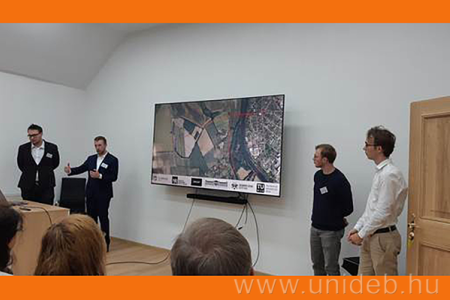
Develop Practical Urban Planning Skills Through Cross-Border Collaboration
Modern civil engineering requires more than textbook knowledge; it demands practical experience in solving complex logistical and infrastructure problems. Students at the University of Debrecen in Hungary are gaining this vital experience by participating in intensive, cross-border educational programs. Recently, a delegation from the university’s Department of Civil Engineering applied their academic training to real-world scenarios at a highly regarded international workshop. By working alongside peers from neighboring countries, these students demonstrated how collaborative engineering can directly address pressing transportation challenges in Central European municipalities.
Explore our related articles for further reading on civil engineering innovations and academic partnerships.
Understand the Middle European Planning Seminar (MEPS) Framework
The Middle European Planning Seminar (MEPS) represents a long-standing tradition of academic cooperation in Central Europe. Established in 1990, this initiative began as a collaborative effort between higher education institutions in Hungary, Austria, and the Czech Republic. The core objective of MEPS is to provide a structured environment where engineering students can test their theoretical knowledge against actual municipal problems.
In 2015, the University of Debrecen formalized its involvement by establishing a dedicated MEPS Workshop within its Faculty of Engineering. This structure ensures that students from Hungary can participate consistently and effectively in the annual seminars. The program operates on a rotating host model, allowing each participating university to welcome international students to their home country, thereby exposing all participants to diverse geographic, regulatory, and cultural approaches to urban planning.
The Structure of the International Workshop
The MEPS format is designed to simulate a professional, high-pressure engineering environment compressed into a one-week timeframe. Students do not work with their home university peers; instead, organizers deliberately form internationally mixed teams. This structure forces participants to navigate language barriers, differing engineering standards, and varied design philosophies. Each team is assigned a specific urban planning problem related to the host city and must develop a comprehensive solution across multiple project components before presenting their final plans to local government officials.
Solve Real-World Transportation Challenges in Hungary and Central Europe
During the 36th iteration of the MEPS, held in Poděbrady, Czech Republic, the focus shifted directly to transportation challenges. Small and medium-sized towns in Central Europe frequently struggle with infrastructure that was designed decades ago, which now faces the pressures of modern traffic volumes, changing commuter patterns, and the need for sustainable transit options.
At the international workshop, the eight student representatives from the University of Debrecen—István Baráth, Zoltán Hasznosi, Barbara Kókai, Péter Lukács, Viktor Nagy, Máté Pásztor, Marcell Tóth, and Csaba Vertetics—collaborated with students from the Budapest University of Technology and Economics, the Vienna University of Technology, and the Czech Technical University in Prague. Their task was to analyze the specific traffic and spatial bottlenecks of a small town and propose actionable, technically sound solutions.
Key Components of Urban Traffic Analysis
Addressing transportation challenges at this level requires a multifaceted approach. The student teams had to evaluate several critical factors, including:
- Traffic Flow Optimization: Redesigning intersections and road networks to reduce congestion during peak hours without compromising pedestrian safety.
- Public Transit Integration: Developing routes and schedules that connect residential areas with commercial and industrial zones efficiently.
- Active Transportation Infrastructure: Planning dedicated bicycle lanes and pedestrian pathways to encourage sustainable travel methods.
- Environmental Impact: Assessing how proposed changes will affect noise pollution, air quality, and the local ecosystem.
- Feasibility and Cost: Ensuring that proposed solutions are financially viable for a small municipality with limited budgetary resources.
Schedule a free consultation to learn more about how civil engineering programs prepare students for these complex logistical challenges.
Build Professional Networks in an International Workshop Environment
One of the most significant benefits of the MEPS program is the exposure it provides to different national standards in urban planning. According to Imre Kovács, the head of the Department of Civil Engineering at the University of Debrecen, the seminar is an excellent opportunity for students to explore the varying educational practices and regulatory frameworks of the participating countries.
When an engineering student from Hungary works alongside peers from Austria and the Czech Republic, they quickly learn that a solution acceptable in Vienna might require significant adaptation to fit the regulatory or geographic constraints of a Hungarian or Czech town. This exposure builds a flexible, adaptive engineering mindset that is highly valued by employers operating across international borders.
Furthermore, the final presentation phase of the international workshop builds crucial professional soft skills. Students must stand before municipal leaders—in this case, Roman Schulz, the mayor of Poděbrady—and defend their technical choices, explain their cost-benefit analyses, and answer unscripted questions. This level of public scrutiny prepares students for the realities of client presentations and public hearings in their future careers.
Prepare for Global Engineering Careers at the University of Debrecen
Success at an international workshop does not happen spontaneously; it requires rigorous preparation. The eight students from the University of Debrecen spent several months preparing for the competition in Poděbrady. Under the guidance of Ádám Ungvárai, the department engineer and head of the MEPS Workshop, the students honed their technical drafting skills, researched Czech transportation regulations, and practiced their presentation techniques.
This intensive preparation is a core component of the educational philosophy at the Faculty of Engineering. The curriculum is designed to move students beyond passive learning, pushing them to apply their knowledge to open-ended problems where there is no single correct answer. By investing months of work into a one-week international workshop, students learn project management, time allocation, and teamwork skills that are difficult to teach in a traditional lecture hall.
The positive reception of the students’ work by Mayor Roman Schulz validates this rigorous approach. It proves that the analytical and technical skills developed at the University of Debrecen are competitive on an international stage and capable of producing viable solutions for real transportation challenges.
Submit your application today to join the Department of Civil Engineering and participate in future international competitions.
Anticipate the Next Host: University of Debrecen in Hungary
The cyclical nature of the MEPS program means that responsibilities rotate among the partner institutions. Following the successful seminar in the Czech Republic, the University of Debrecen is scheduled to host the next Middle European Planning Seminar in Hungary. This upcoming event presents a unique opportunity for the university and its students.
Hosting an international workshop of this caliber requires extensive logistical planning, from securing venues and organizing local site visits to coordinating with municipal officials who will provide the real-world urban planning case studies. For the local students, hosting means they will have the chance to showcase their home country’s infrastructure challenges and welcome international peers to Debrecen. It also allows the Faculty of Engineering to highlight its facilities, its academic rigor, and its commitment to solving Central European transportation challenges.
The upcoming hosted event will likely focus on a specific logistical or spatial issue within Debrecen or a surrounding municipality. Local students will act as both competitors and hosts, adding a layer of diplomatic and organizational responsibility to their academic experience. This dual role further prepares them for leadership positions in urban planning and civil engineering, where managing stakeholder relationships is just as important as technical design.
Have questions? Write to us! to learn how you can get involved with the upcoming MEPS hosting activities at the University of Debrecen.
Evaluate the Impact of Practical Experience on Civil Engineering Education
The participation of the University of Debrecen in the Middle European Planning Seminar underscores a critical shift in how engineering education must evolve. As cities grow and transportation challenges become more complex—driven by factors like e-commerce delivery logistics, electric vehicle integration, and the need for reduced carbon emissions—universities must provide platforms for students to engage with these issues practically.
Programs like MEPS bridge the gap between academic theory and industry practice. They demonstrate that effective urban planning is not a solitary endeavor but a collaborative process requiring input from multiple disciplines, regulatory bodies, and community stakeholders. For students in Hungary and across Central Europe, these international workshops are an essential proving ground, offering a space to test ideas, fail safely, learn from international peers, and ultimately deliver solutions that improve the livability of modern towns.
Share your experiences in the comments below regarding the importance of hands-on, international collaboration in higher education.