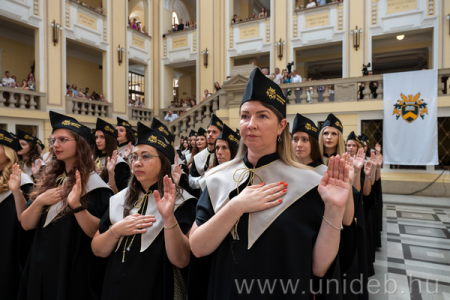
University of Debrecen Faculty of Health Sciences Graduates 540 New Health Specialists
Defining Professional Excellence in Modern Healthcare Education
The recent Hungary graduation ceremony at the University of Debrecen marked a significant academic milestone, celebrating the dedication and hard work of over 540 new graduates. Held across three distinct sessions, this event highlighted the breadth and depth of the Faculty of Health Sciences. For prospective students and professionals monitoring trends in European medical education, this ceremony serves as a clear indicator of the university’s output and its focus on producing well-rounded, practice-ready health specialists. The large cohort of graduates reflects the growing demand for qualified healthcare professionals and the institution’s capacity to meet that need through rigorous academic programming.
Evaluate the scale of this achievement: more than five hundred individuals are now entering the workforce equipped with the credentials to make an immediate impact. This article examines the specific academic pathways offered by the Faculty of Health Sciences, the underlying philosophy that guides their training, the significance of the student awards presented during the ceremony, and actionable advice for those looking to follow a similar path.
Schedule a free consultation to learn more about the application process and academic requirements for health science programs.
Exploring the Academic Programs at the Faculty of Health Sciences
The University of Debrecen structures its health sciences curriculum to address a wide spectrum of patient and community needs. The 540 graduates represent a diverse array of specializations, proving that modern healthcare requires a multidisciplinary approach. Review the primary categories of degrees awarded during the ceremony to understand the scope of career opportunities available.
Clinical and Direct Care Pathways
A substantial portion of the graduating class entered clinical roles that place them directly at the bedside. Nurses, midwives, ambulance officers, and extended-care nurses form the backbone of acute and emergency medical services. These health specialists are trained to handle high-pressure situations, provide immediate patient assessment, and deliver continuous care. The curriculum for these programs emphasizes practical clinical hours, anatomical precision, and quick decision-making skills. For students interested in hands-on patient interaction and critical care environments, these pathways offer direct routes to meaningful employment in hospitals, clinics, and emergency response systems.
Therapy, Rehabilitation, and Nutrition
Another critical segment of the graduating cohort focused on long-term patient recovery and lifestyle management. Physiotherapists and rehabilitation specialists work to restore mobility and function following injury, surgery, or chronic illness. Dieticians and nutritionists provide essential guidance on preventive health and disease management through dietary interventions. These professions require a deep understanding of biomechanics, metabolic processes, and patient psychology. As European populations age, the demand for these rehabilitative and preventative services continues to climb, making these academic tracks highly strategic for future job security.
Social Sciences, Public Health, and Informatics
Recognizing that health extends beyond the clinical setting, the University of Debrecen also certifies professionals in social work, public health, health teaching, and health bio-informatics. Social workers and social economy specialists address the systemic and environmental factors that influence patient well-being. Public health specialists and public health nurses focus on community-wide disease prevention and health promotion. Meanwhile, health bio-informaticians represent the cutting edge of medical technology, bridging the gap between data science and clinical application. These roles are vital for developing public health policy, managing health data systems, and ensuring that vulnerable populations receive the social support they need to maintain their health.
The Philosophy of “Caring Presence” in Healthcare Practice
During the Hungary graduation ceremony, Dean Marianna Móré delivered a keynote address that centered on a concept she termed “caring presence.” For prospective students, understanding this philosophy is crucial, as it defines the pedagogical approach of the Faculty of Health Sciences. Dean Móré argued that the true measure of a health specialist lies not merely in their ability to follow procedures and protocols, but in their capacity to connect with patients on a human level.
Moving Beyond Protocols and Statistics
Modern healthcare systems rely heavily on standardized protocols, statistical outcomes, and technological diagnostics. While these elements are indispensable, they can sometimes obscure the individual experience of the patient. Dean Móré reminded the graduates that their chosen professions cannot be measured exclusively by these metrics. A physiotherapist must see beyond the biomechanical data to understand the patient’s frustration with limited mobility. A social worker must look past case files to recognize the immediate emotional needs of a family in crisis. The training at the University of Debrecen intentionally emphasizes this balance, ensuring that students do not lose their interpersonal focus amid rigorous scientific training.
Upholding Human Dignity in Vulnerable Situations
Healthcare inherently involves moments of profound human vulnerability. Patients frequently face illness, loss, uncertainty, and fear. Dean Móré challenged the graduates to use their professional presence to strengthen human dignity where it is most at risk. This means actively taking patients seriously, refusing to look away from their suffering, and fostering a sense of community for those who feel isolated. For aspiring health specialists, this translates to developing strong emotional intelligence, practicing active listening, and cultivating empathy as a deliberate professional skill rather than just a personality trait.
Explore our related articles for further reading on the importance of soft skills in clinical environments.
Recognizing Achievement: Student Awards and Faculty Honors
Academic ceremonies are not only about conferring degrees; they also serve to highlight models of excellence. The student awards presented at the University of Debrecen provide a roadmap for incoming students on how to maximize their academic experience and stand out in a competitive field.
The Frigyes Verzár Award and Academic Excellence
The Frigyes Verzár Award represents one of the highest honors a student at the Faculty of Health Sciences can achieve. Named after a renowned Hungarian physiologist, this award is granted to students in advanced studies who have improved the reputation of the faculty through exceptional academic achievements, top-level scientific work, and exemplary behavior in social responsibility and volunteerism. This year, the award was presented to Lilla Zsófia Nagy. For prospective students, this award highlights the importance of engaging in scientific research early in your academic career and demonstrating a commitment to community service alongside your standard coursework.
Leadership and Community Engagement Recognitions
Academic success is only one facet of a well-rounded professional profile. Andrea Tekla Farkas received the Rector’s Certificate of Recognition from the University of Debrecen for her outstanding public activities and leadership as the President of the Sectional Student Self-Government of the Faculty of Health Sciences. This recognition underscores the value the university places on student advocacy, organizational leadership, and community building. Additional student awards, including the Excellent Student of the University of Debrecen titles given to Alexandra Tóth-Takács, Natália Fagyas, and Lilla Zsófia Nagy, as well as various certificates of recognition from the Student Self-Government, prove that the institution rewards those who actively contribute to the campus ecosystem.
Faculty and Staff Achievements
Excellence in education is driven by excellent educators. The ceremony also recognized the contributions of faculty and staff who make these academic outcomes possible. Panna Anikó Tóth was named Excellent Lecturer of the Faculty of Health Sciences, while Mariann Klepácsné Ujteleki received the Excellent Employee award. Attila Péter Szabó, Director of UD’s Szolnok Campus, was also honored with a Dean’s Certificate of Recognition. These accolades assure prospective students that they will be learning from a highly decorated and dedicated faculty.
Have questions? Write to us! to connect with current advisors about student life and leadership opportunities.
Actionable Advice for Aspiring Health Specialists
Observing the successes of the recent graduating class provides valuable lessons for those planning to apply to the University of Debrecen or similar institutions. Implement these strategies to build a strong foundation for your healthcare career.
Cultivate Interpersonal Skills Alongside Clinical Knowledge
Take Dean Móré’s message to heart by intentionally developing your communication skills. Volunteer in patient-facing environments, such as local clinics or care homes, to practice interacting with individuals in vulnerable states. Learn to manage your own stress and emotional responses so that you can remain a calm, steady presence for others. These soft skills will differentiate you from peers who focus solely on textbook knowledge.
Engage in Talent Development and Advanced Studies
Notice that many of the top student awards at the ceremony went to individuals involved in the Talent Development Program of the University of Debrecen and the Frigyes Verzár College of Advanced Studies. Seek out these advanced opportunities as soon as you enroll. These programs typically offer specialized mentoring, research opportunities, and networking events that accelerate both your academic and professional development. Do not wait until your final year to seek out extracurricular academic engagement.
Prepare for a Diverse Range of Career Opportunities
Recognize that a degree from the Faculty of Health Sciences opens doors to varied environments. You might work in a traditional hospital setting, a private rehabilitation clinic, a public health agency, or a tech startup focused on health informatics. Keep your career options open by taking elective courses outside your immediate specialty and by networking with students in other departments during your studies. The multidisciplinary nature of the graduating class is a strength you should leverage.
Taking the Next Step in Your Health Sciences Career
The Hungary graduation ceremony at the University of Debrecen serves as a powerful demonstration of what focused, empathetic, and rigorous academic training can produce. The 540 newly minted health specialists are now stepping into roles where their “caring presence” will directly influence patient outcomes and community well-being. Whether your goal is to become a nurse, a physiotherapist, a public health expert, or a bio-informatician, the framework for success involves balancing technical proficiency with deep human connection.
Assess your own readiness to enter this challenging and rewarding field. Research the specific admission requirements for your desired program, identify opportunities for early research and leadership involvement, and begin cultivating the interpersonal skills that will define your professional reputation. The healthcare sector requires professionals who are not only capable but also compassionate.
Submit your application today to begin your journey toward becoming a certified health specialist.