
University of Debrecen and EVE Power Establish Strategic Partnership to Advance Engineering Education in Hungary
How the University of Debrecen and EVE Power Are Reshaping Engineering Education
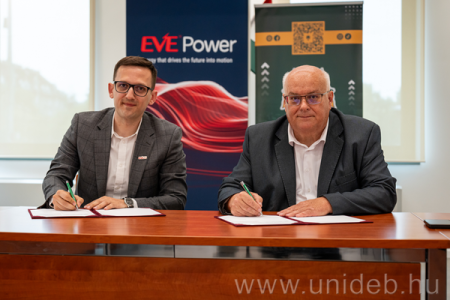
The landscape of engineering education in Hungary is experiencing a significant shift as academic institutions increasingly align with global industry leaders. A prime example of this trend is the recent strategic partnership formed between the University of Debrecen and EVE Power Hungary Kft. Signed on July 2, 2026, this agreement represents a deliberate move to close the gap between theoretical university curricula and the practical demands of modern manufacturing. For prospective engineering students and professionals monitoring the evolution of higher education, this collaboration highlights a clear priority: developing a workforce immediately capable of contributing to high-tech industries.
The core objective of this agreement is to build a contemporary, practical knowledge infrastructure. According to Géza Husi, Dean of the Faculty of Engineering at the University of Debrecen, the foundational principles of this partnership were established during a professional visit to EVE Power’s headquarters in China. This direct engagement with the company’s global operations ensures that the resulting educational frameworks are not merely theoretical concepts, but are directly informed by the operational realities of a leading international manufacturer. Explore our related articles for further reading on how international collaborations influence local academic programs.
Key Focus Areas of the University of Debrecen and EVE Power Agreement
The collaboration between the University of Debrecen and EVE Power is structured around several highly specific educational and developmental goals. Rather than a vague commitment to cooperation, the agreement outlines concrete steps to integrate battery technology and advanced manufacturing into the academic pipeline.
Practice-Oriented Engineering Programs
At the heart of this strategic partnership is the enhancement of practice-oriented engineering education. The primary technical focus areas include battery production, industrial automation, and rigorous quality assurance processes. As the global demand for electric vehicles and energy storage systems surges, proficiency in these specific disciplines has become a critical shortage occupation. By tailoring coursework to these exact needs, the University of Debrecen is positioning its graduates at the forefront of a highly competitive job market.
To initiate this integration, the University of Debrecen will launch a new optional subject starting in September 2026. Notably, this course will be accessible to students from any faculty within the university, recognizing that the battery industry requires a multidisciplinary approach—spanning engineering, logistics, business, and environmental sciences. Furthermore, university administrators are currently evaluating the introduction of a comprehensive, multi-semester training program designed to provide deep, specialized expertise in sustainable mobility and battery cell manufacturing. Schedule a free consultation to learn more about how to structure your academic path to include these emerging technical fields.
Integrating Industry Experts into the Classroom
A persistent challenge in traditional engineering education is the potential disconnect between academic instruction and current industry standards. This agreement directly addresses that issue by mandating the involvement of EVE Power employees in the instructional process. Having active industry professionals co-teach or guest lecture ensures that students are learning contemporary methodologies, rather than outdated textbook examples.
Beyond standard lectures, the partnership facilitates joint supervision of student theses, dissertations, and research projects. This means students will have the opportunity to work on real industrial challenges, guided by both academic professors and EVE Power engineers. For a student completing a master’s thesis, having direct access to proprietary industry data and professional mentorship significantly elevates the quality and practical applicability of their research.
The Role of the Department of Electrical Engineering and Mechatronics
Within the Faculty of Engineering, the Department of Electrical Engineering and Mechatronics will serve as the primary academic driver for this initiative. Sándor Hajdu, the head of the department, emphasized that establishing long-term, mutually beneficial partnerships with key regional industrial players is a strategic imperative. The department’s focus on electrical engineering and mechatronics aligns perfectly with EVE Power’s core activities.
Mechatronics—the synergistic integration of mechanical engineering, electrical engineering, control engineering, and computer science—is fundamental to modern battery manufacturing. Automated production lines, robotic cell handling, and precision quality control systems all rely heavily on mechatronic principles. By leveraging the existing knowledge and development potential within this department, the University of Debrecen and EVE Power can create genuine professional synergies, ensuring that academic research directly fuels industrial innovation and vice versa.
EVE Power’s Investment in Debrecen’s Technological Future
Understanding the perspective of the corporate partner provides essential context for the value of this agreement. EVE Power currently stands as one of the world’s largest battery manufacturers, specializing in the development and production of high-performance lithium-ion battery cells. The company is currently in the process of constructing its first European manufacturing plant in Debrecen, making this strategic partnership a locally significant economic event.
Ádám Kovács, the head of public relations at EVE Power Hungary Kft., stated that supporting education is a strategic priority for the company. The goal is to combine academic knowledge with hands-on industrial experience. From the company’s viewpoint, this collaboration is an essential mechanism for building a local talent pipeline. By engaging students early in their university years, EVE Power aims to demonstrate the viable career opportunities available in Debrecen, thereby encouraging local talent retention. Kovács noted that one of the keys to the city’s technological development is this exact type of seamless cooperation between education and industry, preventing brain drain and fostering a localized ecosystem of expertise.
Beyond the Classroom: Supporting Student Innovation
The commitment of EVE Power to the University of Debrecen extends beyond formal curriculum development. The company has also taken on a sponsorship role for the university’s Formula Student team. Formula Student is a highly competitive international engineering competition where university students design, build, and race small-scale formula-style racing cars.
Participating in Formula Student requires students to apply theoretical knowledge to extreme practical challenges, encompassing everything from aerodynamics and suspension design to electrical systems and battery management. By sponsoring this team, EVE Power is providing students with the financial resources necessary to access high-quality materials and testing facilities. This sponsorship tangibly strengthens the connection between the university and industry, giving students a platform to experiment, fail, iterate, and succeed in a high-stakes engineering environment before they even graduate. Share your experiences in the comments below if you have participated in similar university-industry innovation projects.
What This Strategic Partnership Means for Prospective Engineering Students
For students evaluating their options for engineering education in Hungary, the University of Debrecen’s agreement with EVE Power serves as a strong indicator of the institution’s forward-thinking approach. Choosing a university that maintains active, structural partnerships with global industry leaders offers several distinct advantages.
First, it guarantees that the curriculum remains relevant. Technology evolves rapidly, and textbooks often lag behind industry advancements. When a company like EVE Power helps shape the coursework, students learn current best practices in lithium-ion technology, automation, and quality assurance. Second, it provides unparalleled networking opportunities. Being taught by industry professionals and working on joint research projects allows students to build relationships with potential employers long before they enter the job market. Finally, it enhances employability. Graduates who already possess practical experience with the systems, standards, and challenges of the battery manufacturing sector are inherently more attractive to hiring managers.
As the sustainable mobility sector continues its rapid global expansion, the demand for specialized engineers will only increase. The collaborative framework established by the University of Debrecen and EVE Power provides a blueprint for how universities can effectively respond to this demand, ensuring that the next generation of engineers is fully prepared to design, build, and manage the technologies of the future. Submit your application today to take the first step toward a career in advanced engineering and sustainable technology.