Transition from the Lab to Industry at the University of Debrecen Faculty of Science and Technology Career Day
Securing a relevant position after graduation requires more than just a strong academic record; it demands practical experience and professional connections. For science and technology students, moving from theoretical research to a practical industrial role can present a significant challenge. The University of Debrecen addresses this gap directly through its Faculty of Science and Technology (TTK), hosting targeted events like the annual Career Day to connect students with regional employers. This event highlights how academic institutions and economic stakeholders can collaborate to prepare the next generation of scientists and engineers for immediate entry into the workforce.
Bridge the Gap Between Academic Research and Industrial Demands
Modern industries require professionals who understand not just the science behind a process, but how that process scales in a manufacturing environment. The University of Debrecen recognizes that theoretical education alone is no longer sufficient to meet the complex challenges of the current labor market. To solve this, the Faculty of Science and Technology has spent the past two decades cultivating an extensive network of over a hundred partner companies.
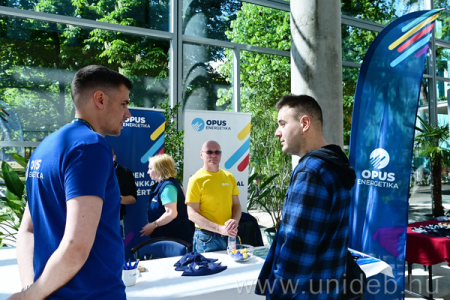
During the 16th annual TTK Career Day, thirty key market players set up booths and engaged directly with students. The faculty’s leadership emphasizes that successful university education now requires the active involvement of industry stakeholders. By integrating market needs into the curriculum, the university ensures that students learn applicable skills. This collaboration has resulted in a unique structural advantage: many of the faculty’s institutes now operate off-campus departments directly within regional industrial companies. This setup allows students to observe and participate in real-world industrial applications while completing their academic requirements.
Schedule a free consultation to learn more about how the University of Debrecen structures its industry partnerships to benefit student career trajectories.
Understand the Structure of Dual Training Programs at the University of Debrecen
One of the most effective methods for facilitating a transition from the lab to industry is the implementation of dual training programs. The University of Debrecen played a pioneering role in this area in Hungary when it launched its dual training initiatives in 2016. Initially restricted to engineering programs, this educational model has proven so successful that it now extends to half of the master’s programs in the natural sciences.
Dual training programs blend traditional academic coursework with integrated work placements. Students alternate between attending lectures and working at a partner company. This structure provides several distinct advantages:
- Financial Benefits: Students typically receive a competitive salary or stipend from their partner company during their work phases, reducing the financial burden of higher education.
- Practical Application: Coursework is immediately reinforced through hands-on application in an industrial setting, which improves retention and understanding of complex scientific principles.
- Guaranteed Employment: Because students spend significant time training within a specific company, they often receive concrete job offers before they even receive their diplomas.
For students aiming to secure a stable future, enrolling in a dual training program provides a clear pathway. The goal of the faculty is to ensure that by the time students graduate, they know exactly where they will start their professional careers.
Submit your application today if you are interested in enrolling in a curriculum that integrates direct industrial experience with academic learning.
Explore Specialized Industry Sectors at TTK Career Day
The economy of eastern Hungary is diverse, and the Career Day at the Faculty of Science and Technology reflects this variety. The event is structured into distinct sections, allowing students to target their job search based on their specific majors and career interests.
Electrical Engineering and Microelectronics
This sector is highly recommended for physics and mathematics majors. As electronic components become smaller and more complex, the demand for professionals who understand the underlying physics of microelectronics continues to grow. Companies attending this section of the Career Day look for students who possess strong analytical skills and a solid foundation in material science and thermodynamics.
Chemical, Pharmaceutical, and Biotechnology Industries
This section represents one of the faculty’s strongest industrial bases. The University of Debrecen has strategically adapted its curriculum to support the region’s booming life sciences sector. For example, the faculty has integrated specialized knowledge related to battery manufacturing directly into its chemical engineering and physics programs. This adjustment responds directly to the establishment of major battery manufacturing plants in the region.
Additionally, the undergraduate biotechnology program has seen immense success. Driven by market demand, these classes consistently reach full enrollment in both Hungarian and English, indicating strong student interest and robust industry demand for graduates in this field.
Data Analysis and Earth Sciences
With the rapid digitization of traditional industries, data analysis has become a critical skill set. This section of the Career Day focuses on opportunities for computer science and natural science majors. Students learn how to apply computational models to geological data, environmental monitoring, and resource management, providing essential services to agricultural and industrial enterprises in Hungary.
Explore our related articles for further reading on the specific technological advancements driving job creation in the Hungarian chemical and pharmaceutical sectors.
Leverage International Perspectives for Multinational Careers
A distinguishing feature of the University of Debrecen’s Faculty of Science and Technology is its highly diverse student body. With over 800 international students, one-third of the faculty’s population comes from abroad. This multicultural environment is deliberately fostered and provides tangible benefits for all students.
During the Career Day, a dedicated English-language section catered specifically to these international students. However, the presence of international peers also benefits Hungarian students. Working alongside individuals from different cultural backgrounds prepares students for the realities of modern multinational corporations. Students develop fluency not just in technical English, but in the collaborative and communicative expectations of global companies. Graduates who are accustomed to multicultural academic environments adapt more quickly to diverse corporate teams, making them highly competitive candidates for roles in international firms operating in Hungary and abroad.
Maximize Your Experience at University Career Fairs
Attending a Career Day is only beneficial if students approach it with a strategic mindset. The events hosted at the University of Debrecen offer more than just a place to drop off a resume; they are interactive professional environments. To make the most of these opportunities, students should adopt specific strategies:
- Participate in Mock Interviews: Many company booths at the TTK Career Day offer mock interviews. These sessions provide a risk-free environment to practice articulating technical knowledge and soft skills under pressure.
- Attend Professional Lectures: Industry leaders often present on emerging trends, such as new biotechnological methods or advancements in microelectronics. Attending these sessions demonstrates proactivity and helps students identify which companies are innovating in their field.
- Network Actively: Rather than simply asking about open positions, students should ask recruiters about the future trajectory of their industry. This approach leaves a lasting impression and positions the student as a forward-thinking candidate.
Students who engage with these resources effectively often leave the Life Science Building at the University of Debrecen with concrete internship placements or conditional job offers in hand.
Have questions? Write to us! We can provide additional guidance on how to prepare for academic and professional networking events.
Secure Your Future in Science and Technology
The transition from academic learning to industrial application does not have to be abrupt or uncertain. Through strategic partnerships, dual training programs, and events like the TTK Career Day, the University of Debrecen provides a structured pathway for science and technology students. By aligning its curriculum with the specific needs of regional employers—ranging from battery manufacturing to biotechnology—the faculty ensures that its degrees hold concrete value in the labor market. For students willing to engage with these resources, a secure and relevant career in industry is an achievable reality upon graduation.
Share your experiences in the comments below if you have participated in a dual training program or a university career fair.