
How the University of Debrecen Faculty of Engineering Elevated Its Academic Journal to International Q1 Ranking
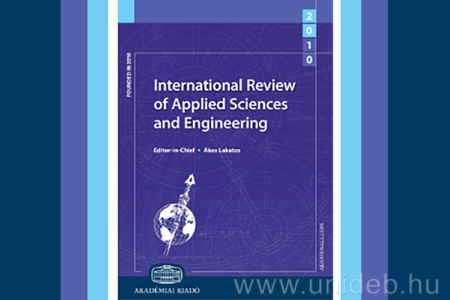
Securing a top-tier position in global academic publishing requires years of strategic planning, rigorous peer review, and a commitment to high-value research. The University of Debrecen in Hungary has demonstrated exactly this level of dedication. The institution’s Faculty of Engineering recently achieved a major milestone when its flagship publication, the International Review of Applied Sciences and Engineering (IRASE), was ranked in the top 25 percent of academic journals worldwide in the architecture category by the Scimago Journal and Country Rank. This achievement highlights the growing international ranking of the University of Debrecen and solidifies the standing of its academic journals in the competitive landscape of scientific publishing.
Understanding the Scimago Journal and Country Rank System
Evaluating the quality of academic journals can be a complex process for researchers and students alike. The Scimago Journal and Country Rank (SJR) provides a widely respected, transparent metric for assessing the scholarly impact of publications. Unlike simple impact factors, the SJR algorithm weights citations based on the prestige of the citing source, offering a more nuanced view of a journal’s true influence within its field.
Journals are categorized into four quartiles: Q1 represents the top 25 percent, Q2 covers the 25 to 50 percent range, Q3 spans the 50 to 75 percent segment, and Q4 includes the bottom 25 percent. Achieving a Q1 ranking signifies that a journal is among the most prestigious academic journals globally in its specific subject area. For the University of Debrecen’s IRASE, attaining a Q1 status in the architecture category—alongside a Q2 in engineering and a Q3 in management science and operational research—indicates a stable, well-balanced, and highly respected international standing.
The Trajectory of the International Review of Applied Sciences and Engineering
Reaching a Q1 ranking does not happen overnight. The International Review of Applied Sciences and Engineering was founded in 2010 by the Faculty of Engineering’s administration. For its first seven years, the editorial team focused on building a solid foundation of rigorous, peer-reviewed applied science research. This foundational work paid off when the journal was accepted into the Scopus database in 2017, a critical step for any publication seeking international visibility.
By 2018, IRASE was officially ranked by Scimago. Under the initial leadership of editor-in-chief Ferenc Kalmár, and subsequently under the guidance of current editor-in-chief Ákos Lakatos, the publication underwent continuous development. Because IRASE focuses on the interdisciplinary nature of applied sciences, it competes across multiple scientific fields rather than a single narrow niche. This broad scope requires a dedicated editorial board capable of evaluating diverse research methodologies, which has been a key factor in the journal’s consistently improving metrics.
Strategic Shifts in Scientific Publishing
The recent leap in the international ranking of IRASE is the direct result of a deliberate scientific and quality improvement strategy implemented by the Faculty of Engineering over the past several years. According to Géza Husi, Dean of the Faculty of Engineering at the University of Debrecen, the leadership made a specific strategic decision three or four years ago aimed at improving the institution’s international standing.
This strategy prioritized increasing international scientific visibility, consistently raising the quality of publications, and presenting applied engineering and architectural sciences in an integrated manner. Dean Husi emphasized that these results are not an isolated success, but rather an indicator of a broader, qualitative shift in the institution’s academic performance. The faculty has actively shifted its perspective to align with international standards, prioritizing high-value-added scientific results that resonate with the global research community.
Impact on Doctoral Education and Research Opportunities
A high-ranking journal provides substantial, tangible benefits to the institution that publishes it. For the Faculty of Engineering, the Q1 ranking of IRASE permanently strengthens the university’s position in the field of engineering in several critical areas. First, it significantly enhances the quality and attractiveness of doctoral education. Prospective PhD candidates actively seek out institutions where they can publish their research in highly visible, well-respected venues.
Second, the journal’s prestige directly supports research and development (R&D) initiatives and grant-seeking activities. When applying for international or domestic research funding, the ability to demonstrate that the institution hosts a Q1-ranked journal serves as strong evidence of a robust research infrastructure. Finally, it fosters international scientific collaborations, as leading researchers from other countries are more willing to co-author papers and share data with institutions that possess top-tier publishing platforms.
Schedule a free consultation to learn more about our doctoral programs.
The Role of Open Access in Expanding Global Reach
A critical component of IRASE’s success—and the success of other academic journals at the University of Debrecen—is the institution’s commitment to open-access publishing. The university operates the Dejournals platform, a Diamond Open Access system managed by the DE University and National Library (DEENK). Currently, the university subscribes to and hosts more than 50 journals on this platform, providing technical support and professional assistance to enhance their visibility.
Diamond Open Access is a highly equitable publishing model. Unlike traditional publishing, where readers face paywalls, or some open-access models, where authors must pay expensive article processing charges (APCs), Diamond Open Access removes financial barriers for both readers and authors. This model ensures that research produced in Hungary is freely accessible to researchers, policymakers, and students worldwide, maximizing the potential for citations and global impact.
Ádám Szabó, a staff member of the Research Support Department at DEENK, noted that these publications have undergone significant professional development in recent years. Their international visibility has strengthened, their pool of authors has expanded, and they increasingly meet international indexing and quality requirements. This dynamic adaptation to the changing expectations of scientific communication is precisely what allows a journal to climb the ranks from Q3 to Q1.
Why Academic Journal Rankings Matter for Prospective Engineering Students
While journal rankings are often viewed as metrics for established professors and postdoctoral researchers, they hold significant implications for prospective students evaluating engineering programs in Hungary. The quality of a faculty’s academic journals serves as a proxy for the overall research culture of the department.
When a student chooses to study at the University of Debrecen’s Faculty of Engineering, they are entering an environment where scientific inquiry is treated with international rigor. The faculty’s ability to maintain a Q1-ranked journal means students have direct access to faculty members who are actively engaged in shaping global academic discourse. Undergraduate and master’s students often participate in research projects that eventually feed into these high-level publications, providing them with invaluable experience that enhances their own career prospects or prepares them for advanced doctoral studies.
Furthermore, studying at an institution with a strong international ranking helps students build a global network. The IRASE journal attracts submissions and peer reviewers from around the world, tying the University of Debrecen into a web of global engineering and architectural science. For students planning to work in multinational corporations or pursue graduate studies abroad, this international exposure is a distinct advantage.
Submit your application today to join a top-ranked engineering faculty.
The Competitive Landscape of Hungarian Academic Journals
The success of IRASE also reflects positively on the broader landscape of higher education in Hungary. Ákos Lakatos, the editor-in-chief of IRASE, pointed out that among journals associated with other Hungarian universities focusing on technical fields, IRASE has taken a leading position in the Scimago ranking. This demonstrates that Hungarian academic institutions can successfully compete on a global stage when they align their internal strategies with international publishing standards.
Published by Akadémia Kiadó, one of Hungary’s most prestigious academic publishers, IRASE benefits from professional editorial management and wide distribution. The combination of a supportive university infrastructure (like the Dejournals platform), a respected national publisher, and a dedicated internal editorial team creates a highly effective ecosystem for academic publishing. Other institutions can look to the University of Debrecen’s Faculty of Engineering as a blueprint for how to systematically elevate the profile of their own scientific outputs.
Evaluating Research Output for Future Academic Careers
For researchers deciding where to submit their work, the trajectory of IRASE offers a compelling case study. A journal that consistently improves its metrics over a five-year period is often a strategic choice for authors. Publishing in a rising journal allows researchers to contribute to its growth while benefiting from increasing visibility as the journal’s reputation expands. The interdisciplinary focus of IRASE—spanning architecture, engineering, and operational research—makes it particularly valuable for researchers working on applied solutions that cross traditional disciplinary boundaries.
As scientific communication continues to evolve, the importance of transparent, open-access publishing will only grow. Institutions that invest in these platforms, as the University of Debrecen has done, will likely see continued improvements in their international rankings. The Q1 achievement of the Faculty of Engineering’s journal is a strong indicator that the university is well-positioned for future successes in global research metrics.
Have questions about the research opportunities at the University of Debrecen? Write to us!
Next Steps for Aspiring Researchers and Engineering Professionals
The elevation of the International Review of Applied Sciences and Engineering to a Q1 international ranking is a clear signal of the University of Debrecen’s commitment to research excellence. For prospective students, this means access to a faculty that prioritizes high-impact, globally recognized scientific work. For established researchers, it represents a reliable, highly visible platform for publishing applied sciences and engineering research.
Choosing the right academic environment is a critical decision for any aspiring engineer or scientist. Evaluating the performance of an institution’s academic journals provides direct insight into its research priorities, faculty expertise, and global connections. The Faculty of Engineering at the University of Debrecen has proven its capacity to meet and exceed international standards, making it a highly competitive option for anyone looking to advance their career in applied sciences and engineering.
Explore our related articles for further reading on academic publishing and university rankings.