
Testing Aerogel Materials: How the University of Debrecen Advances Thermal Insulation and Engineering Applications in Hungary
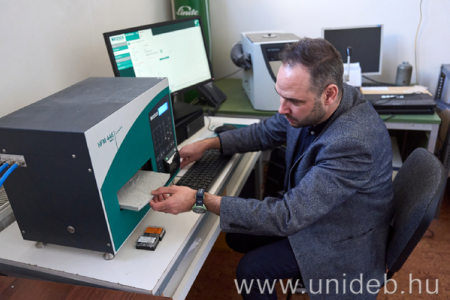
Aerogel materials — the lightest solids in the world — are quietly changing how industries approach thermal insulation. At the Faculty of Engineering of the University of Debrecen in Hungary, researchers recently completed a detailed investigation into the general properties and resistance of these remarkable super insulators. Their findings, published in the scientific journal Case Studies in Thermal Engineering, offer practical guidance for the construction, automotive, aerospace, and oil industries, and they point to new directions in engineering applications of advanced materials.
This article breaks down what the research team discovered, why aerogels have become so important across industries, and what the results mean for engineers, material developers, and students. If you are considering a future in engineering or materials research, schedule a free consultation to learn more about the programs and research opportunities available at the University of Debrecen.
Why Aerogel Materials Are Redefining Thermal Insulation
Few materials capture the attention of engineers quite like aerogels. These substances are the lightest solids in the world, with more than 90 percent of their structure composed of air. They are produced by carefully replacing the liquid component of a gel with gas, a process that preserves the gel’s internal framework while removing nearly all of its mass. The result is a translucent, almost ghost-like material that researchers have nicknamed “frozen smoke.”
Despite their delicate appearance, aerogels are extraordinarily effective thermal insulators. They block heat transfer far better than conventional materials, and they possess a surprising mechanical quality: although they feel fragile to the touch, they can support up to a thousand times their own weight. This unusual combination of low density, high porosity, and thermal resistance explains why aerogel materials have moved from laboratory curiosities to practical components in some of the world’s most demanding industries.
Engineering Applications of Aerogels Across Key Industries
The versatility of aerogels has led to rapid adoption in multiple sectors. Understanding where and how these materials are used helps explain why research like the work conducted at the University of Debrecen matters so much — and why demand for specialists in thermal insulation continues to grow.
Construction and Building Insulation
In the construction industry, aerogels provide high-performance insulation for walls, roofs, and retrofitting projects where space is limited. Because they deliver exceptional thermal resistance in thin layers, they allow architects and building engineers to meet strict energy-efficiency standards without sacrificing interior space.
Aerospace and Extreme Environments
Space exploration relies on aerogels to protect spacecraft and sensitive instruments from extreme cold and extreme heat. Wherever temperature swings are severe and every gram of weight matters, these super insulators have become a material of choice for aerospace engineers.
Electric Vehicles and Battery Safety
In electric cars, aerogel layers prevent the spread of heat generated within battery packs. Containing thermal events at the cell level is a major safety priority for automotive manufacturers, and aerogel barriers have become a preferred solution because they combine slim profiles with outstanding heat-blocking capability.
Industrial Systems and Environmental Protection
Industrial facilities use aerogels to minimize heat loss from steam pipes and storage tanks, cutting energy costs and improving process efficiency. Thanks to their enormous internal surface area, aerogels are also effective at absorbing oil spills and a variety of chemicals, making them valuable tools in environmental remediation efforts.
Curious how these developments could apply to your own studies or projects? Explore our related articles for further reading on advanced insulation materials and their engineering applications.
How the University of Debrecen Tested Aerogel Resistance
Researchers at the Faculty of Engineering of the University of Debrecen set out to answer an important question: how well do aerogel insulations hold up under sustained heat exposure? The team, led by Ákos Lakatos, Head of the Department of Building Services and Building Engineering, examined the thermal properties, thermal stability, and engineering applications of a commercial product known as Slentex insulation.
The methodology was straightforward but rigorous. Samples were aged at 150 and 250 degrees Celsius for one day, after which the researchers monitored changes in both thermal and physical characteristics. This aging approach simulates the kind of long-term thermal stress that insulation materials may experience in real installations, compressing extended service conditions into a controlled laboratory test. The resulting data allowed the team to identify changes in structural and thermal properties and to examine possible correlations between the two.
Key Findings From the Aging Experiments
The results revealed measurable but manageable changes. The team identified observable and quantifiable surface and structural changes in the Slentex fiber. Specific heat capacity (Cp) measurements supported an amorphization process, showing a 10 percent change after one day of heat treatment at 250 degrees Celsius. Microscopic and visual analysis confirmed a heavily oxidized surface on the treated samples.
Importantly, the news on performance was encouraging. Thermal conductivity measurements showed that the material retained stable thermal insulation despite the structural transformations. Specific heat capacity changed only slightly after aging, a behavior the researchers attribute to the amorphous nature of the material’s state. From these thermal values, the team derived thermal diffusion and volumetric heat capacity, finding an approximately 3 to 4 percent decrease in thermal diffusion alongside a corresponding increase in volumetric heat capacity.
Additional analysis using differential scanning calorimetry showed a significant and continuous increase in the heat flow curve and a strong heat absorption process, further documenting how the material behaves under sustained thermal load.
Have questions about the research methods or about aerogel materials in general? Write to us — our team is happy to help.
What These Results Mean for Thermal Insulation Design
For engineers, the practical message of the study is clear: aerogel insulation maintains its core thermal performance even after exposure to elevated temperatures that would compromise many conventional materials. The structural and chemical changes observed — amorphization and surface oxidation — did not translate into a meaningful loss of insulating capability during the test period.
This kind of data is invaluable for anyone specifying insulation for demanding environments. It supports more accurate service-life predictions, informs safety margins in design calculations, and gives manufacturers a benchmark against which to improve their products. Research of this type also strengthens Hungary’s position in applied materials science, demonstrating that the University of Debrecen contributes directly to the development of technologies used around the world.
The findings were published in the English-language scientific journal Case Studies in Thermal Engineering, and the research team’s achievement was recognized with a Publication Award by the Count István Tisza Foundation for the University of Debrecen and the University of Debrecen.
The Future of Aerogel Development: Three Priorities
Professor Lakatos and his colleagues see clear directions for the next generation of aerogel products. According to the research team, aerogel developers should focus on three priorities:
- Hybrid systems: Combining aerogels with other materials to enhance mechanical strength, reduce costs, and tailor performance to specific engineering applications.
- Improved moisture barrier layers: Protecting aerogel insulation from water ingress, which remains one of the main challenges for long-term performance in humid or outdoor environments.
- Low-carbon emission production methods: Making manufacturing more sustainable so that the environmental benefits of superior thermal insulation are not offset by an energy-intensive production process.
Each of these priorities represents an open research question — and an opportunity for engineers and materials scientists who want to work at the frontier of insulation technology.
Study Engineering and Materials Research at the University of Debrecen
For students and professionals considering where to study or conduct research in thermal insulation and advanced materials, the University of Debrecen offers a compelling environment. The Faculty of Engineering combines hands-on laboratory work with internationally recognized research, and projects like this aerogel study give students direct exposure to publishable, industry-relevant science. Hungary itself has become an attractive destination for international students, offering high-quality education, modern research infrastructure, and a central location in Europe.
Ready to take the next step? Submit your application today to join the Faculty of Engineering at the University of Debrecen and build your expertise in one of the most dynamic fields of modern materials science.
Final Thoughts on Super Insulators and Their Growing Role
The University of Debrecen’s testing of resistant super insulators confirms what industry adoption already suggests: aerogel materials are not a passing trend but a durable foundation for next-generation thermal insulation. Their stable performance under heat aging, their versatility across construction, automotive, aerospace, and industrial applications, and their ongoing improvement through focused research all point toward expanding use in the years ahead.
Whether you are an engineer specifying insulation for a demanding project, a researcher tracking advances in materials science, or a student choosing where to build your career, the developments at the University of Debrecen are worth following closely.
If you have hands-on experience with aerogel materials or thermal insulation projects, share your experiences in the comments below — your insights could help fellow readers make better engineering decisions.