Study Humanities in Hungary: University of Debrecen Expands Global Education and International Relations
The landscape of higher education is increasingly defined by cross-border collaboration, academic networking, and international visibility. Institutions that fail to establish a global presence risk falling behind in attracting top-tier talent and producing impactful research. Recognizing this shift, the University of Debrecen in Hungary has taken deliberate steps to elevate its academic profile. Through the recent launch of the Humaniora program, the university is actively promoting its humanities departments to a worldwide audience, reinforcing its commitment to global education and strengthening international relations across its campus.
The Growing Demand for Global Education in the Humanities
Historically, the humanities have been viewed through a localized or highly regionalized lens. However, as the modern workforce becomes increasingly interconnected, the skills taught in humanities programs—critical thinking, cross-cultural communication, ethical reasoning, and historical context—are now fundamental to the field of international relations. Students pursuing degrees in literature, philosophy, history, and the arts are no longer confined to domestic careers; they are entering global diplomacy, international non-governmental organizations, and multinational corporate strategy.
Global education in the humanities requires more than just translating syllabi into English. It demands an infrastructure that supports international research collaborations, faculty exchanges, and joint publications. Universities must actively curate an environment where international students and scholars can engage with local academic traditions while contributing their own diverse perspectives. This bilateral exchange of ideas is precisely what drives innovation in the social sciences and humanities. Schedule a free consultation to learn more about how global education frameworks can align with your academic career goals.
Inside the Humaniora Initiative at the University of Debrecen
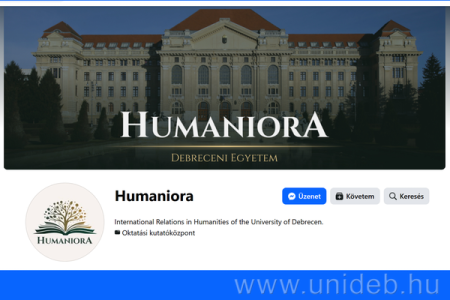
To structure and promote these international efforts, the University of Debrecen recently introduced the Humaniora program. The initiative centers around a newly launched English-language Facebook page, designed to broadcast news, events, and academic achievements from the university’s humanities departments directly to an international audience. The program’s leadership has also announced plans to launch a dedicated English-language website, which will serve as a centralized hub for researchers and students worldwide.
The name “Humaniora” carries significant historical weight. Derived from Latin, the term served as an umbrella concept for the humanities during the Renaissance humanism movement in 14th and 15th century Italy. It encompasses the core areas of classical ancient learning, including language, literature, philosophy, the arts, and history. By adopting this name, the University of Debrecen connects its modern internationalization efforts to a centuries-old European intellectual tradition.
The primary objective of the Humaniora platform is to ensure that the scholarly output of the university’s Faculty of Humanities reaches a broader audience abroad. By continuously updating the platform with relevant news, the university makes it easier for international peers to identify opportunities for collaboration, thereby reducing the friction often associated with cross-border academic networking. Explore our related articles for further reading on how digital platforms are shaping modern university strategies.
Building a Centralized Information Hub
The transition from fragmented departmental news to a unified, English-language platform represents a strategic shift in how universities manage their public relations. Rather than relying on international researchers to stumble upon isolated department websites, the Humaniora initiative aggregates high-value information. This centralized approach ensures that significant academic conferences, visiting lecturer announcements, and published research papers are immediately accessible to a global readership, maximizing the reach and impact of the university’s academic output.
Building Strong International Relations Through Academic Networks
The success of any global education initiative is measured by the tangible academic networks it produces. The University of Debrecen has already established a robust foundation in this regard. Currently, the institution hosts nearly 8,000 international students from approximately 140 countries. This diverse student body creates a naturally internationalized campus environment where cross-cultural dialogue is integrated into daily academic life rather than relegated to specialized, isolated programs.
Beyond student enrollment, the university’s international relations are solidified through its faculty and researcher connections. The various faculties and departments regularly host international academic conferences, providing a venue for scholars from different continents to share their latest findings. These events frequently lead to joint publications, which not only advance academic knowledge but also tie the University of Debrecen to a web of global research institutions.
Furthermore, the university actively invites visiting lecturers from prestigious international institutions and awards honorary doctoral degrees to distinguished global professors. These practices do more than generate positive press; they create lasting, formalized relationships that facilitate student exchanges, joint grant applications, and collaborative research projects. For prospective students, this means studying at an institution that functions as an active node in the global academic network rather than an isolated regional college. Submit your application today to join a globally connected academic community that prioritizes international relations.
QS 2026 Rankings and the Visibility of Hungarian Universities
A critical metric of these internationalization efforts is performance in global university rankings. The Faculty of Humanities at the University of Debrecen recently achieved a significant milestone by ranking among the world’s top 550 institutions in the Quacquarelli Symonds (QS) 2026 subject rankings. This marks the first time in the university’s history that its humanities faculty has reached this level of international recognition.
QS rankings rely heavily on academic reputation, employer reputation, and research impact—metrics that are directly influenced by a university’s international visibility. High scores in the humanities carry substantial weight in determining a university’s final position in overall international rankings. The Humaniora program was designed, in part, to sustain and build upon this momentum. By proactively marketing the faculty’s achievements, the university ensures that its scholarly output is recognized by the international academics and employers who participate in QS ranking surveys.
What the Rankings Mean for Prospective Students
For students evaluating where to pursue their degrees, a top 550 placement in the QS subject rankings provides objective validation of the faculty’s quality. It indicates that the research produced by the institution is cited globally, that graduates are respected by international employers, and that the academic staff are recognized leaders in their respective fields. Choosing a ranked institution provides a measurable advantage in a competitive global job market, particularly for students aiming to build careers in international relations, global policy, or cross-cultural communications.
The Strategic Importance of Hungary in International Relations
Studying humanities in Hungary offers a distinct strategic advantage for students interested in international relations. Situated at the crossroads of Central Europe, Hungary provides a unique vantage point for analyzing the historical, political, and cultural dynamics of the European Union, Eastern Europe, and the broader Eurasian region. The University of Debrecen, as one of the oldest and largest higher education institutions in the country, serves as an excellent base for this type of regional study.
The curriculum within the humanities faculty is designed to leverage this geographic positioning. Students engage with Central European history, regional languages, and the socio-political transitions that have defined the region over the past century. Understanding these local dynamics is essential for any professional entering international relations, as global policies are inevitably shaped by regional contexts. By studying in Hungary, students gain access to primary sources, local expert insights, and a cultural immersion that cannot be replicated in a purely Western European or North American classroom setting.
Practical Steps for Students Seeking Global Education Opportunities
Evaluating global education options requires a strategic approach. Prospective students should look beyond marketing materials and assess the structural elements of a university’s internationalization strategy. Key factors to consider include the ratio of international to domestic faculty, the availability of English-taught courses at advanced levels, the frequency of international academic conferences hosted by the institution, and the university’s track record of producing joint publications with foreign institutions.
The Humaniora initiative at the University of Debrecen provides a transparent window into these very metrics. By publicly documenting the faculty’s international engagements, visiting lecturers, and research milestones, the platform allows prospective students to verify the institution’s global reach before committing to a program. This level of transparency is a strong indicator of a mature, well-organized academic institution. Have questions? Write to us! We can help you navigate the specifics of evaluating international humanities programs.
Career Paths for Humanities Graduates in a Globalized Economy
A common misconception is that humanities degrees lack practical application in the modern economy. In reality, the globalized economy heavily rewards the exact competencies developed in these programs. Graduates who possess a deep understanding of cultural nuances, historical context, and ethical frameworks are highly sought after in several growing sectors.
- Diplomacy and Foreign Service: Government agencies require experts who understand the cultural and historical contexts of foreign nations to negotiate effectively and build lasting alliances.
- International Non-Governmental Organizations (NGOs): Organizations operating across borders need professionals who can navigate diverse cultural landscapes and communicate effectively with local populations.
- Global Journalism and Media: Reporting on international events demands a strong foundation in history and political philosophy to provide accurate, contextualized analysis.
- Cultural Preservation and Policy: As globalization threatens local cultures, there is an increasing demand for professionals who can advocate for and manage cultural heritage initiatives at an international level.
The University of Debrecen’s focus on increasing the international visibility of its humanities programs directly supports graduates entering these fields. When a student earns a degree from an institution recognized in global rankings like the QS 2026 list, their credentials carry weight with international employers and graduate school admissions committees alike.
Conclusion
The promotion of the humanities at the international level is no longer an optional public relations exercise for universities; it is a fundamental requirement for institutional survival and academic relevance. The University of Debrecen has recognized this reality and responded with the structured, strategic Humaniora program. By creating dedicated English-language platforms, highlighting its top 550 QS 2026 ranking, and fostering an environment that hosts thousands of international students and prominent global scholars, the university is cementing its position as a key player in global education. For students seeking a rigorous, internationally recognized humanities education in a strategically vital region of Europe, the developments at the University of Debrecen signal a institution moving decisively in the right direction. Share your experiences in the comments below regarding what you look for when choosing an internationally focused humanities program.