Navigate Organizational Challenges with Budapest Metropolitan University’s International Dialogue Series
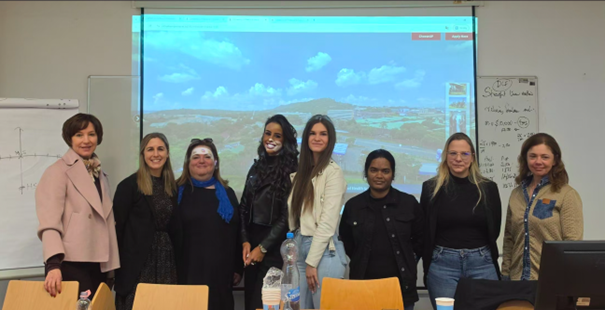
Modern businesses operate in an environment defined by continuous disruption. Fluctuating economies, shifting regulatory landscapes, and an increasingly diverse workforce require leaders to adopt new frameworks for strategic management. To address these evolving demands, Budapest Metropolitan University in Hungary recently hosted the METU World Dialogues. This international dialogue series brought together global academics to analyze contemporary organizational challenges and propose actionable strategies for modern leaders.
By leveraging the Erasmus+ program to connect with scholars across multiple continents, Budapest Metropolitan University created a platform that moves beyond theoretical lectures. Instead, it fostered a dynamic exchange of ideas focused on the practical realities of running organizations today. For business students and professionals, understanding these global perspectives is essential for career advancement and effective leadership.
Schedule a free consultation to learn more about our business and management programs.
Understanding Modern Organizational Challenges in a Global Context
Organizational challenges have shifted dramatically over the past decade. Historically, management focused primarily on operational efficiency, supply chain optimization, and localized market penetration. Today, the scope of challenges has broadened to include intercultural friction, strict sustainability mandates, and complex global mobility patterns. Leaders can no longer rely on a single-dimensional approach to problem-solving.
The recent roundtable discussions highlighted that uncertainty and cultural diversity are no longer exceptional circumstances; they represent the standard operational framework for most medium and large enterprises. When a company operates across borders, it must simultaneously manage differing consumer expectations, varied labor laws, and distinct communication styles. Recognizing these organizational challenges as permanent fixtures rather than temporary obstacles is the first step toward building resilient corporate structures.
The Role of Erasmus+ in Fostering Academic and Professional Exchange
Addressing complex business issues requires diverse perspectives. The Erasmus+ program plays a critical role in facilitating this exchange by allowing institutions like Budapest Metropolitan University to host visiting professors from around the world. In the context of the METU World Dialogues, Erasmus+ served as the catalyst for bringing together experts from Egypt, Palestine, Georgia, and South Africa.
This type of international dialogue ensures that academic discourse in Hungary remains connected to global trends. When students and local professionals engage with visiting scholars, they gain exposure to regional nuances that standard textbooks often overlook. For example, understanding how economic uncertainty affects organizational agility in the Middle East provides valuable contrast to how similar challenges are handled in Central Europe. These exchanges bridge the gap between localized study and global application.
Explore our related articles for further reading on international exchange programs.
Key Themes from the METU World Dialogues Series
The international dialogue series was structured into four distinct sessions, each tackling a specific facet of modern organizational management. The themes selected reflect the most pressing concerns facing business leaders today.
Intercultural Communication and Quality Assurance
Dr. Marwa Anis from the British University in Egypt led the first session, examining the intersection of intercultural communication and quality assurance. In multinational organizations, quality assurance is not merely a technical process; it is a communicative one. When teams are distributed across different countries, ensuring that quality standards are uniformly understood and applied becomes a significant hurdle.
Misinterpretations arising from cultural differences can lead to deviations in product quality or service delivery. For instance, a directive from a manager in a high-power-distance culture might be interpreted differently by a team member in a low-power-distance culture. Dr. Anis’s discussion emphasized that organizations must build culturally aware communication protocols into their quality assurance frameworks to prevent these costly errors. Leaders must train their teams not just on technical standards, but on how to effectively communicate those standards across cultural boundaries.
ESG Integration and Organizational Agility
The second session featured Dr. Ahmad Mohammad Herzallah from Al-Quds University, who addressed the integration of Environmental, Social, and Governance (ESG) criteria within uncertain economic contexts. ESG compliance has transitioned from a voluntary public relations tool to a strict investor requirement. However, integrating ESG metrics requires significant resources, which can strain organizations facing economic instability.
Dr. Herzallah highlighted the concept of organizational agility as the primary solution to this tension. Agile organizations can pivot their resource allocation rapidly, allowing them to meet new sustainability regulations without halting core business operations. This requires decentralizing decision-making and empowering mid-level managers to implement ESG initiatives at the departmental level. For businesses operating in Hungary and the broader European Union, where ESG reporting requirements are becoming increasingly stringent, developing this organizational agility is a critical competitive advantage.
Migration and Female Labour Mobility
Dr. Tamar Doreuli from Georgia shifted the focus to the socio-economic dimensions of migration, with a specific emphasis on female labor mobility. Migration drastically alters the labor market, forcing organizations to adapt their talent acquisition and retention strategies. However, female labor mobility presents unique dynamics that organizations frequently fail to address.
Women who migrate for work often face distinct challenges, including credential recognition gaps, childcare responsibilities, and cultural barriers to advancement in the workplace. Dr. Doreuli’s analysis pointed out that organizations failing to integrate female migrant workers effectively are ignoring a highly educated and motivated talent pool. To mitigate this, companies must develop targeted integration programs, offer flexible working arrangements, and establish mentorship initiatives that account for the specific barriers female migrants face. Addressing these organizational challenges leads to more diverse teams and improved problem-solving capabilities.
Share your experiences with leadership challenges in the comments below.
Strategic Sensitivity and Identity-Based Leadership
The final session brought together Dr. Catherine Le Roux and Dr. Anne Crafford from the University of Pretoria to discuss strategic sensitivity and identity-based leadership. In highly complex organizational settings, traditional command-and-control leadership models often fail. Strategic sensitivity—the ability to detect and interpret subtle shifts in the external environment—is what separates resilient organizations from those that falter during crises.
Identity-based leadership complements this by focusing on the shared purpose and values of the organization. Rather than relying on positional authority, identity-based leaders unite teams around a common organizational identity. This approach is particularly effective during periods of restructuring or market volatility, as it provides employees with a sense of stability and shared mission. The speakers argued that cultivating these leadership traits requires deliberate practice and a departure from rigid, hierarchical management structures.
Building a Multidisciplinary Approach to Strategic Management
A recurring theme throughout the METU World Dialogues was the necessity of a multidisciplinary approach to strategic management. The organizational challenges discussed—ESG integration, migration, intercultural communication—do not exist in silos. A company attempting to improve its ESG profile, for example, will inevitably encounter intercultural communication hurdles if its operations span multiple countries.
Effective strategic management requires leaders to synthesize insights from sociology, economics, environmental science, and psychology. Academic institutions play a vital role in training future leaders to think across these traditional boundaries. By hosting events that blend business management with socio-economic analysis, Budapest Metropolitan University is actively promoting a brand of business education that prepares students for the interconnected nature of modern global commerce.
How International Dialogue Shapes Future Business Leaders
For students and early-career professionals, participating in or observing international dialogues provides a distinct advantage. Theoretical knowledge forms the foundation of business education, but exposure to real-world, globalized problem-solving accelerates professional development. When students hear directly from a professor in South Africa about identity-based leadership, or from an expert in Egypt about quality assurance, they learn to contextualize their local experiences within a global framework.
This exposure builds cultural intelligence (CQ), a metric that modern employers value just as highly as traditional intelligence or emotional intelligence. High cultural intelligence allows professionals to navigate unfamiliar business environments, build trust with international clients, and lead diverse teams effectively. As businesses continue to expand their global footprints, professionals who have engaged with international academic discourse will find themselves better equipped to handle the complexities of global management.
Applying Global Insights to Local Business Practices
While the METU World Dialogues featured international speakers, the insights gained are highly applicable to the local business ecosystem in Hungary. The country serves as a major hub for foreign direct investment, with numerous multinational corporations operating regional headquarters there. Leaders in this environment must manage teams that span multiple countries and cultures daily.
Applying the lessons from the dialogue series means taking a proactive stance on ESG reporting before regulations force immediate compliance. It means auditing internal communication structures to ensure that quality assurance protocols are culturally adaptable. It also means re-evaluating talent acquisition strategies to fully leverage the diverse labor pool created by European migration patterns. By treating these organizational challenges as opportunities for innovation, local businesses can strengthen their competitive positioning.
Conclusion
The METU World Dialogues organized by Budapest Metropolitan University demonstrate the critical importance of international academic cooperation in addressing modern organizational challenges. Through the Erasmus+ program, the university successfully facilitated an international dialogue that connected local students and professionals with cutting-edge global research on sustainability, migration, leadership, and communication.
As the business landscape continues to evolve, the ability to understand and manage cultural diversity, integrate ESG principles, and lead with strategic sensitivity will define successful organizations. Academic forums that prioritize multidisciplinary and international perspectives are essential for developing the next generation of capable business leaders.
Submit your application today to join the next generation of global business leaders.