
Study Battery Technology at the University of Debrecen: New Engineering Course Developed with EVE Power in Hungary
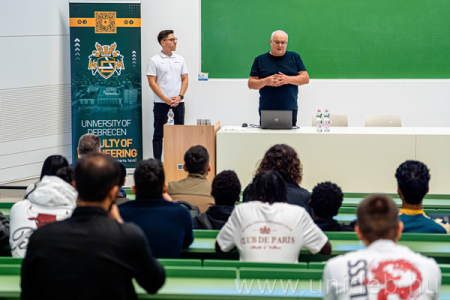
Hungary has become one of Europe’s most active hubs for electric vehicle and battery manufacturing, and demand for engineers who understand energy storage is rising just as fast. To close the gap between classroom theory and industrial reality, the Faculty of Engineering at the University of Debrecen has joined forces with EVE Power Hungary Kft. to launch a new English-language elective: The Basis of Batteries Powered by EVE. The engineering course introduces students to the operation of modern batteries, the fundamentals of their manufacturing technology, and the career paths opening up in Debrecen’s expanding battery sector.
For current students, the course offers practical, industry-taught knowledge without leaving campus. For prospective students considering where to study engineering in Hungary, it signals how the University of Debrecen aligns its curriculum with the hiring needs of major employers. If you are weighing your study options, explore the degree programs offered by the Faculty of Engineering at the University of Debrecen to see how coursework, research, and industry partnerships fit together.
Why Battery Technology Now Sits at the Center of Engineering Education
Batteries are no longer a niche subject reserved for electrochemists. They power the vehicles rolling off Hungarian assembly lines, the phones in our pockets, and the cameras, tools, and medical devices that fill daily life. Géza Husi, Dean of the Faculty of Engineering at the University of Debrecen, captured the shift well when he explained that while battery production is rooted deeply in the natural sciences, the moment a battery is integrated into a car, a phone, or a camera, it becomes an engineering challenge. Making that integration seamless requires engineers who understand both how batteries function and how they are manufactured.
That perspective explains why the faculty chose to act. Debrecen’s industrial sector has surged in recent years, driven largely by electric vehicle manufacturing and the investments that follow it. Companies building battery plants need process engineers, quality specialists, automation experts, and production managers—roles that demand more than a passing familiarity with cell technology. A dedicated engineering course on battery technology gives students a head start on exactly these competencies.
What the Basis of Batteries Powered by EVE Course Covers
The new course is a one-semester, English-language elective open to students from every faculty at the University of Debrecen, not only engineers. Sessions are delivered with the involvement of experts from EVE Power Hungary, which means students hear directly from professionals working inside one of the world’s largest battery manufacturers. Registration for the current semester closed on September 20, but the course structure and its reception offer valuable insight for anyone planning future enrollment.
From Battery Evolution to Manufacturing Practice
The syllabus traces the evolution of modern battery technologies, explains their practical operation, and examines future development potential. Rather than treating batteries as abstract chemistry, the course connects cell behavior to real products and production lines. Additional topics include the automation solutions and quality assurance methods used in the battery sector—precisely the areas where manufacturers report persistent skills shortages.
Direct Exposure to an Industry Employer
The course also introduces participants to EVE Power Hungary itself, including the internship and career opportunities available at the company. For students, this turns a standard elective into a potential recruitment pipeline. Attending lectures delivered by practicing industry experts, asking questions about plant operations, and learning what employers actually look for can shorten the path from student to hire considerably.
Strong Demand from Hungarian and International Students
Interest in the course exceeded all expectations. Organizers initially capped enrollment at 45 students, raised the limit to 150 due to demand, and still filled every seat quickly. Roughly half of the applicants are international students, a figure that underlines how strongly Hungary’s battery industry resonates with learners from abroad. If you are an international student researching study destinations in Europe, schedule a consultation with the University of Debrecen’s international admissions team to discuss program options, application timelines, and life in Debrecen.
EVE Power in Debrecen: What the Partnership Means for Students
The company behind the course carries significant weight. EVE Power ranks among the largest battery manufacturers in the world, specializing in the development and production of high-performance lithium-ion battery cells. The company is currently constructing its first European plant in Debrecen, with trial production scheduled to begin next year. Over the long term, the plant plans to supply new-generation cylindrical battery cells to BMW.
The scale of the company’s research activity matters for students as well. EVE Power employs more than 6,500 research and development professionals worldwide and allocates around six percent of its annual revenue to R&D. Dániel Kiss, the company’s head of external relations, noted that Debrecen’s industrial and technological ecosystem linked to electromobility and the battery industry is developing rapidly, placing local students in an excellent position to gain firsthand insight into that growth and to become active participants in it later on.
The new course did not appear in isolation. In July, the Faculty of Engineering and EVE Power Hungary signed an agreement designed to enhance practice-oriented engineering training. The collaboration reflects a broader strategy: connect students with the companies that will employ them, and let those companies help shape what students learn.
Practical Reasons to Choose the University of Debrecen for Engineering Studies
Prospective students evaluating universities in Hungary should look at several concrete factors, all of which this announcement illustrates.
Curriculum Built Around Regional Industry
The Faculty of Engineering designs courses that respond to the technologies being deployed in Debrecen and the surrounding region. Battery technology is the latest example, but the underlying principle is consistent: students study subjects with direct professional application, taught with input from the companies that use them daily.
An International Learning Environment
With roughly half of the new course’s enrollment coming from international students, the classroom itself becomes a multicultural workspace. Engineering careers increasingly span borders, and studying alongside peers from different countries builds the communication habits that global employers expect.
A Pipeline of Advanced Coursework
The Faculty has already announced a follow-up course for next semester covering the high-tech manufacturing and technological processes of the battery industry in greater detail. Completing the current introductory course is not a prerequisite for signing up for the advanced one, which lowers the barrier for students who discover the field mid-year. To stay informed about enrollment windows and new course announcements, follow the University of Debrecen’s news channel and subscribe to updates from the Faculty of Engineering.
How to Prepare for a Career in Battery Technology
Whether or not you can join the current course, several steps will strengthen your position in this field:
- Strengthen your foundations in physics, chemistry, and mathematics. Battery technology draws heavily on electrochemistry and materials science, and engineering roles translate these fundamentals into products and processes.
- Learn how manufacturing systems work. Automation, quality assurance, and process control recur throughout the battery sector. Familiarity with these areas signals job readiness to employers.
- Follow industry developments. Track announcements from manufacturers such as EVE Power and the automakers they supply. Knowing which cell formats and chemistries are gaining traction helps you aim your studies where demand is heading.
- Pursue internships early. EVE Power’s Hungarian operations are scaling up, and the company explicitly presents internships and career opportunities to students. Early workplace exposure often determines who secures full-time roles after graduation.
- Take elective courses outside your comfort zone. The Debrecen course is open to all faculties precisely because battery technology intersects with mechanical, electrical, chemical, and industrial engineering alike.
Start Building Your Battery Technology Career in Debrecen
The launch of The Basis of Batteries Powered by EVE marks a practical milestone for engineering education in Hungary. It links a major research university with a global manufacturer at the moment the country’s battery industry is scaling, and it hands students knowledge that employers can apply immediately. Demand for the course—150 seats filled, half by international students—confirms that learners recognize the opportunity.
If you are ready to position yourself for a career in this sector, act now: review the admission requirements for the University of Debrecen’s engineering programs and prepare your application for the coming intake. Current students with questions about future offerings can contact the Faculty of Engineering directly for guidance on enrollment dates and course details. Hungary’s battery industry is being built now, in plants like the one rising in Debrecen—and the engineers it needs are being trained just as concretely, starting with courses like this one.