
ECER 2027 at the University of Debrecen: What Educational Researchers Should Know About Europe’s Leading Educational Research Conference
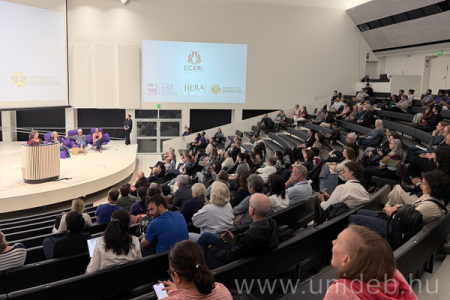
The European Conference on Educational Research (ECER), the largest annual gathering of education scholars in Europe, has confirmed its next destination: the University of Debrecen in Hungary. The announcement was made at the closing ceremony of this year’s conference in Tampere, Finland, where 3,619 participants from 82 countries gathered to share research, debate methodology, and build professional networks. In August and September 2027, that momentum will move to Debrecen, giving researchers across Europe—and particularly within Hungary—a rare opportunity to engage with the international educational research community without leaving the region.
If you are an educational researcher, a doctoral candidate, or an education professional considering international conference participation, ECER 2027 deserves a place on your calendar. The tentative conference program is already available, and you can review the ECER 2027 program details and submission timeline on the official EERA website to start planning your participation today.
A New Chapter for Educational Research in Hungary
The formal handover took place at the end of the Tampere edition, where Erika Juhász—President of the Hungarian Educational Research Association (HERA) and Head of the Department of Cultural Studies at the Faculty of Humanities of the University of Debrecen—extended an official invitation to all attendees for the 2027 gathering.
The scale of the conference is difficult to overstate. The Finnish edition drew participants from 82 countries, including a 51-member delegation from Hungary. For a national research community of Hungary’s size, hosting an event of this magnitude represents a significant milestone. It places Hungarian educational research on a prominent international stage and creates direct access to European networks that can shape research agendas, funding collaborations, and comparative studies for years to come.
Understanding ECER: More Than Three Decades of European Collaboration
To appreciate what ECER 2027 means for Debrecen and Hungary, it helps to understand the conference’s history and structure. ECER is organized annually by the European Educational Research Association (EERA), a network that has convened the conference in a different country every year since 1992. Each edition is coordinated by a local member organization, which ensures that the conference reflects both pan-European priorities and the strengths of the host nation’s research community.
EERA currently comprises 43 member organizations across 41 countries. Hungary is represented within this network by the Hungarian Educational Research Association, which counts almost 700 members and serves as the professional home for educational researchers nationwide. It was through HERA’s coordination, together with the University of Debrecen, that the bid to bring the conference to Hungary succeeded.
For researchers who have never attended, ECER functions as several events in one: a presentation venue for completed studies, a workshop space for methodological development, a networking hub for cross-border projects, and increasingly, a platform for early-career scholars to gain visibility among established academics.
ECER 2027: Dates, Structure, and Conference Theme
The 2027 edition at the University of Debrecen will follow the established two-part format, with a deliberate overlap designed to maximize networking opportunities.
Emerging Researchers’ Conference: August 30–31, 2027
The event opens with the Emerging Researchers’ Conference, a dedicated program for doctoral candidates and early-career researchers. This segment offers a supportive environment in which newer scholars can present work-in-progress, receive structured feedback from experienced mentors, and build confidence before entering the larger conference arena. For PhD students in education, it is one of the most accessible entry points into the European research community.
Main Conference: August 31 – September 3, 2027
The European Conference on Educational Research itself runs from August 31 to September 3, deliberately overlapping with the Emerging Researchers’ program on the final day. This scheduling choice is intentional: it allows emerging scholars to transition directly into the main conference, meet senior researchers in their fields, and begin conversations that often evolve into lasting collaborations.
Theme: Learning Communities and Shared Futures in Education
The conference will center on the theme “Learning Communities and Shared Futures in Education.” This framing invites contributions across a broad spectrum of topics: how schools, universities, and informal learning environments function as communities; how educational systems can respond to demographic, technological, and social change; and how research can help societies imagine and build equitable educational futures.
For prospective presenters, the theme is broad enough to accommodate research in curriculum studies, higher education policy, teacher education, digital learning, inclusive education, and comparative pedagogy—while still providing a unifying lens that encourages interdisciplinary dialogue.
Why Attend an International Educational Research Conference?
Researchers sometimes underestimate the professional value of conference participation, especially when publication pressures dominate academic life. Yet the benefits of attending a conference of ECER’s scale are concrete and measurable.
International collaboration opportunities. Comparative research in education depends on partners in other systems. A conference that gathers thousands of scholars from dozens of countries compresses years of relationship-building into a few days. Many long-running European research projects began as hallway conversations at ECER.
Visibility for emerging scholars. Presenting at a major international conference signals credibility to hiring committees, doctoral supervisors, and funding bodies alike. The Emerging Researchers’ Conference specifically lowers the barrier for first-time presenters.
Exposure to methodological diversity. European educational research spans a wide methodological range, from large-scale quantitative assessments to ethnographic and design-based approaches. Encountering this diversity firsthand sharpens researchers’ own methodological reasoning.
Access to current debates. Conference keynotes and network sessions surface questions before they appear in journals, giving attendees an early view of where the field is heading.
For researchers based in Hungary, there is an additional consideration: the organizers have issued a clear call for strong domestic participation. HERA and the University of Debrecen have invited Hungarian educational researchers and professionals to attend in substantial numbers, to showcase the achievements of Hungarian education, and to forge as many new international collaborations as possible. If you are not yet a member, consider joining the Hungarian Educational Research Association to connect with the national community preparing for ECER 2027 and to stay informed about national delegation activities.
The Venue: University of Debrecen and the City of Debrecen
Given the expected participation figures, the conference will be hosted across multiple buildings on the University of Debrecen’s University Square campus. Attendees will move between the historic Main Building, the Life Sciences Center, the Lifelong Learning Center, the Chemistry Building, and the Faculty of Music building—a layout that mirrors the multidisciplinary character of the program itself.
The setting extends beyond the campus. Accompanying programs are planned at locations across Debrecen, including the city’s renowned Big Forest (Nagyerdő), a protected parkland area adjacent to the university that serves as the city’s recreational heart. Additional events will take place at venues throughout the city, giving attendees a genuine experience of Debrecen as both an academic center and a cultural destination.
Debrecen offers practical advantages for conference travelers. As Hungary’s second-largest city, it combines a full calendar of Debrecen events and cultural attractions with manageable costs compared to Western European capitals. The city is easily reached from Budapest and maintains its own international airport, which simplifies logistics for participants arriving from across Europe and beyond. If you are weighing travel plans for 2027, start exploring accommodation and city options in Debrecen early—major conferences tend to fill nearby hotels well in advance of the opening date.
Key Dates and How to Participate in ECER 2027
For those planning to present, the timeline is already defined, and preparation should begin well before deadlines arrive.
- Now: The tentative conference program is available at the official ECER 2027 page maintained by EERA.
- December 1, 2026: The abstract submission window opens.
- January 31, 2027: The submission deadline closes.
- August 30–31, 2027: Emerging Researchers’ Conference.
- August 31 – September 3, 2027: Main conference at the University of Debrecen.
The five-to-eight-week submission window rewards early planning rather than last-minute writing. Mark your calendar for December 1, 2026, and begin outlining your abstract now so that you can submit in the first days of the window rather than the final ones.
Practical Advice for a Strong Abstract Submission
Acceptance rates at major international conferences reflect the competitiveness of the process. While every EERA network has its own review standards, several principles apply broadly.
Align your contribution with the conference theme. Reviewers look for relevance. If your research addresses learning communities, shared educational futures, or the intersection of the two, make that connection explicit rather than leaving it implicit.
State your question, method, and findings clearly. Abstracts fail most often because they describe a topic instead of presenting a study. Reviewers want to know what you asked, how you investigated it, and what you found—even if the work is still in progress.
Choose the right EERA network. ECER is organized around thematic networks covering areas such as assessment, vocational education, higher education, and inclusion. Submitting to the network whose reviewers best understand your work significantly improves your chances and improves the feedback you receive.
Write for an international audience. Avoid terminology specific to a single national system without brief context. European reviewers will span dozens of countries and research traditions.
If you have questions about preparing a submission or about the conference format, share your questions in the comments below—discussing plans with fellow attendees is often the fastest way to clarify practical details.
Planning Ahead: Making the Most of Conference Participation
Attending a conference of this scale requires strategy. With thousands of presentations across multiple venues and parallel sessions, arriving without a plan guarantees that you will miss more than you see.
Study the program before you travel and identify a small number of priority sessions in your field, balanced with sessions outside it. Build in time for the informal spaces—coffee breaks, network meetings, and evening events—where much of the real networking occurs. If you are an emerging researcher, take full advantage of the overlap day between the two conference segments; it exists specifically to connect you with the broader community.
Hungarian institutions should also think beyond individual attendance. Departments, doctoral schools, and research groups may find value in coordinated participation: presenting a coherent set of studies, organizing a joint symposium proposal, or hosting a gathering for international colleagues interested in collaboration with Hungarian education research.
Conclusion: A Milestone for Hungarian Educational Research
Bringing ECER 2027 to the University of Debrecen is more than a logistical achievement—it is a statement about the standing of Hungarian educational research within Europe. The conference will gather thousands of scholars under the theme “Learning Communities and Shared Futures in Education,” on a campus purpose-built for interdisciplinary exchange, in a city ready to host an event of international scale.
For researchers in Hungary and across Europe, the practical next steps are clear. Draft your abstract over the coming months, submit between December 1, 2026, and January 31, 2027, and secure your place at the conference. Whether you are presenting for the first time at the Emerging Researchers’ Conference or contributing to the main program as a seasoned scholar, ECER 2027 offers a concentrated opportunity to strengthen your research, expand your network, and contribute to the shared future of European education.
The announcement in Tampere closed one conference chapter and opened another. What happens next—in lecture halls across the University of Debrecen and in collaborations formed in its corridors—will depend on the researchers who choose to take part. If this article was useful, share it with colleagues and explore our related articles on academic conferences, research funding, and international collaboration in education.