
Review Classical Studies and Epigraphy at the University of Debrecen International Conference
Understanding the Scope of the University of Debrecen Epigraphy Conference
Examine the foundational role of epigraphy and papyrology in reconstructing ancient history. Epigraphy, the study of written inscriptions on durable materials like stone and metal, serves as a primary source for understanding ancient Greek and Roman societies. Papyrology complements this by analyzing texts written on papyrus, preserving everyday records, literary works, and administrative documents. On May 7 and 8, 2026, the Department of Classical Philology and Ancient History at the Institute of History, within the Faculty of Humanities (BTK) of the University of Debrecen, hosted a specialized international conference focusing on these critical disciplines.
Held in the Sándor Karácsony Hall of the Main Building, this event gathered prominent Hungarian and international scholars to present their latest findings. The conference provided a focused environment for evaluating new epigraphic discoveries, discussing methodological advancements, and debating historical interpretations derived from ancient texts. For students and professionals in Classical Studies, such gatherings are essential for staying current with ongoing research and building professional networks.
Key Research Topics in Ancient Greek and Roman Epigraphy
The academic presentations at the conference covered a wide chronological and geographical scope, reflecting the complex nature of ancient civilizations. Researchers moved beyond general overviews to provide detailed analyses of specific regions and administrative mechanisms.
The Carpathian Basin and the Danube Region During the Roman Era
A significant portion of the conference addressed the Danube region, a crucial frontier zone for the Roman Empire. Scholars presented research on Pannonia (modern-day Transdanubia in Hungary), Dacia (present-day Transylvania in Romania), Moesia (modern-day Bulgaria), and Dalmatia. These provinces were vital for Roman defense, trade, and resource extraction.
Discussions highlighted how military inscriptions from the Danubian region help track troop movements, fortification building, and the integration of local populations into the Roman military structure. Additionally, researchers examined evidence from the Carpathian Basin dating back to the Bronze Age, demonstrating how epigraphic and archaeological data can be combined to understand long-term settlement patterns and cultural shifts in Central Europe.
Roman Provincial Administration and Municipal Elections
Another major theme involved the internal workings of Roman local government. Presentations focused on elections in Roman municipal governments and the evolution of Roman law. Inscriptions are often the only surviving records of local magistrates, town councils, and civic benefactors.
By analyzing voting procedures, electoral propaganda, and legal decrees carved into stone, historians can reconstruct the political dynamics of provincial towns. The conference also featured discussions on the Roman provinces in ancient Anatolia, comparing the administrative practices of the eastern and western parts of the empire to provide a holistic view of Roman governance.
Explore our related articles for further reading on ancient Roman provincial history.
The Academic Network Behind the Classical Studies Symposium
Analyze the extensive collaborative network that made this conference possible. The study of ancient inscriptions requires international cooperation, as the historical borders of the Roman Empire cross modern national boundaries. The University of Debrecen successfully facilitated this collaboration by bringing together a diverse group of institutions.
Representatives from major Hungarian universities attended, including Eötvös Loránd University (ELTE), the National University of Public Service, Pázmány Péter Catholic University, Semmelweis University, and the University of Szeged. The international presence was equally robust, featuring scholars from the Universities of Vienna, Sofia, and Podgorica.
Researchers from neighboring countries played a particularly important role, reflecting the shared history of the Carpathian Basin. Romanian institutions were heavily represented, with participants from Babeș-Bolyai University in Cluj-Napoca, the University of Iași, the Vasile Pârvan Institute of Archaeology of the Romanian Academy, the University of Timișoara, and the Oradea Museum. Additional contributions came from the Institute for Balkan Studies of the Serbian Academy of Sciences and Arts in Belgrade, the Institute of Archaeology of the Slovak Academy of Sciences in Nitra, and the Csallóköz Museum in Dunajska Streda.
This cross-border academic exchange allows researchers to compare findings from different parts of the former Roman frontier, leading to more accurate and comprehensive historical conclusions.
Honoring Professor György Németh’s Legacy in Classical Studies
Review the historical context of this conference series, which has a established presence in the European academic landscape. The symposium was launched in 1999 by Professor György Németh, who served as the Head of the Department of Classical Philology and Ancient History at the Faculty of Humanities of the University of Debrecen. Professor Németh is currently a faculty member at the Department of Ancient History at ELTE in Budapest.
The 2026 conference served a dual purpose: presenting new research and paying tribute to Professor Németh’s sustained contributions to the field. During the opening address, Professor Péter Forisek, the chief organizer, highlighted the significance of the milestone, noting that over twenty-five years, the University of Debrecen has hosted ten Hungarian and five international epigraphic conferences. Furthermore, scholars from Debrecen have participated in conventions across Europe, including in Cluj-Napoca, Iași, Timișoara, Sibiu, and Vienna.
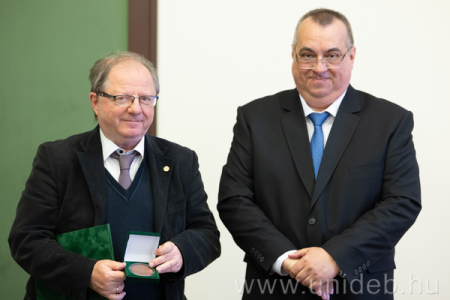
To recognize his foundational work, Professor Németh was awarded the bronze level of the Pro Universitate Debreceniensi 2000 Award. This medal is bestowed by the leadership of the University of Debrecen to recognize top-level academic and teaching activities, as well as efforts to establish international relations. The award specifically acknowledged Professor Németh’s role in building the international network that continues to sustain the Department of Classical Philology and Ancient History.
Twenty-Five Years of Scholarly Exchange
The endurance of this conference series demonstrates the sustained demand for specialized forums in Classical Studies. By maintaining a consistent schedule of events over a quarter-century, the University of Debrecen has solidified its reputation as a central hub for epigraphic research in Central Europe. The transition from a national roundtable to a recognized international symposium reflects a deliberate and successful strategy of academic outreach.
Have questions about the research presented at the conference? Write to us!
Accessing Future Research: Studia Epigraphica Pannonica Supplementum
Identify the mechanisms for accessing the research discussed at the conference. Academic conferences are only as impactful as the publications they produce. The University of Debrecen ensures that the findings from its Classical Studies symposium reach a global audience through a dedicated publication series.
The papers from the 2026 conference are scheduled to be published in the Studia Epigraphica Pannonica Supplementum series by Phoibos Verlag in Vienna. This publisher specializes in high-quality academic texts related to ancient history and archaeology, ensuring rigorous peer review and wide distribution.
This upcoming volume will follow previous successful publications. In 2022, the proceedings were published under the title Defending the Polis – Defending the Empire, exploring the military and civic responsibilities in ancient Greek and Roman societies. In 2024, the conference proceedings were released as The Danubian Region and the Balkans during the Roman Empire in Military Inscriptions, providing a focused analysis of military epigraphy along the frontier. The consistent publication record guarantees that the international conference serves as a catalyst for long-term academic resources rather than a standalone event.
Why International Conferences Matter for Humanities Research
Consider the broader implications of events like the University of Debrecen epigraphy conference for the humanities. In an increasingly digital academic environment, in-person conferences remain vital for several reasons. They allow scholars to examine physical artifacts, discuss nuanced translations of ancient languages, and debate interpretive frameworks in real time.
For graduate students and early-career researchers, these events provide an opportunity to present preliminary findings to established experts, receive constructive feedback, and establish mentorship relationships. The specific focus on epigraphy requires scholars to share high-resolution images of inscriptions, compare readings, and collaboratively decipher damaged texts—a process that is highly collaborative and benefits from face-to-face interaction.
The continued success of the University of Debrecen’s conference series confirms that there is a strong, active community dedicated to preserving and analyzing the written records of antiquity. By hosting these events and facilitating the resulting publications, the university contributes directly to the collective understanding of ancient European history.