Represent Hungarian Higher Education: Óbuda University at the Liaoning International Friendship Conference
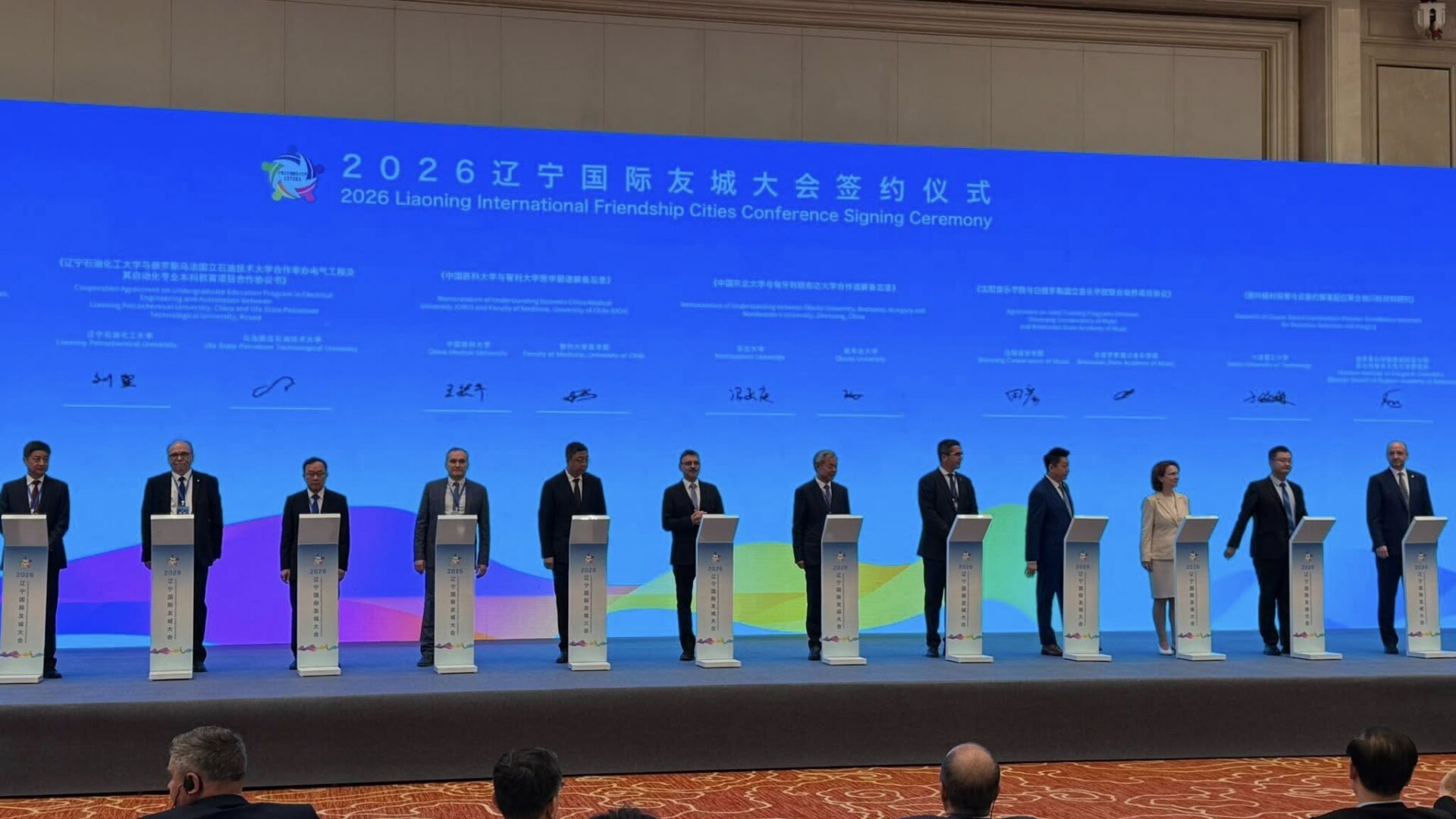
Building robust global academic networks requires consistent effort, strategic planning, and active participation in high-level diplomatic forums. Recently, a high-level delegation from Óbuda University, led by Prof. Dr. Levente Kovács, traveled to China to represent Hungarian universities at the prestigious Liaoning International Friendship Conference. This event marked a significant milestone for higher education in Hungary, demonstrating the growing international influence of Óbuda University and establishing concrete pathways for future academic and scientific collaboration. By engaging directly with global leaders in education and government, Óbuda University continues to position itself as a forward-thinking institution capable of navigating the complexities of modern international cooperation.
Assess the Scale and Impact of the Liaoning International Friendship Conference
International cooperation in higher education thrives on large-scale, multi-stakeholder events where institutions can align their goals with regional and national economic strategies. The Liaoning International Friendship Conference provided exactly such a platform. Bringing together nearly 500 participants from 15 different countries, the event facilitated high-level dialogue between rectors from 50 universities and over 60 city leaders. For Óbuda University, participating in an event of this magnitude offered an unprecedented opportunity to showcase its capabilities on a global stage.
Liaoning Province is an essential hub for academic and industrial advancement in Northeast China. The region hosts 140 universities and six dedicated academic research centers. These institutions play a prominent role in driving innovation across multiple high-tech sectors. By engaging with this dense network of academic and civic leaders, Hungarian representatives were able to identify synergies between Central European and East Asian educational models. The conference structure allowed for formal plenary presentations alongside targeted bilateral discussions, ensuring that the initial introductions could quickly evolve into actionable agendas.
Explore our related articles for further reading on how regional academic hubs drive global innovation.
Review the Plenary Presentation by Óbuda University Leadership
A defining moment of the delegation’s visit occurred during the conference’s plenary session. Prof. Dr. Levente Kovács, Rector of Óbuda University, was the only university leader invited to address the entire assembly regarding his institution’s educational, research, and innovation activities. This exclusive invitation served as a strong validation of Óbuda University’s reputation and its strategic direction in applied sciences and engineering.
During the address, the Rector outlined the university’s core strengths, emphasizing its practical approach to problem-solving and its integration of research directly into the curriculum. Presenting to an audience of international rectors and municipal leaders requires a clear articulation of not just what a university does, but how it contributes to the broader socioeconomic landscape. The presentation highlighted Óbuda University’s focus on producing highly skilled graduates who can immediately contribute to the technology and manufacturing sectors, a message that resonated well with the industrial focus of the Liaoning region.
Formalize Strategic Partnerships with Chinese Institutions
High-level conferences are most effective when they result in documented, binding agreements between institutions. During the trip to the Far East, Óbuda University successfully concluded a significant cooperation agreement with Northeastern University. Furthermore, a comprehensive Memorandum of Understanding (MoU) was signed with Liaoning University, one of China’s key public higher education institutions known for its strong regional roots and broad academic portfolio.
These agreements are not merely ceremonial. They provide a formal framework for developing strategic cooperation and implementing joint educational, research, and innovation initiatives. For students and faculty at Óbuda University, these MoUs translate into tangible opportunities. They establish the legal and administrative foundations necessary to secure funding for joint projects, recognize academic credits across borders, and facilitate the sharing of intellectual property developed in collaborative laboratories. Establishing this framework is a critical first step in moving from casual academic networking to sustained, institutionalized international cooperation.
Schedule a free consultation to learn more about how international partnerships can influence your academic career path.
Identify Key Areas for Joint Research and Innovation
The success of any international academic partnership depends on the alignment of research capabilities. During the negotiations in China, Prof. Dr. Kovács identified several specific disciplines where Óbuda University and its Chinese counterparts can achieve mutually beneficial outcomes. The primary focus areas include automation, materials science, energy, and artificial intelligence.
Automation and Artificial Intelligence
Both Hungary and China are heavily invested in the advancement of Industry 4.0. Óbuda University has established a strong foundation in robotics, control systems, and machine learning. By pairing this expertise with the massive datasets and industrial application environments available in Liaoning Province, researchers can develop more robust, scalable AI models. Joint research in this sector can lead to improvements in smart manufacturing, predictive maintenance, and autonomous systems.
Materials Science and Energy
As global industries transition toward sustainable practices, the demand for advanced materials and efficient energy systems has skyrocketed. Collaboration in materials science allows researchers to share specialized testing equipment and proprietary methodologies. Whether developing new composites for the automotive industry or creating more efficient photovoltaic cells, the combined research and innovation capacities of Óbuda University and Liaoning’s academic institutions can accelerate the timeline from laboratory discovery to commercial application.
Develop Talent Management and Mobility Programs
Beyond laboratory research, a core component of the newly established cooperation focuses on human capital. The discussions specifically addressed the expansion of mobility programs and the launch of specialized talent management initiatives. One of the most promising concepts introduced was a 1+1 year program designed specifically to support young researchers.
Under this proposed model, a doctoral candidate or postgraduate researcher would spend one year at Óbuda University in Hungary and one year at a partner institution in China. This structure provides early-career researchers with a dual perspective on international scientific methodologies. They gain access to diverse academic cultures, learn to navigate different research funding mechanisms, and build a professional network that spans two continents. For the hosting institutions, these programs facilitate the exchange of fresh ideas and help integrate international best practices into the local academic environment.
Additionally, expanding standard student and faculty mobility ensures that the collaboration is not limited to a select group of researchers. Undergraduate and graduate students benefit from exposure to different teaching styles and industrial environments, which significantly enhances their employability upon graduation. Faculty exchanges allow professors to co-teach courses, bringing a global context directly into the classroom.
Have questions? Write to us! We can provide additional details on upcoming mobility opportunities.
Establish Joint Laboratories for Applied Sciences
To sustain long-term scientific collaboration, both parties discussed the possibility of establishing joint research laboratories. A joint lab operates under the shared governance of two or more institutions, pooling resources, equipment, and personnel to tackle specific scientific challenges. In the context of Óbuda University’s partnership with Northeastern University and Liaoning University, these laboratories would likely focus on applied engineering and digital technologies.
The practical benefits of joint laboratories are substantial. They allow institutions to share the high costs associated with advanced scientific equipment. Furthermore, they create a dedicated physical or virtual space where researchers from different countries can work side-by-side on a daily basis, rather than interacting only at annual conferences. This continuous interaction fosters a deeper understanding of each partner’s working methods and accelerates the troubleshooting process in complex experimental setups. For the higher education sector as a whole, joint labs serve as tangible proof that international cooperation can produce concrete, measurable scientific outputs.
Build on a Foundation of Continuous Engagement
The success of the Liaoning International Friendship Conference delegation was not an isolated event but the result of a deliberate, sustained strategy. The invitation to represent Hungarian universities was preceded by a visit from the Rector of Óbuda University to the region just two months earlier. That initial visit laid the essential groundwork for the subsequent negotiations, allowing the Chinese partners to familiarize themselves with Óbuda University’s strategic vision before committing to large-scale agreements.
This sequential approach to international relations is highly effective in the higher education sector. Trust is built over time, and academic institutions must ensure that their potential partners share similar values regarding academic integrity, research ethics, and educational quality. By maintaining a consistent presence and following up on initial meetings with concrete proposals—such as the 1+1 researcher program and joint lab concepts—Óbuda University demonstrated a serious, professional commitment to the partnership.
Evaluate the Future of Higher Education in Hungary
The agreements forged at the Liaoning International Friendship Conference have significant implications for the future of higher education in Hungary. As the global economy becomes increasingly interconnected, universities can no longer operate exclusively within national borders. They must actively seek out international partners who can help them address complex, transnational challenges. The focus on automation, energy, and artificial intelligence aligns perfectly with European Union strategic priorities, meaning that the research conducted through these new Chinese partnerships will have direct relevance to regional economic goals in Central Europe.
For students considering their academic futures, the expansion of Óbuda University’s international partner network means greater access to cutting-edge research, diverse cultural experiences, and improved career prospects. The university’s proactive stance in securing agreements with top-tier institutions in Asia signals a commitment to providing a globally competitive education.
Submit your application today to become part of a globally connected academic community at Óbuda University.
Conclusion
Representing Hungarian universities at the Liaoning International Friendship Conference allowed Óbuda University to solidify its role as a key player in global academic diplomacy. The event facilitated the signing of strategic Memorandums of Understanding with Northeastern University and Liaoning University, paving the way for expanded student mobility, joint research laboratories, and specialized talent management programs. By focusing on high-impact disciplines such as artificial intelligence, materials science, and energy, the partnership is positioned to generate valuable scientific and educational outcomes. This proactive approach to international cooperation ensures that Óbuda University remains at the forefront of higher education innovation, providing its students and faculty with the resources and global networks necessary to succeed in a highly competitive international landscape.
Share your experiences in the comments below regarding the importance of international academic partnerships.