Óbuda University Advances Educational Collaboration and International Partnerships During South Korea Visit
Strong universities rarely grow in isolation. They build networks, exchange knowledge across borders, and position their students and researchers within global academic and industrial ecosystems. A recent delegation from Óbuda University in Budapest, Hungary, demonstrated exactly how this works in practice. Led by Rector Prof. Dr. Levente Kovács, the delegation completed a professional South Korea visit focused on expanding educational collaboration, research cooperation, and long-term international partnerships with leading Korean institutions.
The visit covered four universities across two of South Korea’s most important industrial regions, included a tour of one of the world’s largest shipyards, and concluded with active participation in one of the most prestigious automation and control engineering congresses in the world. For prospective students, researchers, and academic partners, the trip offers a clear picture of where Óbuda University is heading internationally. If you are considering studying in Hungary, you can explore the available programs at Óbuda University to see how these global connections translate into concrete study opportunities.
Why International Partnerships Shape Modern Higher Education
Universities that operate only within their national borders face a growing disadvantage. Engineering, robotics, informatics, and health sciences evolve at a pace that no single institution can follow alone. International partnerships allow universities to compare curricula, share laboratory infrastructure, co-publish research, and give students exposure to different academic cultures and labour markets.
Óbuda University has made international academic partnerships a central pillar of its development strategy. As Prof. Dr. Levente Kovács stated during the visit, international academic partnerships are among the most important drivers of university development. The goal is not symbolic cooperation but tangible outcomes: joint degree programmes, student and faculty mobility, short-term professional courses, and shared research and innovation projects that produce results within a reasonable timeframe.
For students in Hungary and those arriving from abroad, this approach means their degrees are increasingly connected to a global network of employers, research groups, and partner institutions. For lecturers and researchers, it opens access to new professional communities, joint publications, and collaborative funding opportunities.
Highlights of the South Korea Visit: Four Institutions, One Vision
The South Korea visit was carefully structured to engage institutions that complement Óbuda University’s profile: strong engineering traditions, close industry ties, and a commitment to practice-oriented education. Each meeting pursued a specific set of cooperation formats.
University of Ulsan: Cooperation in an Industrial Powerhouse
The first stop was the University of Ulsan, where the Óbuda University delegation presented the university’s achievements in education and research. Discussions covered student and faculty mobility, short-term professional programmes, dual-degree structures, and joint research and innovation initiatives.
The significance of this meeting lies in its context. Ulsan sits at the heart of one of the world’s strongest industrial and technological environments, home to major automotive, shipbuilding, and petrochemical operations. As the Rector noted, establishing a relationship with a university operating inside such an ecosystem carries strategic value. Students and researchers at Óbuda University stand to benefit from exposure to an environment where academic knowledge and industrial application are tightly interwoven.
Ulsan College: Practice-Oriented Education and Industry Links
The second meeting, at Ulsan College, placed practice-oriented higher education at the centre of the agenda. One key message emerged clearly from the discussions: close cooperation between higher education and industry plays a decisive role in delivering competitive, applicable knowledge and skills.
This principle aligns directly with Óbuda University’s own educational philosophy. The university works to ensure that its programmes and international partnerships respond to the real needs of the labour market. Partnerships of the kind discussed with Ulsan College strengthen this connection, giving students practical training formats that reflect current industrial standards rather than outdated textbook models.
Dong-Eui Institute of Technology: Mobility and Professional Programmes
In Busan, the delegation visited the Dong-Eui Institute of Technology, where discussions focused on student mobility, targeted professional programmes, and longer-term academic cooperation. Busan ranks among South Korea’s most significant industrial and technological regions, making it an attractive environment for joint educational and research projects.
For students, mobility agreements of this type translate into semesters abroad, international project work, and professional networks that extend well beyond graduation. For researchers, they create pathways toward joint applications, shared supervision, and comparative studies across European and Asian contexts.
Dongseo University: Innovation and Short-Term Programmes
The final institutional stop was Dongseo University, an institution with a strong international outlook and particular emphasis on innovation and practice-oriented education. The parties discussed expanding cooperation with attention to student mobility, short and intensive summer programmes, and joint professional and research initiatives.
A notable point from these discussions was the Rector’s insistence that cooperation should not focus exclusively on long-term formats. Short, intensive, thematic programmes can add significant value to students’ education without requiring a full semester or year abroad. Summer schools and focused professional courses offer flexible entry points into international education, an approach worth considering for any student who wants international experience on a tighter schedule.
Institutions and academics interested in building similar bridges with a Hungarian university can contact the International Relations Office of Óbuda University to discuss potential cooperation formats.
Lessons from HD Hyundai Heavy Industries: Where Education Meets Industry
Between meetings, the delegation visited the HD Hyundai Heavy Industries shipyard in Ulsan, a facility that illustrates why South Korea is regarded as one of the world’s leading industrial and technological centres. The visit reinforced a conclusion that increasingly defines competitive higher education worldwide: innovation, engineering expertise, and university research are most powerful when they operate as a connected system.
The takeaway for Hungary’s higher education sector, and for Óbuda University specifically, is strategic. Universities that anchor their programmes in real industrial ecosystems produce graduates who are employable from day one. Universities that maintain research partnerships with industry secure relevant research questions, funding channels, and technology transfer opportunities. The South Korea visit confirmed that the competitive university of the future will rely on deliberate, structured partnerships with industry rather than occasional, informal contacts.
Representing Hungary at the 23rd IFAC World Congress in Busan
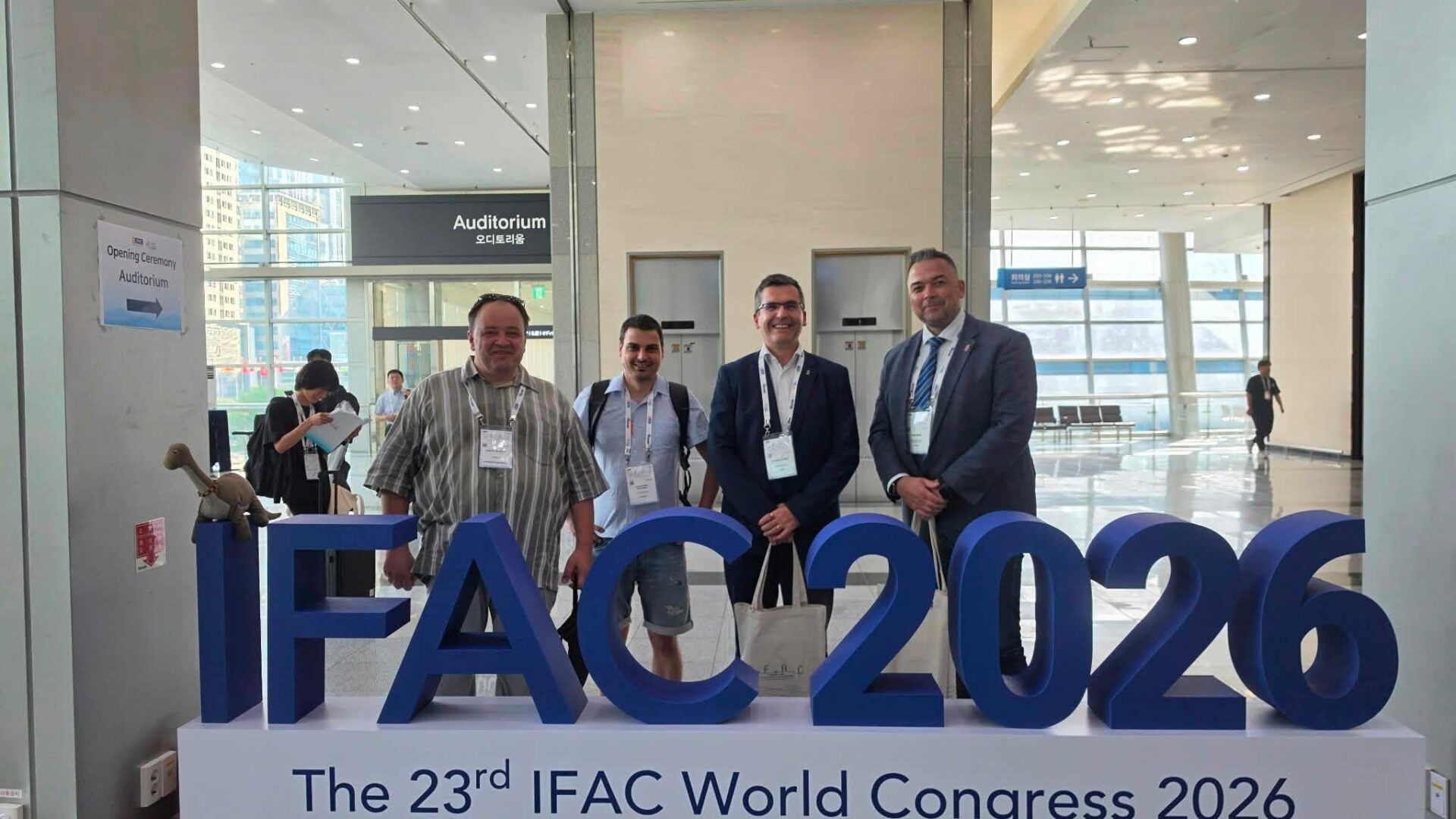
The academic dimension of the South Korea visit culminated at the 23rd World Congress of the International Federation of Automatic Control (IFAC), held in Busan. This congress, organised every three years, stands among the leading international events in automation, control engineering, robotics, and intelligent systems.
The scale of the event underlines its importance: participants from 73 countries, nearly 500 technical sessions, and more than 3,000 scientific papers, with 4,435 registered online participants in addition to onsite attendance. A research group from Óbuda University, PhysCon, presented several papers, representing the university’s scientific work directly on this global stage.
Prof. Dr. Levente Kovács, who has been active in the IFAC professional community since 2005, emphasised the personal and institutional significance of participating in person. Congresses of this calibre serve multiple functions simultaneously: they expose researchers to the latest findings before publication cycles complete, they generate collaboration leads that later become formal partnerships, and they raise the international visibility of the institutions involved.
For a Hungarian university, consistent presence at events such as the IFAC World Congress signals research quality to potential partners abroad. It also connects domestic research agendas with global priorities in automation and intelligent systems, fields where demand for qualified specialists continues to grow across Europe and Asia alike.
What the South Korea Visit Means for Students and Researchers
Behind the diplomatic language of official visits lie practical outcomes. Based on the discussions held, students and researchers connected to Óbuda University can expect several concrete directions:
- Student mobility: semester-long exchanges and mobility frameworks with Korean institutions, giving students experience in one of Asia’s most advanced economies.
- Short-term programmes: intensive summer schools and themed professional courses that deliver international exposure without long absences from home institutions.
- Dual-degree possibilities: negotiations initiated with the University of Ulsan point toward structures in which study periods abroad count toward degrees recognised in both Hungary and South Korea.
- Joint research and innovation: shared projects in engineering, automation, and applied sciences, supported by networks established at events such as the IFAC World Congress.
- Faculty exchange: opportunities for lecturers to teach, observe, and collaborate abroad, which in turn refreshes the curriculum students receive in Budapest.
Students currently enrolled at Óbuda University who want to build international experience into their studies can learn about existing exchange programmes, including Erasmus and other mobility options, and follow the university’s announcements as new Asian partnerships mature.
Studying at Óbuda University in Hungary: The Broader Context
The South Korea visit also says something important to international students considering where to study. A university that invests in international partnerships builds them into the student experience: guest lecturers, joint projects, exchange semesters, and internationally supervised theses become part of normal academic life rather than rare exceptions.
Located in Budapest, Óbuda University offers engineering, informatics, and applied sciences programmes within the heart of Europe. International students can access support through dedicated offices covering admission, mobility, and academic services, and scholarship routes such as the Stipendium Hungaricum programme make studying in Hungary accessible to applicants from dozens of countries. If these directions match your plans, you can review the application process and required documents for Óbuda University and prepare a competitive application ahead of the deadlines.
Next Steps for Prospective Students and Academic Partners
The discussions held in Ulsan and Busan are designed to develop into joint programmes and long-term strategic partnerships. For readers evaluating their options, three practical steps follow naturally from this news.
First, map your goals. Whether you are a prospective student seeking an internationally connected engineering degree or a researcher looking for collaboration partners in automation and intelligent systems, clarify which cooperation formats serve you best: full degree programmes, exchanges, summer schools, or joint projects.
Second, engage directly. Universities respond to concrete enquiries. Prospective partners can reach the relevant international offices, and applicants can attend open days or contact admissions staff with specific questions about curricula and mobility options. If you have questions about programmes, scholarships, or life in Budapest, write to the International Education Office and receive guidance tailored to your situation.
Third, follow developments. International partnerships of this kind take shape over months and years, and the students who benefit most are those who track new opportunities as they open. Subscribe to the university newsletter to receive updates on new programmes, partnership announcements, and application windows as they are published.
Conclusion: A Deliberate Strategy with Measurable Goals
The South Korea visit by the Óbuda University delegation was not a symbolic trip. It combined targeted institutional meetings, direct exposure to a world-class industrial environment, and high-level scientific representation at the IFAC World Congress into a single, coherent strategy. The stated objective, turning negotiations into tangible cooperation opportunities for students, lecturers, and researchers as quickly as possible, reflects a results-oriented approach to internationalisation.
For Hungary’s higher education landscape, the visit demonstrates how a focused Budapest university builds international partnerships that serve labour-market relevance and research quality at the same time. For students and academics watching from the outside, it provides a clear signal: the network surrounding Óbuda University is expanding, and those who engage with it early will be best positioned to benefit from the programmes and collaborations that follow. Have thoughts on international study opportunities or experience with Hungarian universities? Share your perspective in the comments below, and explore the related resources linked throughout this article to take your next step.