
Explore IT Innovations in Artificial Intelligence and Data Science at the University of Debrecen, Hungary
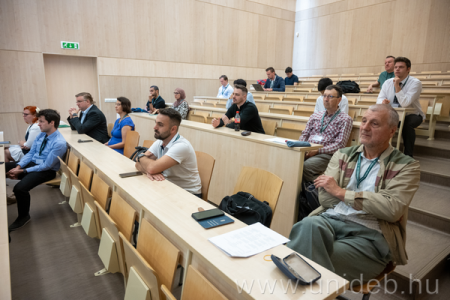
When leading researchers gather to present their latest findings, the topics they choose often preview what students will study in the years ahead. The recent two-day CITDS (Conference on Information Technology and Data Science), hosted by the Faculty of Informatics at the University of Debrecen in Hungary, offered exactly that kind of preview. Presentations and panel discussions covered the challenges of autonomous driving, new paradigms in artificial intelligence, digital twins, cloud computing, and integrated modeling for climate and air quality protection. For prospective students weighing where to study computer science or data science in Europe, the event provides a clear window into the university’s research culture, academic network, and teaching priorities.
If you are considering a degree in informatics, artificial intelligence, or data science, explore the programs offered by the Faculty of Informatics at the University of Debrecen and see how its conference-driven research environment connects directly to the classroom.
Why the CITDS Conference Signals Research Strength at the University of Debrecen
The CITDS conference has grown into an increasingly prestigious meeting point for researchers working in informatics and data science. In his welcoming address, András Hajdu, Dean of the Faculty of Informatics, noted that rising interest in the event has brought more researchers to Debrecen each year to share scientific findings and results. That momentum matters for two reasons.
First, the scope of the conference is deliberately broad. Developments in artificial intelligence, data science, computer science, communication technologies, and cybersecurity are increasingly intertwined, and progress in one area frequently creates opportunities — or new challenges — in another. A program that treats these fields as connected, rather than isolated, mirrors how real technology projects operate in industry.
Second, the conference proceedings are advancing toward inclusion in the IEEE Xplore digital library, one of the most recognized research databases in engineering and computing. For students, this is a meaningful quality signal. It indicates that the work presented at the university meets international editorial and academic standards, and that students studying there are surrounded by research evaluated against a global benchmark.
Dean Hajdu also emphasized a point that prospective students should not overlook: the University of Debrecen considers it essential to host international forums where renowned researchers, young scientists, and students meet face to face. Conferences like CITDS give students direct access to experts they would otherwise only encounter in academic journals.
To learn more about the research groups and ongoing projects behind events like this, write to the Faculty of Informatics directly — faculty representatives regularly respond to questions from prospective international students.
Artificial Intelligence Research That Connects Disciplines
Artificial intelligence featured prominently on the conference agenda, but not as a standalone topic. One of the stated strengths of CITDS is that it connects AI with cybersecurity, communication technologies, software development, mathematical modeling, and real-world engineering applications. This approach reflects how AI is actually deployed: as a layer within larger systems rather than an isolated product.
From Large Language Models to Medical Applications
Academic talks on artificial intelligence ranged widely. Sessions addressed large language models, multimodal AI systems that process text, images, and other data types together, and practical applications in medicine. Other presentations examined computer vision, forecasting methods, and AI deployed in industrial systems.
For students, this breadth carries a practical lesson. Specializing in AI no longer means studying algorithms in isolation. It means understanding the domain where the technology is applied — healthcare, manufacturing, logistics — and the data infrastructure that supports it. Degree programs that expose students to multiple application areas, as the University of Debrecen’s Faculty of Informatics does through its research environment, prepare graduates for that reality.
Explainable AI and Trustworthy Systems
Another notable theme was the explainability of AI. As machine learning systems influence decisions in medicine, finance, and public services, regulators and end users increasingly demand systems whose reasoning can be inspected and audited. Research into explainable AI addresses this need directly, and universities that include it in their research agenda are preparing students for one of the most significant professional requirements of the coming decade.
Digital Twins and Data Science for Climate Protection
Among the most forward-looking sessions were those on digital twins and integrated modeling for climate and air quality protection. A digital twin is a virtual replica of a physical system — a city, a factory, an ecosystem — continuously updated with real-world data so researchers can simulate scenarios and test decisions before applying them in practice.
Applying these methods to environmental questions demonstrates the social relevance of data science. Students who want their technical work to contribute to environmental protection, public health, and policy decisions will find in this research area a concrete example of how computational skills translate into measurable societal impact.
Cloud, Fog, and Edge Computing: Lessons from an International Expert
The conference also welcomed internationally recognized guest speakers. Among them was Helen (Eleni) D. Karatza, Professor Emeritus at the Aristotle University of Thessaloniki in Greece, who presented advanced research findings in cloud, fog, and edge computing.
Her talk focused on resource management and scheduling — the mechanisms that determine whether cloud-based systems can handle high-performance computing tasks and run complex, time-critical, real-time applications efficiently. As she explained, performance in these systems depends heavily on how well workloads are scheduled across distributed infrastructure.
For students, the takeaway is straightforward: the infrastructure layer of computing remains a rich field of study. While public attention concentrates on AI models, the systems that train and serve those models depend on sophisticated scheduling and resource allocation. Skills in distributed systems, cloud architecture, and performance engineering remain consistently in demand across the job market.
Autonomous Vehicles, IoT, and the Broad Agenda of Modern IT Innovations
Across the two days, participants attended presentations on a remarkably wide set of topics: the challenges of autonomous driving, embedded systems, security and data protection, the Internet of Things (IoT) and network technologies, software technologies, computational models, and stochastic and temporal data analysis.
This range illustrates an important point for anyone planning a career in technology. The most interesting problems rarely sit within a single discipline. An autonomous vehicle combines computer vision, embedded systems, real-time networking, and safety engineering. A smart city sensor network combines IoT devices, data protection, and large-scale analytics. Education that encourages work across these boundaries produces graduates who can lead such projects rather than merely contribute to isolated components of them.
Studying in a Connected Academic Community in Hungary
This year, CITDS was closely connected to the AIDA AICET summer symposium and school, and the conference program was open to participants in that hybrid professional event. That structure matters for students: summer schools and symposia attached to conferences offer early-career researchers and students the chance to present work, attend tutorials, and build professional networks long before graduation.
Hungary itself adds practical advantages for international students. The country sits at the crossroads of Central Europe, offers a lower cost of living than many Western European destinations, and hosts a growing international academic community. The University of Debrecen, one of Hungary’s largest and most established institutions of higher education, has invested substantially in internationalization, with English-language degree programs and active partnerships across Europe and beyond.
Have questions about admission requirements, tuition, or life in Debrecen? Schedule a consultation with the university’s international team to receive guidance tailored to your academic background.
Turning Conference Themes into Career Preparation
The topics covered at CITDS double as a checklist for students planning their studies. Based on the direction of current research, consider the following steps:
- Build strong foundations. Presentations on stochastic and temporal data analysis and computational models underline that mathematics and statistics remain the backbone of data science. Prioritize these subjects early in your degree.
- Combine AI with a domain. Medical applications, industrial systems, and climate modeling all show that AI creates the most value when paired with domain knowledge. Choose electives that deepen your understanding of a specific sector.
- Learn infrastructure, not just models. Sessions on cloud, fog, and edge computing confirm that deployment skills — scheduling, resource management, distributed systems — separate capable graduates from exceptional ones.
- Treat security as a core skill. With dedicated sessions on security and data protection, the message is clear: any system handling sensitive data requires professionals who understand privacy and cybersecurity.
- Seek research exposure early. Conferences, summer schools, and symposia give students publication experience and professional contacts. Select a university that makes these opportunities accessible to undergraduate and master’s students alike.
Take the Next Step at the University of Debrecen
Events such as the CITDS conference demonstrate what a strong Faculty of Informatics offers: active research in artificial intelligence, data science, and IT innovations; international guest speakers; proceedings aimed at globally recognized publication databases; and a community that connects students with working researchers. For prospective students, that environment translates into current teaching content, supervision by active researchers, and graduation projects with genuine scientific or industrial relevance.
Submit your application today to join a faculty where research and teaching operate side by side, or browse the university’s English-language programs in computer science engineering, artificial intelligence, and data science to find the degree that matches your goals.
Are you a current student or an alumnus of the Faculty of Informatics? Share your experiences in the comments below, or explore our related articles on studying technology in Central Europe for further reading.