
Examine the History of Medical Technology at Óbuda University’s Kandó Faculty in Hungary
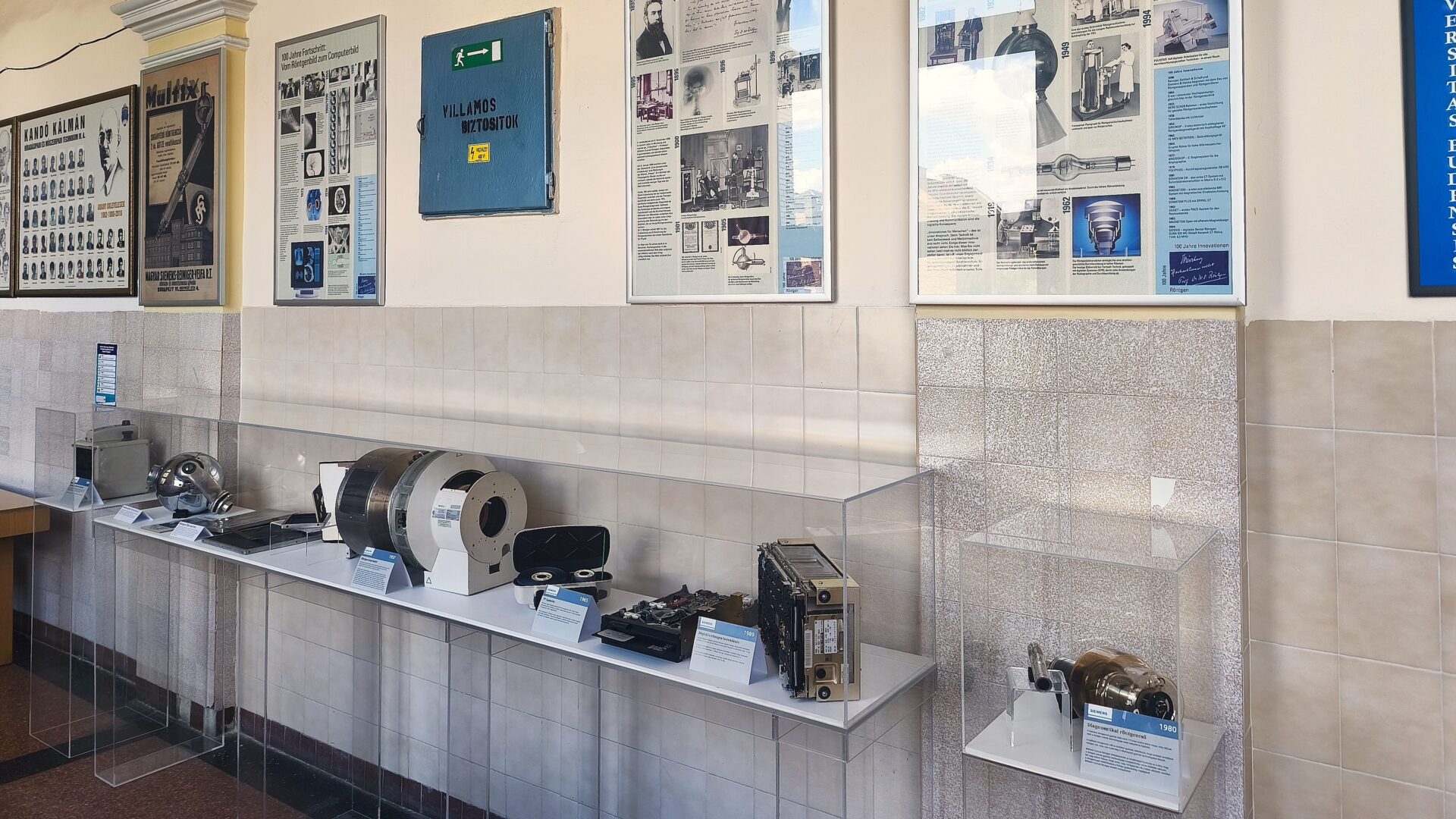
Understanding the trajectory of modern healthcare requires looking back at the engineering milestones that made current diagnostics and treatments possible. At the Kandó Kálmán Faculty of Electrical Engineering at Óbuda University in Hungary, a new exhibition does exactly that by putting the evolution of medical technology on full display. Donated by Siemens Healthineers, this collection of historical artefacts and iconic medical devices serves as a physical timeline of innovation. For prospective students, current engineers, and academics, this exhibition highlights how engineering education directly shapes the future of patient care.
Bridging Engineering and Healthcare Through Historical Context
Modern intelligent healthcare technologies do not exist in a vacuum; they are the result of decades of iterative engineering, problem-solving, and technological breakthroughs. The new exhibition at the Kandó Faculty provides a tangible connection between the technological innovations of the past and the sophisticated systems used in hospitals today. By examining early engineering solutions used in medical diagnostics and therapy, visitors gain a profound appreciation for the foundational principles of the field.
For students pursuing degrees in electrical engineering or related disciplines, seeing the physical manifestations of theoretical concepts bridges the gap between textbook equations and real-world application. Understanding how early engineers solved complex problems—such as capturing internal biological images or measuring electrical impulses in the human body—provides invaluable context. This historical perspective reinforces the idea that today’s cutting-edge medical technology is built upon a long legacy of mechanical and electrical ingenuity.
Explore our related articles for further reading on the intersection of engineering and healthcare.
The Role of the Kandó Faculty in Modern Engineering Education
Named after Kálmán Kandó, a pioneering figure in the development of electric railways, the Kandó Kálmán Faculty of Electrical Engineering has a long-standing reputation for producing highly skilled engineers. Located at the Tavaszmező Street Campus, the faculty is one of the core pillars of Óbuda University. While traditionally known for power engineering and mechatronics, the faculty has increasingly expanded its focus into biomedical engineering and digital health technologies.
Integrating a permanent exhibition on medical technology directly into the faculty’s infrastructure underscores a strategic academic shift. It signals to prospective students that the Kandó Faculty is not merely teaching abstract electrical theory, but is actively engaging with applied sciences that have a direct, positive impact on human life. The placement of the exhibition along one of the busiest corridors of the campus ensures that this focus is visible and impactful, integrating historical education into the daily routines of students and staff.
Schedule a free consultation to learn more about Kandó Faculty engineering programs.
How Industry Partnerships Shape Academic Environments
The Siemens Healthineers Contribution
The existence of this exhibition is a direct result of a strategic donation from Siemens Healthineers, a global leader in medical technology. This partnership between a major industry player and Óbuda University illustrates the critical role that corporate-academic collaborations play in engineering education. When industry leaders invest in university campuses, they provide students with access to resources, historical context, and real-world perspectives that standard curricula cannot always offer.
Siemens Healthineers has a significant operational footprint in Hungary, making this donation to the Kandó Faculty a localized investment in the future workforce. By providing actual historical devices rather than just photographs or textbooks, the company has given the university a three-dimensional teaching tool. Students can observe the craftsmanship, the material choices, and the engineering constraints of earlier eras, offering lessons in product development and lifecycle management that are highly relevant to modern engineering roles.
Have questions about industry partnerships at Óbuda University? Write to us!
Tracing the Evolution of Diagnostic and Therapeutic Equipment
The artefacts on display at the Tavaszmező Street Campus cover major milestones in the field, allowing visitors to trace the evolution of medical devices from their rudimentary beginnings to the precursors of modern intelligent systems. Early medical technology was heavily reliant on fundamental electrical and mechanical engineering principles. For example, the development of early X-ray equipment required engineers to solve significant problems related to high-voltage power supplies, heat dissipation, and vacuum tube technology.
As visitors move through the exhibition, they can observe the transition from purely mechanical and analog devices to early digital systems. This transition highlights the rapid acceleration of computing power and its integration into healthcare. Early electrocardiogram (ECG) machines, ultrasound prototypes, and imaging equipment demonstrate how engineers continuously adapted to new technological possibilities. Analyzing these devices helps current engineering students understand the importance of adaptability and cross-disciplinary thinking—skills that are absolutely essential in today’s fast-paced medical technology sector.
Why Hungary Remains a Strategic Hub for Medical Technology
Hosting this exhibition at Óbuda University is particularly fitting given Hungary’s strategic position in the global medical technology supply chain. Over the past few decades, Hungary has become a premier destination for medical device manufacturing, research and development, and innovation. Numerous multinational corporations, including Siemens Healthineers, have established major production and R&D facilities within the country.
This industrial ecosystem creates a robust environment for engineering education. Universities like Óbuda do not operate in isolation; they are deeply connected to an industry that actively demands highly trained electrical and biomedical engineers. The exhibition serves as a reminder of this local-industrial heritage. Students studying at the Kandó Faculty are positioned geographically and academically at the heart of a thriving sector. By understanding the history of the devices manufactured and developed within their own country, students can better visualize their own career trajectories within this lucrative and impactful industry.
Enhancing Student Learning Beyond the Standard Curriculum
While formal lectures and laboratory sessions form the backbone of engineering education, passive and informal learning environments play a crucial role in shaping a student’s professional identity. The medical technology exhibition at the Kandó Faculty functions as an open-air museum of engineering history. Because it is situated in a high-traffic corridor, students encounter these historical devices daily, prompting organic curiosity and spontaneous learning.
This type of environmental design in academic spaces has proven benefits. It encourages peer-to-peer discussion, provides visual breaks from intensive study sessions, and constantly reinforces the relevance of the students’ chosen field. Furthermore, the exhibition aims explicitly to inspire the engineers of the future. Seeing the physical evidence of past engineering triumphs can motivate students during challenging coursework, reminding them that the complex systems they are learning to design today will one day be viewed as historic milestones.
Submit your application today to join the next generation of engineers at Óbuda University.
Plan Your Visit to the Tavaszmező Street Campus Exhibition
The medical technology exhibition is freely accessible to the entire Óbuda University community, including students and staff from other faculties, as well as external visitors who pass through the Tavaszmező Street Campus. This open-access approach ensures that the educational value of the Siemens Healthineers donation extends beyond the electrical engineering student body, reaching aspiring professionals in computer science, mechatronics, and business management who may also play roles in the healthcare technology sector.
For international students considering studying in Hungary, visiting the campus and experiencing this blend of historical reverence and forward-thinking education can be a deciding factor. The exhibition stands as a testament to the quality of engineering education at Óbuda University, demonstrating a commitment to producing well-rounded professionals who understand where their industry has been and where it is going.
Share your experiences or thoughts on the evolution of medical technology in the comments below.