Examine Óbuda University’s Role in Sustainable Built Heritage Through New Egyptian Delegation Partnership
Bridging Continents: The Context of the Egyptian Delegation Visit to Hungary
In recent news from Hungary, the academic and professional focus on historical preservation has taken a significant step forward. An official Egyptian delegation from Benha University visited Óbuda University to strengthen ongoing professional cooperation. This high-level meeting centered squarely on the critical necessity of sustainable built heritage, a field that is rapidly gaining urgency as global climates shift and urbanization pressures increase. The discussions serve as a prime example of how international academic partnerships can directly address complex, real-world challenges in architecture and civil engineering.
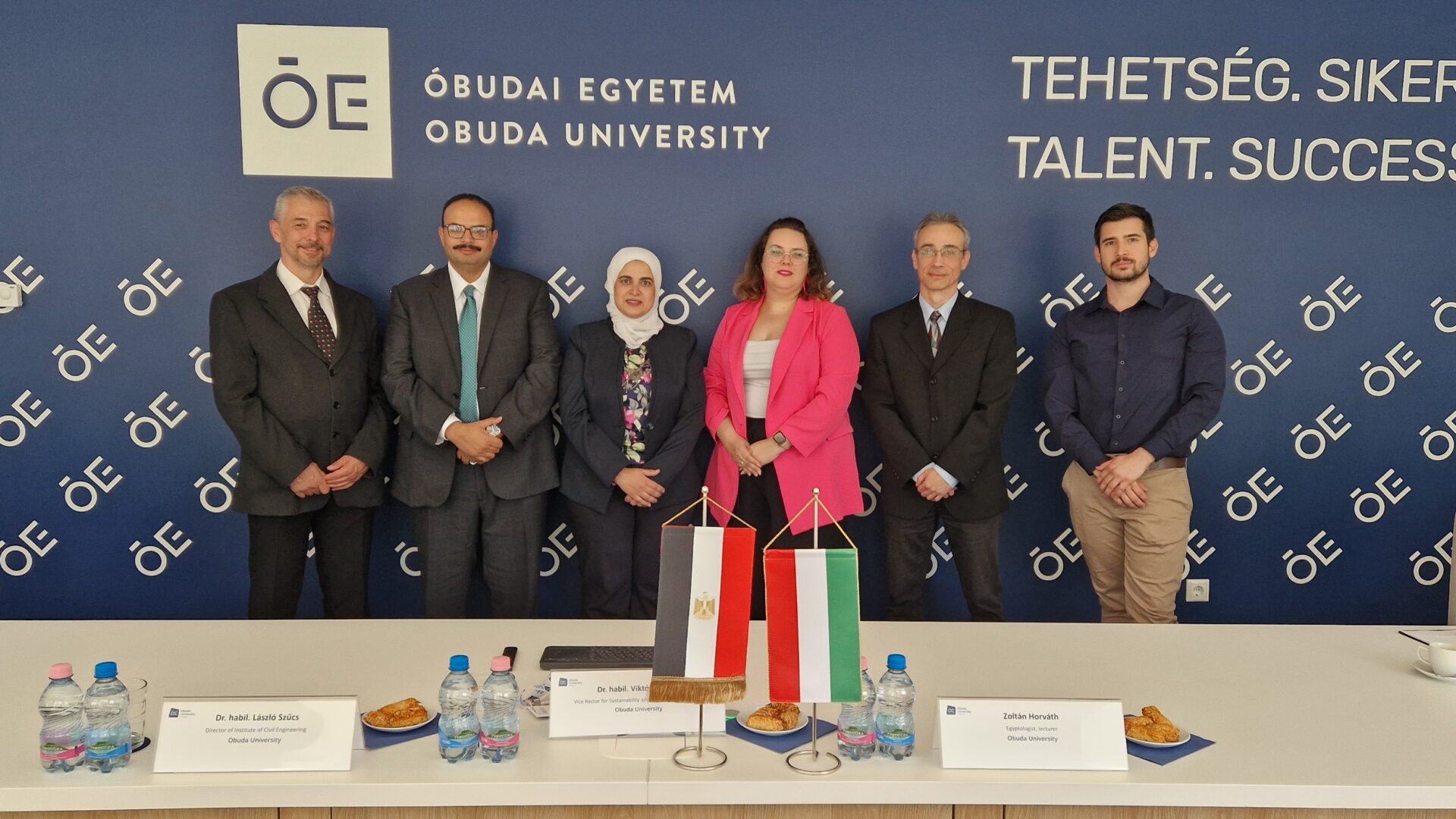
The visit was hosted by the Miklós Ybl Faculty of Architecture and Civil Engineering at Óbuda University. Representing the university’s leadership, Dr. habil. Viktória Sugár, Vice-Rector for Sustainability and Strategic Developments, formally received the two distinguished deans from Benha University: Prof. Zeinab Feisal Abd Elkader and Prof. Mohamed Said Mohamed Abd-Elghaffart. This reception underscored the strategic importance Óbuda University places on sustainability and international relations, aligning institutional goals with global conservation efforts. Explore our related articles for further reading on how international partnerships shape the future of architectural education.
Defining Sustainable Built Heritage in Modern Architecture
To fully understand the significance of this collaboration, it is necessary to define what sustainable built heritage actually entails. In the past, heritage conservation often focused narrowly on restoring a structure to its original, static state. Today, the discipline has evolved. Sustainable built heritage involves managing and adapting historical structures so they remain functional, safe, and culturally relevant for future generations, all while minimizing environmental impact.
This approach requires a delicate balance. Architects and engineers must preserve the authentic historical fabric of a site while integrating modern energy-efficiency standards, structural reinforcements, and climate-resilient technologies. For countries like Egypt, which possesses an unparalleled density of ancient archaeological sites, and Hungary, which boasts a rich architectural history spanning centuries, finding this balance is not just an academic exercise—it is a cultural and economic imperative. This latest news highlights how institutions like Óbuda University are leading the charge in redefining preservation methodologies for the modern era.
Key Areas of Collaboration Between Óbuda University and Benha University
The negotiations between the Hungarian and Egyptian institutions, which initially began last year in Egypt, continued with focused intensity at the Miklós Ybl Faculty. Led by Dr. Zsuzsanna Fáczányi, Vice-Dean for Research, and supported by the faculty’s academic staff, the working groups identified several promising avenues for mutual cooperation. These areas are specifically designed to facilitate faculty and student mobility while launching joint research programs that yield tangible results.
Archaeological Fieldwork and Architectural Documentation
A primary focus of the joint efforts is the physical preservation of highly endangered Egyptian historical sites. This begins with comprehensive archaeological fieldwork and meticulous architectural documentation. Before any conservation work can begin, structures must be precisely measured, mapped, and recorded using advanced surveying techniques. Students and faculty from both universities will collaborate on creating detailed digital and physical records of at-risk sites, ensuring that their structural realities and historical contexts are accurately preserved for future analysis. Have questions? Write to us! if you want to know more about the specific documentation techniques being utilized.
Developing Modern Site Management Plans
Documenting a site is only the first step; managing it sustainably requires comprehensive planning. The delegation discussed the development and implementation of modern site management plans. These plans address how historical sites are maintained, how visitor traffic is managed to prevent physical degradation, and how local communities are integrated into the preservation process. By combining Benha University’s localized expertise regarding Egyptian sites with Óbuda University’s engineering and management frameworks, the partnership aims to create scalable models for heritage site management that can be applied globally.
The Proposed Joint Sustainable Built Heritage Workshop
Perhaps the most concrete outcome of the Egyptian delegation’s visit was the formal proposal to establish a joint ‘Sustainable Built Heritage Workshop.’ This proposed platform is designed to integrate heritage protection, sustainability principles, and the opportunities provided by smart systems directly into higher education and research. The workshop would focus on five key areas that represent the cutting edge of architectural conservation:
- Adaptive Reuse of Historical Buildings: Instead of leaving historical structures as isolated museums, adaptive reuse finds new, modern functions for them. This could involve transforming ancient warehouses into community centers or repurposing historical administrative buildings into modern educational facilities, ensuring the buildings remain active parts of the urban fabric.
- Sustainable Building Renovation: Upgrading the energy performance of older buildings is notoriously difficult. The workshop will research methods for insulating historic structures, updating HVAC systems, and improving energy efficiency without compromising their historical integrity or violating conservation guidelines.
- Climate Resilience: Historical sites are increasingly threatened by extreme weather events, rising temperatures, and changing precipitation patterns. The collaboration will study how to fortify ancient structures against these modern environmental threats, ensuring their survival in a changing climate.
- Intelligent Conservation and Monitoring: This involves embedding smart technologies, such as IoT (Internet of Things) sensors, into historical structures. These sensors can continuously monitor structural health, humidity, temperature, and vibration levels, providing real-time data to conservationists and allowing for preventative maintenance before irreversible damage occurs.
- Digital Access and Experience: Making heritage accessible to the public without increasing physical wear on the sites is a major modern challenge. The workshop will explore the use of 3D scanning, virtual reality (VR), and augmented reality (AR) to create immersive digital experiences, allowing global audiences to explore endangered sites safely.
This multi-faceted approach ensures that the research conducted through this workshop will have both deep academic value and immediate practical applications. Schedule a free consultation to learn more about our research programs and how you can engage with these innovative sustainability initiatives.
Enhancing Academic Mobility and Joint Research Programs
Beyond the specific technical workshops, the visit heavily emphasized the human element of academic cooperation. Facilitating faculty and student mobility is a core objective of the partnership. For students at the Miklós Ybl Faculty of Architecture and Civil Engineering, the opportunity to participate in fieldwork in Egypt offers unparalleled hands-on experience. Conversely, Egyptian students and faculty gain access to Óbuda University’s advanced laboratories and European perspectives on architectural conservation.
During the visit, the Egyptian guests toured the specialized laboratories of the Institute of Civil Engineering and the design studios of the Institute of Architecture. These facilities are equipped with the advanced materials testing equipment, structural modeling software, and digital fabrication tools necessary to prototype and test conservation strategies before they are applied in the field. Following the tour, the delegation delivered scientific presentations to an audience of OU academic staff and students, fostering a direct exchange of knowledge regarding their primary research areas in Egypt. Submit your application today to join our architecture and civil engineering programs and participate in future international exchange opportunities.
The Strategic Importance of International Partnerships for Hungarian Universities
The meeting between Óbuda University and Benha University is indicative of a broader strategic trend in Hungarian higher education. By actively seeking out international partners and aligning research goals with global challenges—such as climate change and heritage preservation—universities in Hungary are elevating their global standing. For Óbuda University, hosting an Egyptian delegation focused on such a specialized topic reinforces its reputation as a forward-thinking institution that prioritizes sustainability and applied sciences.
These international collaborations do more than generate academic papers; they build professional networks that span continents. They prepare students for a globalized workforce where understanding cross-cultural approaches to engineering and architecture is a distinct advantage. The focus on sustainable built heritage specifically positions Óbuda University as a thought leader in a niche that will only grow in importance as international bodies and governments increase funding for climate-resilient infrastructure and preservation.
Moving Forward: The Future of Heritage Conservation
The visit of the Egyptian delegation to Óbuda University marks a concrete step forward in the fight to preserve global historical sites. By proposing the Sustainable Built Heritage Workshop and committing to joint research programs and academic mobility, both institutions have moved beyond theoretical discussions into actionable planning. The integration of smart systems, sustainable engineering principles, and rigorous archaeological documentation provides a comprehensive blueprint for how modern universities can contribute to heritage conservation.
As these initiatives develop over the coming years, the partnership between the Miklós Ybl Faculty and Benha University will likely serve as a model for other institutions. It demonstrates that protecting the past does not require rejecting the future; rather, the most effective preservation strategies rely heavily on the most advanced modern technologies and collaborative international frameworks. Share your experiences in the comments below regarding the intersection of modern technology and historical preservation.