Examine Óbuda University’s Impact on Digital Education and Industrial Cooperation in Hungary
Building Strategic Academic Alliances in Central Europe
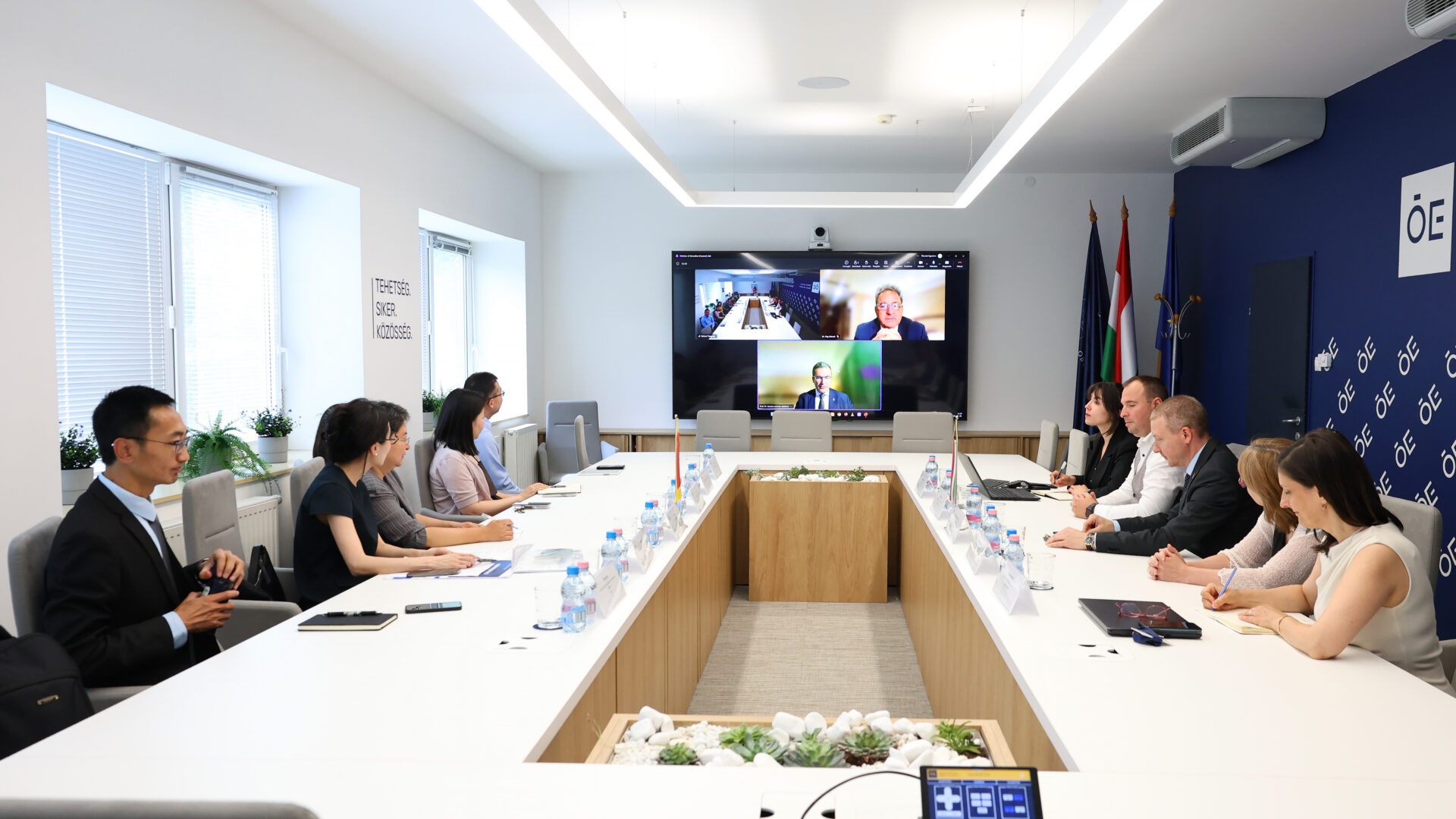
Recent news from Hungary highlights a significant development in the international higher education sector. A high-level delegation from the National Center for Educational Technology (NCET), operating under the Chinese Ministry of Education, recently conducted a comprehensive review of Óbuda University’s operational frameworks. This visit underscores the growing recognition of Hungary as a central hub for technological advancement and academic excellence in Europe. By focusing on shared objectives in digital education and industrial cooperation, the two institutions are laying the groundwork for robust, long-term partnerships that extend beyond traditional academic exchanges.
The delegation, led by NCET Director General Li Ping, included key figures such as Qi Tao, Director of Human Resources; Zhang Gang, Director of Development, Planning, and Research; and Deputy Directors Lin Jin and Cheng Xiuli. Their visit to Budapest was not merely a diplomatic formality, but rather a targeted effort to map out concrete collaboration platforms. For academic professionals and prospective students, this type of high-level engagement signals that Óbuda University is actively integrating its curriculum and research initiatives with global industry standards.
Schedule a free consultation to learn more about how international partnerships at Óbuda University can benefit your academic career.
Integrating Artificial Intelligence into Modern Learning Environments
A central pillar of the discussions revolved around the practical application of artificial intelligence within educational settings. The Chinese delegation presented their “Smart Education of China” platform, a comprehensive system that encompasses primary through higher education, including the development of sophisticated digital museums. This presentation provided a valuable opportunity for Óbuda University to benchmark its own AI Campus initiatives against a large-scale national framework.
Digital education is no longer confined to simple online portals or video lectures. It involves utilizing machine learning algorithms to personalize student learning paths, automating administrative tasks to allow faculty to focus on research, and creating immersive virtual environments for complex engineering concepts. Óbuda University has heavily invested in these areas, ensuring that students and faculty have access to state-of-the-art digital tools. The dialogue with NCET highlighted a mutual interest in content and knowledge sharing, which could lead to the development of joint educational technologies that benefit both Hungarian and Chinese students.
Furthermore, the integration of AI in education requires careful consideration of data privacy, algorithmic bias, and digital infrastructure. By engaging with international partners who are actively deploying these systems at a national level, Óbuda University is better positioned to navigate these challenges and implement best practices in its own digital classrooms.
Structuring University-Industry Partnerships for Talent Acquisition
Another critical focus of the visit was the mechanics of university-industry relations. The presence of Bence Tobak, Education Industry Business Development Manager at Huawei Technologies Hungary Kft., at the meeting illustrates the deeply interconnected nature of Óbuda University’s academic and corporate networks. Successful industrial cooperation requires more than just corporate sponsorship; it demands a structural alignment between a university’s research output and a corporation’s strategic needs.
The discussions specifically addressed methods for attracting talented students into pipeline programs that lead directly to industry roles. Companies like Huawei require a steady influx of highly skilled engineers, data scientists, and robotics specialists. By co-developing curricula and offering hands-on project experiences through joint research and development (R&D) initiatives, universities can ensure that graduates are immediately employable and capable of contributing to high-tech industries upon graduation. This model of industrial cooperation benefits the students through enhanced employability, the university through funding and real-world application of research, and the industry through a customized talent pool.
Navigating Intellectual Property in Collaborative Research
One of the most technically complex aspects of international industrial cooperation is the management of intellectual property (IP). The Chinese delegation expressed a keen interest in studying Óbuda University’s IP management practices, which are notably characterized by joint ownership models, collaborative commercialization strategies, and a focus on direct industrial application.
Traditionally, universities and corporations have clashed over IP rights, with institutions seeking to retain full ownership of faculty inventions and corporations demanding exclusive rights to commercialize jointly developed technologies. Óbuda University has navigated this challenge by establishing frameworks that prioritize mutual benefit. Joint ownership models require clear agreements on licensing revenues, territorial rights, and the responsibilities of each party in bringing a product to market. By showcasing this successful model to the NCET delegation, Óbuda University reinforced its reputation as a pragmatic and business-friendly research partner capable of managing complex, cross-border R&D projects.
Submit your application today to join a forward-thinking institution that actively shapes the future of technology and research management.
Applying Engineering Principles to Health Research
While engineering and IT form the core identity of Óbuda University, the discussions with the Chinese delegation revealed significant potential for collaboration in health research, specifically in the fields of diabetes and oncology. This cross-disciplinary approach is a hallmark of modern digital education, where engineering principles are applied to biological and medical challenges.
The integration of AI into health research allows for the rapid analysis of large medical datasets, improving early diagnosis rates and personalizing treatment plans for complex diseases like cancer. Óbuda University’s Cyber Medicine Competence Centre serves as a primary example of this interdisciplinary focus, bridging the gap between software engineering, robotics, and clinical medicine. Collaborative projects in these areas with international partners can accelerate the development of innovative medical technologies, providing students and researchers with the opportunity to work on projects that have a direct, positive impact on patient outcomes.
Demonstrating Capabilities at the Antal Bejczy Center for Intelligent Robotics
Theoretical discussions are most effective when supplemented with tangible demonstrations. During their visit, the Chinese delegation toured the Antal Bejczy Center for Intelligent Robotics. This facility represents the practical application of the university’s R&D capabilities, featuring advanced robotic systems that are utilized in both industrial and research settings.
Showcasing this facility served a dual purpose. First, it demonstrated the physical infrastructure and technical expertise available at Óbuda University. Second, it provided a concrete basis for discussing future joint laboratory programs. When international partners can observe functioning prototypes and interact with the researchers who built them, it significantly accelerates the trust-building process necessary for formalizing agreements. The robotics center stands as a testament to the quality of engineering education in Hungary and its direct applicability to industrial cooperation.
Formulating a Roadmap for International Memorandums of Understanding
High-level visits must result in actionable outcomes to maintain their momentum. The parties involved in this meeting have outlined a clear, structured roadmap for formalizing their relationship. The immediate next step involves professor-level networking, allowing academic leaders to identify specific overlapping research interests and curriculum alignment opportunities. This grassroots connection ensures that any broader institutional agreement is built on a solid foundation of practical, workable collaborations.
Following this networking phase, the institutions intend to sign an official Memorandum of Understanding (MoU). This document will serve as the legal and administrative framework for future activities, including student and faculty exchanges, joint laboratory programs, and shared grant applications. Notably, the parties also discussed the potential for long-term international programs that could involve African partners, indicating a vision for a truly global educational network rather than a strictly bilateral agreement.
Have questions? Write to us! to find out how you can participate in upcoming international exchange programs and global research initiatives.
Evaluating the Long-Term Value of Cross-Border Educational Networks
The visit from the NCET delegation to Óbuda University represents a significant marker in the evolving landscape of international higher education. By focusing on the specific, actionable areas of digital education, AI integration, IP management, and health technology, the institutions are moving beyond superficial partnerships to create frameworks that drive tangible industrial and academic progress.
For students, this means access to a more globalized curriculum, exposure to international research methodologies, and better career prospects in multinational tech companies. For researchers, it provides access to broader funding pools, diverse datasets, and collaborative expertise. For the industry, it ensures a steady pipeline of innovators who understand both the theoretical foundations of technology and the practical requirements of commercialization. As Óbuda University continues to expand its network of international partner institutions, its role as a critical node in Europe’s technological and educational infrastructure will only continue to grow.
Explore our related articles for further reading on how Óbuda University is shaping the future of digital education and global industrial cooperation.