Explore the New International Partnership Between Óbuda University and Stellenbosch University in Military Sciences
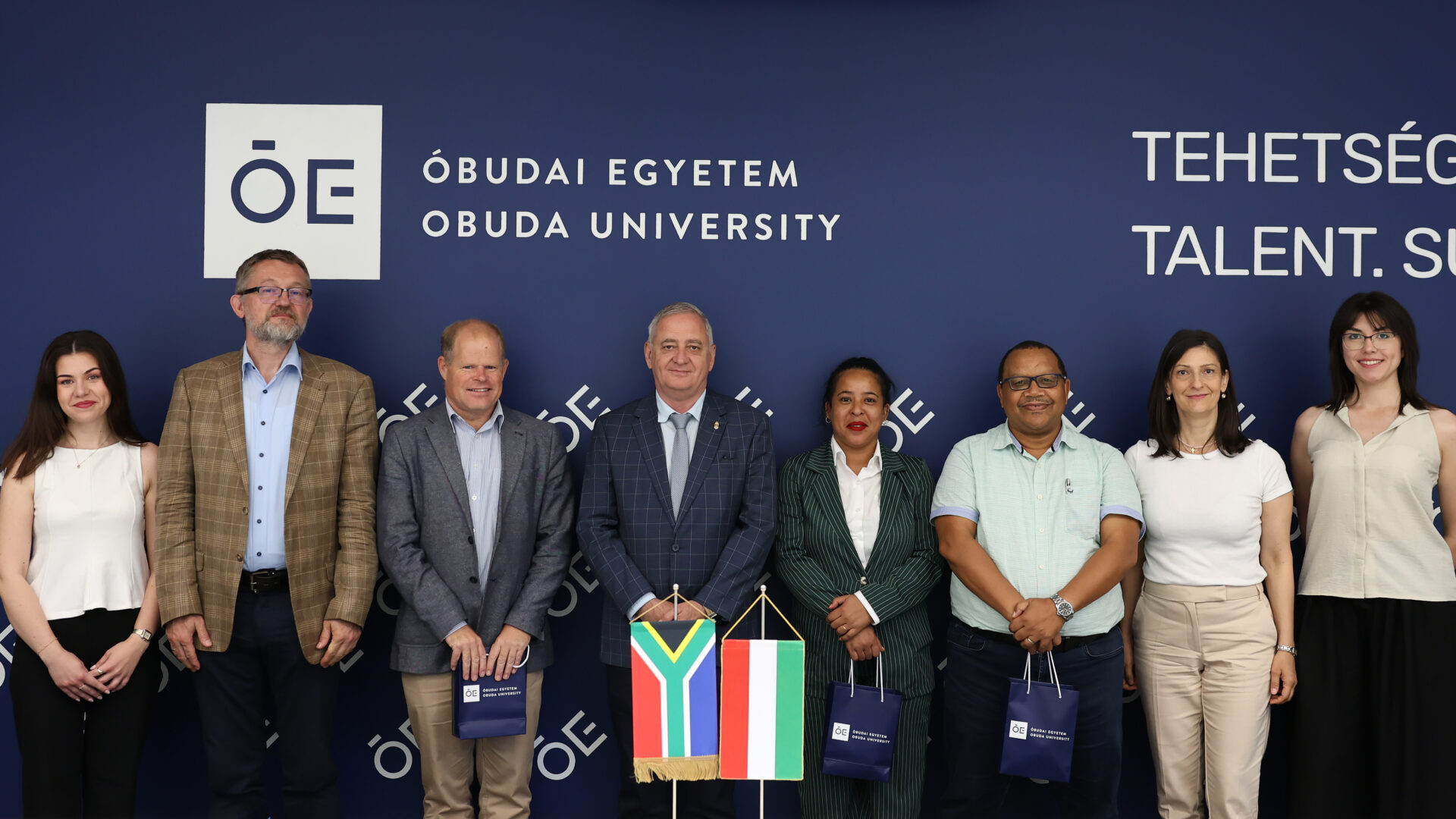
Recent high-level diplomatic and academic discussions have laid the groundwork for a significant international partnership connecting Central Europe and Southern Africa. A specialized delegation from Stellenbosch University in South Africa visited Óbuda University in Hungary to establish a formal framework for cooperation. This meeting signals a focused effort to merge expertise in military sciences, engineering, and digital technologies, creating new avenues for research and academic mobility between two distinct higher education environments.
For researchers and students tracking developments in defense technology, academic internationalization, and engineering, this collaboration represents a concrete step toward cross-continental knowledge exchange. Schedule a free consultation to learn more about how such international academic networks can influence your educational and career trajectory.
Connecting Hungary and South Africa Through Higher Education
Establishing an effective international partnership requires aligning the strengths and strategic goals of both institutions. Stellenbosch University (SU) brings a formidable academic reputation to the table, consistently ranking within the top 350 universities globally according to major ranking systems like QS and Times Higher Education (THE). As a prominent research-intensive institution in Africa, SU provides deep regional insights and specialized knowledge through its Faculty of Military Science and the Center for Military Studies (CEMIS).
Óbuda University, located in Budapest, Hungary, serves as a leading technical university in the region with a heavy emphasis on applied sciences, engineering, and innovation. By hosting the South African delegation, Óbuda University demonstrated its commitment to expanding its global footprint beyond traditional European borders. The presence of Prof. Dr. Zoltán Rajnai, Vice-Rector for General Affairs, and Prof. Dr. János Besenyő, Head of the Africa Research Institute at the Bánki Donát Faculty of Mechanical and Safety Engineering, underscored the strategic importance Óbuda University places on African academic relations.
This connection between Hungary and South Africa bridges a geographical gap, allowing European and African researchers to address global security and technological challenges from shared, yet diverse, perspectives.
Key Focus Areas of the Óbuda University and Stellenbosch University Partnership
The initial consultations between the two universities identified specific, high-impact fields where collaboration would be mutually beneficial. Rather than pursuing a vague agreement, the delegations targeted disciplines where both institutions have established infrastructure and proven expertise.
Advancing Research in Military Sciences
Military sciences in the modern academic context extend far beyond traditional tactical studies. They encompass cybersecurity, logistics, command and control systems, and defense technology management. The delegation from Stellenbosch University included Capt (Navy) Graeme Wesley Plint, Deputy Commandant of the Military Academy, and Lt. Col. Audrey Rozanne Lawrance, a senior researcher. Their participation ensured that the discussions remained grounded in the practical and strategic realities of modern defense forces.
By partnering with Óbuda University’s mechanical and safety engineering faculties, researchers can collaborate on projects ranging from autonomous systems to safety protocols in high-risk environments. The goal is to produce peer-reviewed research and develop technologies that enhance the operational capabilities and strategic understanding of defense sectors in both nations.
Integrating Digital Technologies and Nuclear Physics
Beyond traditional military studies, the partnership explicitly targets engineering and digital technologies. The integration of artificial intelligence, machine learning, and advanced robotics into defense and civilian infrastructure is a priority for both Hungary and South Africa. Furthermore, the inclusion of nuclear physics as a joint research area points to shared interests in energy security, nuclear detection technologies, and non-proliferation studies.
Dr. Hendrick Snyders, a researcher and lecturer at SU’s Faculty of Military Science, contributed to mapping out how these highly technical fields can be integrated into a cohesive research agenda. Combining SU’s theoretical and regional security knowledge with Óbuda University’s applied engineering labs creates a robust environment for technological advancement.
The Role of NATO DIANA and Advanced Robotics in the Collaboration
A critical component of the visit involved showcasing Óbuda University’s active participation in the NATO DIANA (Defence Innovation Accelerator for the North Atlantic) program. During the visit, Péter Balogh provided an online presentation detailing the university’s laboratories involved in this initiative. NATO DIANA focuses on accelerating dual-use technologies—innovations that have both civilian and defense applications, such as advanced sensors, secure communications, and energy resilience.
The South African delegation, led through the facilities by Prof. Dr. Péter Galambos, received a firsthand look at Óbuda University’s modern robotics laboratory. For the visitors, seeing the physical infrastructure solidified the potential for joint projects. A robotics lab focused on NATO DIANA standards requires rigorous testing and validation, offering an ideal testing ground for collaborative research that meets international defense standards.
This exposure allows researchers from Stellenbosch University to understand the technological benchmarks required by European and transatlantic defense frameworks, which can subsequently be adapted and applied within the African context. Explore our related articles for further reading on how NATO DIANA shapes university research programs.
What This International Partnership Means for Students and Researchers
While high-level meetings between university administrators and military officials set the stage, the ultimate beneficiaries of any international partnership are the students and academic staff. The planned cooperation between Óbuda University and Stellenbosch University is expected to operationalize through several concrete mechanisms.
Academic Mobility and Exchange Programs
Óbuda University already maintains extensive mobility programs, including Erasmus+, the Pannónia Scholarship Program, and CEEPUS. Adding Stellenbosch University to the network of partner institutions creates a new, highly attractive destination for Hungarian students. Conversely, South African students gain access to a top-tier technical university in the heart of the European Union. Exposure to different educational methodologies, cultural environments, and geopolitical perspectives is invaluable for students pursuing careers in international relations, military sciences, and engineering.
Joint Conferences and Publication Opportunities
The action plan emerging from the visit includes continuous coordination and joint conference participation. For doctoral students and early-career researchers, presenting at international conferences co-organized by Óbuda University and Stellenbosch University provides critical visibility. Furthermore, cross-institutional co-authoring of academic papers increases the reach and citation potential of their research.
Students currently enrolled in engineering or military sciences programs should monitor these developments closely, as new joint modules, summer schools, or dual-degree opportunities often follow the signing of a Memorandum of Understanding. Submit your application today to position yourself at the forefront of these expanding international academic networks.
Next Steps for Institutional Cooperation in Hungary and Beyond
The immediate next step following the South African delegation’s visit is the drafting and signing of a formal Memorandum of Understanding (MoU) between Óbuda University and the Faculty of Military Science at Stellenbosch University. An MoU serves as the legal and administrative foundation that allows for the transfer of funds, sharing of intellectual property, and formal exchange of personnel.
However, the delegations recognized that institutional agreements only succeed when supported by direct, researcher-to-researcher contact. The strategy moving forward involves identifying specific project leads at both universities who will work together to secure funding. This could involve applying for grants from the European Union’s Horizon Europe program, the Hungarian National Research, Development and Innovation Office, or the South African National Research Foundation (NRF).
By starting with targeted, manageable research projects—such as a joint study on a specific digital technology application in defense—the partnership can build momentum. Success in smaller collaborations often paves the way for larger, multi-year institutional contracts and the establishment of joint research centers.
Building a Framework for Future Defense and Engineering Research
The visit of the Stellenbosch University delegation to Óbuda University highlights a growing trend in higher education: the globalization of defense and security research. As technological challenges become more complex, universities must look beyond their borders to find complementary expertise. The pairing of Óbuda University’s applied engineering and NATO-aligned robotics research with Stellenbosch University’s established military science curriculum and African regional focus creates a uniquely powerful collaborative dynamic.
For the broader academic community in Hungary, this partnership demonstrates Óbuda University’s active role in global research networks. For South Africa, it reinforces Stellenbosch University’s position as a globally connected institution capable of engaging with top-tier European technical universities. As the Memorandum of Understanding moves from draft to execution, the academic and defense communities will be watching to see what tangible technologies and research outputs emerge from this strategic alignment.
Have questions? Write to us! if you want to understand how these international research partnerships might influence academic program offerings or research funding opportunities in your specific field of study.
Staying informed about university partnerships is essential for prospective students and researchers aiming to build competitive, globally recognized careers. Share your experiences in the comments below regarding the impact of international exchange programs on academic and professional development.