Advancing International Research on Reaction Mechanisms: Inside the University of Debrecen’s Chemistry Conference in Hungary
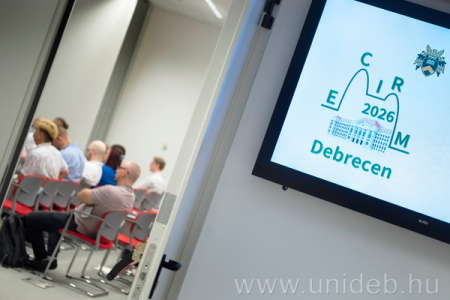
When more than sixty researchers from Europe and overseas gathered at the University of Debrecen between September 6 and 9, the subject drawing them to Hungary was a branch of chemistry that quietly underpins some of the most important technologies of our time. The seventh European Colloquium on Inorganic Reaction Mechanisms (ECIRM) — the most prestigious European forum for the study of inorganic reaction kinetics and mechanisms — returned once again to the campus where the conference series was founded. Over four days, participants presented findings relevant to modern drug development, industrial catalysis, and environmental protection technologies. This article reviews what the chemistry conference covered, why research into reaction mechanisms matters far beyond the laboratory, and what the University of Debrecen’s role as host reveals about the strength of international research in Hungary.
Want to follow the latest research news from the University of Debrecen? Visit the university’s official press portal for regular updates on conferences, awards, and scientific discoveries.
Why Reaction Mechanisms Matter in Modern Chemistry
Chemistry is often presented as a simple story of inputs and outputs: combine reagents, obtain products. Between those two endpoints, however, lies a complex sequence of elementary steps, short-lived intermediate species, and energy transfers that determines whether a reaction succeeds, how quickly it proceeds, and what by-products appear along the way. Understanding that sequence — the reaction mechanism — is one of the central tasks of contemporary chemical science, and it was the unifying theme of the Debrecen meeting.
The practical importance of this field is difficult to overstate. Precise knowledge of reaction mechanisms is indispensable for developing more effective medicines and for creating new catalysts that facilitate green energy production and carbon dioxide capture. When pharmaceutical chemists optimize a synthesis route, when engineers improve a catalytic converter, or when researchers design materials that remove CO2 from industrial emissions, they depend on exactly the kind of molecular-level insight discussed throughout the conference.
From Striking a Match to Molecular-Level Insight
Professor István Fábián, professor emeritus at the Institute of Chemistry of the Faculty of Science and Technology, captured the essence of the discipline with a familiar example. Everybody knows that striking a match produces a flame, he observed — yet few people realize that this everyday act involves a multitude of reaction steps and generates a series of transient products that disappear within moments. The task of mechanism research is to understand the sequence and the speed of those steps, because that sequence and speed constitute the reaction mechanism itself.
This perspective changes how we view chemistry: not as a static collection of formulas, but as a dynamic system of molecular events unfolding over fractions of a second. Capturing those events requires sophisticated analytical instruments, careful experimental design, and sustained international collaboration — all of which were on display at the conference.
The ECIRM Chemistry Conference: A Hungarian Initiative That Became a European Institution
The European Colloquium on Inorganic Reaction Mechanisms has an origin story rooted in Debrecen. Professor Fábián launched the conference in 2013 at the University of Debrecen, and his initiative quickly evolved into an international traveling conference, driven by the enthusiasm of foreign partners who recognized the need for a dedicated European forum on inorganic reaction kinetics and mechanisms. Thirteen years later, the seventh edition returned to its birthplace — a telling sign of the university’s standing within this specialized community.
The reputation of the series is considerable. ECIRM is regarded as the most prestigious European forum for the study of inorganic reaction kinetics and mechanisms, and this year’s gathering attracted renowned experts not only from numerous European countries but also from overseas. For a conference focused on a technically narrow field, that level of international participation reflects both the quality of the science presented and the organizational credibility of the host institution.
Key Themes: Redox Processes, Catalysis, and Organometallic Chemistry
Across the four-day program, more than sixty participants presented their latest scientific findings through lectures and poster sessions. The thematic scope covered the main pillars of the discipline:
- Homogeneous and heterogeneous redox processes — reactions involving electron transfer, whether in solution or at surfaces, which lie at the heart of energy storage, corrosion science, and biological chemistry.
- Catalysis — the acceleration of chemical reactions by substances that emerge unchanged, a cornerstone of industrial chemistry and essential to green technologies.
- Organometallic chemistry — the study of compounds containing metal–carbon bonds, which serve as workhorses in modern synthesis and catalytic processes.
ECIRM 2026 placed special emphasis on non-traditional analytical methods that provide new, molecular-level insights into the functioning of reactive systems. This focus mirrors a broader trend in the field: as instrumentation becomes more sensitive and data analysis more powerful, researchers can now observe transient intermediates and ultrafast processes that were invisible to previous generations of chemists.
Are you a researcher working on redox chemistry, catalysis, or organometallic systems? Follow the ECIRM conference series and consider presenting your own findings to this specialized international audience at a future colloquium.
Inside the Research Ecosystem of the University of Debrecen
Hosting a prestigious international chemistry conference is rarely accidental; it usually reflects years of institutional investment. In his welcome speech at the opening ceremony, Szilárd Szabó, dean of the Faculty of Science and Technology, situated the event within the broader research strength of the faculty. The six institutes of the faculty together form a multidisciplinary ecosystem, he explained, in which fundamental scientific discoveries continuously fuel modern technological innovations.
The figures supporting that statement are substantial. All six organizational units within the Faculty of Science and Technology hold the title of Excellent Research Site, recognized by the Hungarian Academy of Sciences. The faculty hosts as many as ten elite research groups supported by the Hungarian Research Network (HUN-REN). It is also home to two flagship Hungarian projects and two Frontline (Élvonal) research programs comparable in caliber to grants from the European Research Council. Securing two such grants is an extraordinary achievement for a single faculty — particularly one located outside the capital, Budapest. The physical infrastructure matches this ambition: three of the faculty’s facilities rank among Hungary’s top fifty research infrastructures.
Honors for Distinguished Chemists in Debrecen
The conference coincided with a moment of institutional recognition. At the academic year opening ceremony of the University of Debrecen, held earlier the same day, professors György Bazsa and István Fábián were both awarded the title of Rector Emeritus. Professor Bazsa also received a University of Debrecen Commemorative Medal, while Katalin Várnagy was presented with the Pro Universitate Award. The dean noted during the ceremony that the Institute of Chemistry ranks at the forefront of comparable institutes in Hungary — a claim reinforced both by the honors bestowed on its members and by the international conference it hosted that very week.
From MRI Contrast Agents to Space Technology: The Practical Reach of Mechanisms Research
One of the most compelling aspects of the Debrecen story is how research into abstract-sounding molecular processes translates into tangible applications. The research groups of the Institute of Chemistry maintain an extensive system of international networks and participate in numerous successful initiatives that demonstrate this breadth.
Their portfolio extends from the study of contrast agents used in MRI diagnostic techniques — work with direct consequences for medical imaging — to the development of functionalized aerogels, advanced porous materials with potential uses in insulation, filtration, and catalysis. One of the institute’s recently concluded research projects was even related to space technology. These examples underline a central message of modern inorganic chemistry: understanding reaction mechanisms at the molecular level is what makes it possible to design better diagnostic agents, more durable materials, and more efficient catalysts for green energy and carbon dioxide capture.
Why Environmental and Medical Technologies Depend on Mechanism Studies
Two examples illustrate the connection. First, carbon dioxide capture and green energy technologies rely on catalysts whose performance depends entirely on the elementary steps of electron and atom transfer at their active sites. Mapping those steps allows chemists to improve catalysts rationally rather than relying on trial and error. Second, MRI contrast agents must undergo precisely controlled chemical behavior inside the human body; understanding their reaction kinetics under aqueous, biological conditions is a precondition for safer and more effective diagnostic tools. In both cases, the fundamental science celebrated at the chemistry conference in Debrecen feeds directly into technologies that affect daily life.
What the Conference Means for Students and Researchers Considering Hungary
For prospective students and early-career researchers, the University of Debrecen’s hosting of ECIRM carries a practical message: Hungary offers a serious environment for chemical research beyond the traditional strongholds of Western Europe. Debrecen, the country’s second-largest city, combines a major research university with an international academic community and a cost of living well below that of most Western European cities.
Students who join the Faculty of Science and Technology gain access to the ecosystem described above: institutes recognized as Excellent Research Sites, HUN-REN-supported research groups, and Frontline research programs. For those interested specifically in reaction mechanisms, catalysis, or inorganic chemistry, the presence of internationally connected research groups creates opportunities for collaboration, academic mobility, and exposure to cutting-edge analytical methods — the same methods highlighted throughout the conference program.
Considering a chemistry degree at a university with a strong international research profile? Explore the study programs offered by the Faculty of Science and Technology at the University of Debrecen and see how your academic plans could fit into this research environment.
Final Thoughts on International Research at the University of Debrecen
The seventh ECIRM conference demonstrated that the University of Debrecen is not simply participating in international research on reaction mechanisms — it is helping to lead the conversation. From founding the conference series in 2013, to the honors awarded to its professors, to the applied reach of its research groups, the institution has built a profile that extends well beyond the borders of Hungary. For the chemistry community, the event reaffirmed the central role of reaction mechanism studies in driving progress across medicine, catalysis, and environmental technology. For students and researchers weighing where to study or collaborate, it offered a concrete data point: internationally recognized chemistry is being done in Debrecen, and the research community there continues to grow.
Have you attended an ECIRM colloquium or conducted research on inorganic reaction mechanisms? Share your experiences and questions in the comments below — we would like to hear your perspective.
Stay informed about upcoming chemistry conferences and research developments in Hungary. Subscribe to our newsletter for regular updates on international research and academic opportunities.