Advance International Visibility: Óbuda University at the THE Asia Summit in Hong Kong
Higher education institutions today operate in an environment defined by rapid technological shifts, geopolitical complexities, and evolving economic demands. To remain relevant and effective, universities must look beyond their national borders and actively participate in the global discourse on educational advancement. Recently, Óbuda University, Hungary, took a definitive step in this direction by participating in the prestigious Times Higher Education (THE) Asia Summit. This engagement highlights the institution’s commitment to navigating global transformation and significantly enhancing its international visibility among the world’s leading academic institutions.
Balancing Tradition and Modernity in Hungarian Higher Education
Establishing a distinct identity on the global stage requires a clear understanding of an institution’s roots coupled with a forward-looking operational framework. Prof. Dr. Levente Kovács, Rector of Óbuda University, articulated this balance during the summit’s exclusive leadership sessions. The university does not view its history and its future as competing forces; rather, they operate as complementary pillars of institutional strength.
Óbuda University simultaneously builds upon centuries-old academic traditions while leveraging the agile, modern operational model that emerged from its formal establishment as a university in 2010. This dual approach provides a distinct competitive advantage. The historical foundation offers stability, institutional credibility, and a deeply rooted commitment to academic rigor. Conversely, the modern structural framework allows the university to pivot quickly in response to emerging industry trends, integrate new technologies into the curriculum, and adopt flexible administrative processes. For prospective students and academic partners, this means engaging with an institution that respects classical academic foundations but is not constrained by outdated operational paradigms.
Schedule a free consultation to learn more about our academic programs and how our modern approach to education can support your career goals.
The Steward’s Compass: Leading Through Institutional Disruption
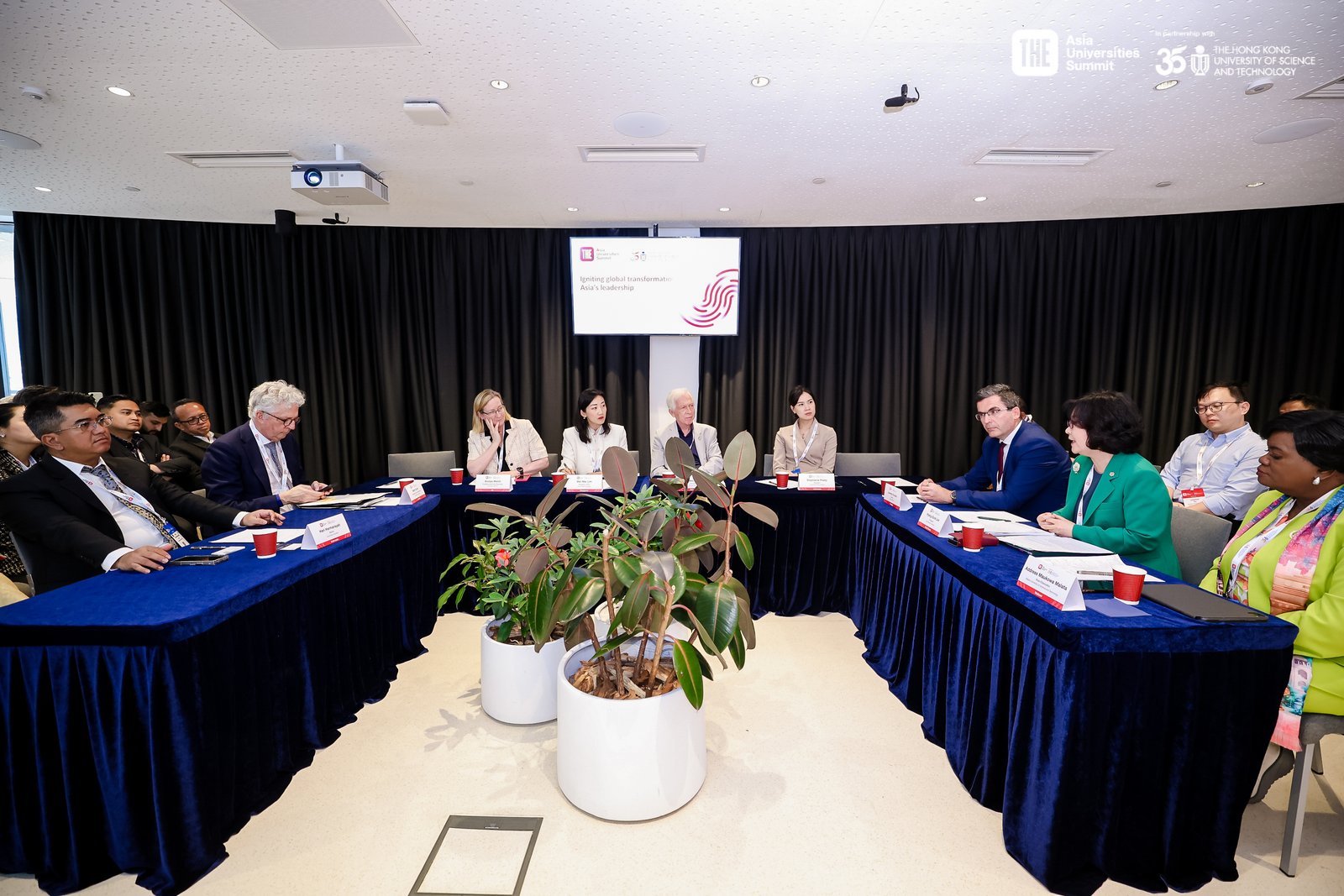
The core theme of the THE Asia Summit—”Igniting global transformation: Asia’s leadership”—brought together rectors from highly ranked institutions, including the University of Sydney, the University of Bristol, and Universitas Indonesia. Within this elite context, Rector Kovács participated in an invitation-only roundtable titled “The steward’s compass: Cultivating legacy in an age of disruption.” The session focused on a critical question facing senior academic leadership: how can universities effectively respond to a rapidly changing environment while simultaneously contributing to long-term societal development?
Preserving Core Values Amid Rapid Change
In an era where universities are increasingly pressured to behave like corporate entities, prioritizing commercialization and short-term metrics, Rector Kovács emphasized the non-negotiable necessity of public service and societal values. He argued that academic independence must remain the primary anchor for any institution claiming to serve social progress.
This stance is particularly relevant in the context of global transformation. When artificial intelligence, automation, and global market shifts disrupt traditional career pathways, universities must resist the urge to simply chase trending keywords. Instead, they must focus on cultivating critical thinking, ethical reasoning, and foundational scientific literacy. By maintaining this focus, Óbuda University ensures that its educational and research activities yield long-term societal benefits rather than just transient economic outputs. The institution acts as a stabilizing force, preparing graduates not just for their first job, but for a lifetime of adaptation in an unpredictable global market.
Three Pillars of University Leadership Strategy
When addressing the specific mechanisms required to lead a university through periods of disruption, the Rector identified three actionable pillars that form the backbone of Óbuda University’s strategic agenda. These pillars are directly tied to the institution’s ongoing ascent in international rankings, including its placement in the 601-800 bracket in the 2026 THE World University Rankings.
Strengthening Internationalization
Internationalization extends far beyond simply hosting international students or sending domestic students abroad. For Óbuda University, it involves the deep integration of global perspectives into the core curriculum, the fostering of cross-cultural research teams, and the active pursuit of bilateral agreements with strategic partners worldwide. Attending the THE Asia Summit in Hong Kong is a direct manifestation of this strategy, allowing the university to forge connections in one of the world’s most dynamic educational and economic regions.
Increasing Global Visibility
Academic excellence alone is insufficient if the broader global community remains unaware of a university’s contributions. Óbuda University has deliberately invested in raising its international profile through targeted participation in high-impact global forums, consistent publication in high-tier international journals, and active engagement with global ranking methodologies. By being present at the THE Asia Summit, the institution ensures that its name and capabilities are recognized by peer institutions, potential students, and international employers across Asia and beyond.
Strategic Resource Allocation for Research and Development
The third pillar involves the deliberate and strategic allocation of resources toward clearly defined research and development priorities. Rather than spreading funding thinly across disparate, low-impact projects, Óbuda University concentrates its investments on key areas where it can achieve meaningful, globally recognized breakthroughs. This targeted approach to R&D not only attracts top-tier faculty and researchers but also drives the innovation ecosystem that surrounds the university, ultimately contributing to higher rankings and greater societal impact.
Submit your application today to join a globally connected institution that prioritizes strategic research and student success.
Expanding Networks at the THE Asia Summit
Strategic dialogue at leadership roundtables is only one component of effective international engagement. Óbuda University reinforced its presence at the Hong Kong University of Science and Technology by operating a dedicated exhibition stand throughout the duration of the THE Asia Summit. This physical presence served multiple critical functions in the university’s broader internationalization strategy.
First, the exhibition stand provided a centralized hub for establishing and strengthening relationships with international partners. Face-to-face interactions remain invaluable in academic diplomacy, allowing for the nuanced discussions necessary to build joint research initiatives, dual-degree programs, and faculty exchange agreements. Second, the stand served as a recruitment platform, directly engaging with prospective students from across Asia who are looking for high-quality, affordable, and globally recognized higher education opportunities in Europe.
Furthermore, the exhibition allowed Óbuda University to concretely showcase its educational and research achievements. Rather than relying solely on reputation, the university presented tangible examples of its innovation ecosystem, including its venture capital initiatives and technology transfer successes. This practical demonstration of capability helps to demystify the institution for international audiences and solidifies its reputation as a hub for applied sciences and technological innovation in Hungary.
Why International Visibility Matters for Prospective Students and Partners
The activities undertaken by Óbuda University at the THE Asia Summit have direct, practical implications for its core stakeholders. For prospective students, a university’s international visibility is a strong indicator of the value of the degree they will earn. Degrees from internationally recognized institutions carry weight in the global job market, opening doors to multinational employers and facilitating admission to top-tier graduate programs worldwide.
Additionally, a university with a robust global network offers students unparalleled opportunities during their studies. Access to international exchange programs, guest lectures from global industry leaders, and collaborative projects with peers from other countries are all direct byproducts of a university’s commitment to global transformation and internationalization. When a student chooses an institution that actively participates in summits like the one in Hong Kong, they are choosing an environment that is actively connected to the pulse of global industry and academia.
For corporate partners and research collaborators, Óbuda University’s growing international profile signals a reliable, forward-thinking partner capable of contributing to complex, multinational R&D projects. The alignment of resources with strategic priorities, as highlighted by the Rector, assures partners that the university is focused on delivering high-impact results rather than engaging in academic silos.
Explore our related articles for further reading on international exchange opportunities and research partnerships at Óbuda University.
Charting the Future of Higher Education in Hungary
Participation in the THE Asia Summit represents a clear, calculated step in Óbuda University’s ongoing evolution. By engaging with the theme of global transformation and articulating a leadership philosophy grounded in public service, academic independence, and strategic resource allocation, the institution has firmly positioned itself as a forward-thinking leader in the Central European higher education landscape.
The integration of centuries-old traditions with a modern, flexible operational model provides a resilient framework capable of withstanding the disruptions of the 21st century. As Óbuda University continues to strengthen its internationalization efforts, increase its global visibility, and fund targeted R&D initiatives, it sets a benchmark for how regional universities can achieve meaningful, sustainable impact on the world stage. The institution’s presence in Hong Kong is not merely a symbolic gesture; it is an active, operational commitment to building the international networks necessary to drive future societal and technological progress.
Have questions about studying in Hungary or our international programs? Write to us! Our International Education Office is ready to provide the guidance you need.