
Explore STEM Careers for Women in Science at Óbuda University’s Girls’ Day in Hungary
Why Career Orientation Events Matter for Women in Science in Hungary
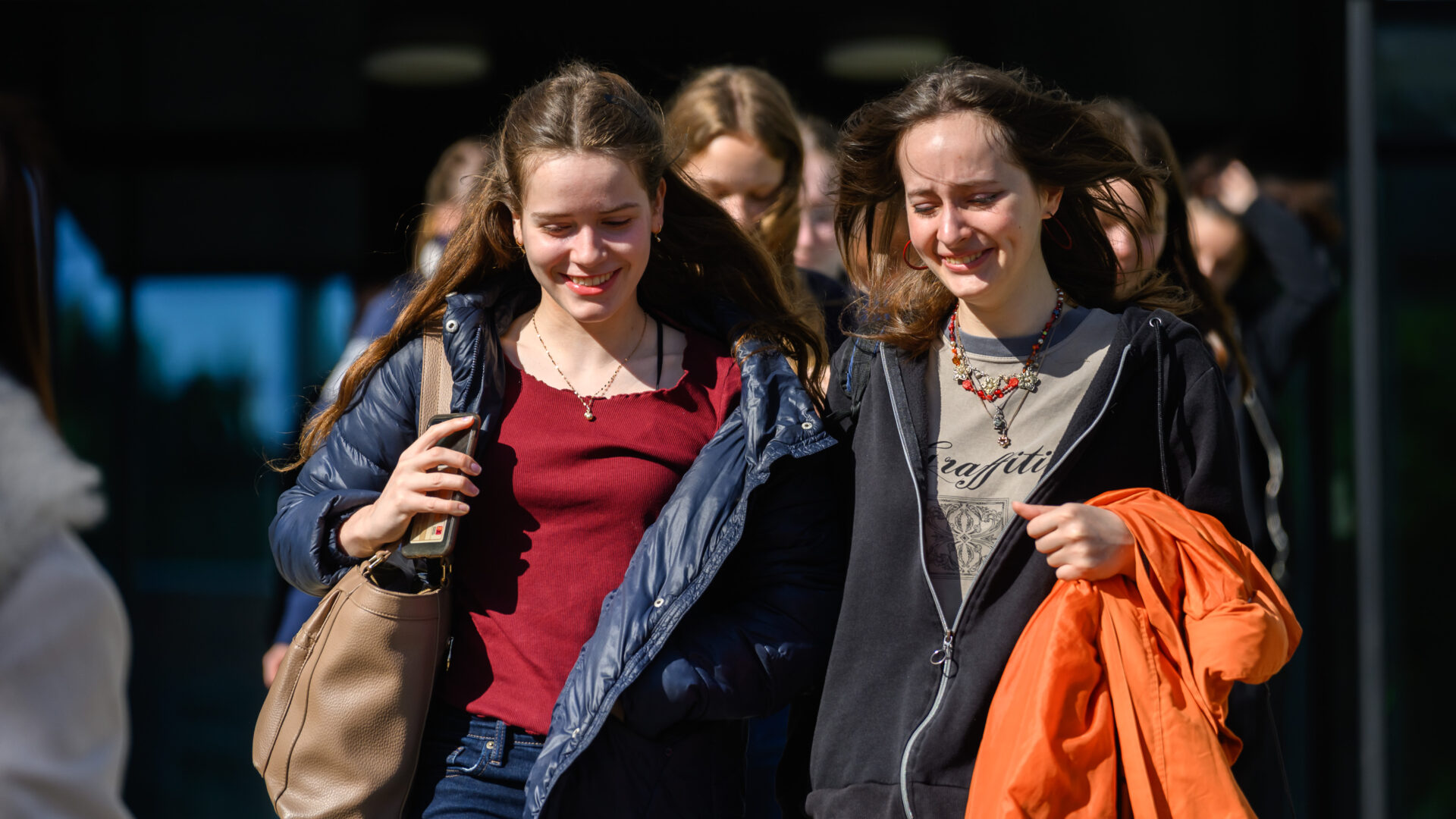
Addressing the gender gap in technology and engineering requires more than just classroom education; it demands early, hands-on exposure to real-world applications. In Hungary, initiatives like Girls’ Day play a critical role in bridging the gap between secondary education and higher education for young women. By welcoming upper primary and secondary school girls onto university campuses, institutions can effectively demonstrate that STEM careers are not only accessible but also highly creative and socially valuable.
Óbuda University has established itself as a leading force in this effort, consistently partnering with the Women in Science Association to host nationwide career orientation events. The goal is clear: to dispel outdated stereotypes and show young women that engineering, informatics, and the natural sciences offer excellent, long-term career opportunities. When students can touch the equipment, run the software, and speak directly with female professionals, the abstract concept of a “career in science” becomes a tangible, achievable goal.
Schedule a free consultation to learn more about our STEM programs and how we support women in science.
Inside the Faculties: Hands-On Learning Across Disciplines
The success of Girls’ Day at Óbuda University lies in its structure. Rather than sitting through passive lectures, visiting students rotate through specialized laboratories and research centers. This year, five distinct faculties opened their doors, each designing a unique curriculum tailored to highlight different aspects of modern STEM careers.
Alba Regia Faculty: Data Science, Materials, and Robotics
At the Alba Regia Faculty, 24 schoolgirls participated in a program titled “Create in the Present, Dream the Future!” The session was structured to provide a broad overview of seven distinct professions: data science, materials engineering, mechanical engineering, environmental engineering, mechatronics engineering, engineering informatics, and electrical engineering.
Presentations were deliberately delivered by female professionals and students to ensure the visiting girls could see themselves reflected in the academic success stories. The day began with an interactive quiz led by students from the Sports Economics master’s program, immediately breaking the ice and encouraging active participation. Corporate involvement also played a role, with Arconic joining the university to present manufacturing processes using demonstrative tools.
The practical portion of the day included guided tours of the VR laboratory and the robotics laboratory. By interacting with advanced infrastructure and robotic equipment, students could directly observe how software and hardware integrate to solve complex problems. For students traveling from Székesfehérvár and the surrounding regions, this direct exposure to university-level engineering infrastructure is often a defining moment in their academic decision-making process.
Bánki Donát Faculty: Practical Mechanical and Safety Engineering
At the Bánki Donát Faculty of Mechanical and Safety Engineering, the focus shifted slightly to emphasize engineering thinking and practical technical work. Participants attended a series of technical presentations and live experiments designed to showcase the wide variety of specializations within the mechanical engineering domain.
This faculty’s approach specifically highlighted what it means to pursue and succeed in an engineering career as a woman. By pairing experiments with candid conversations between visiting students, current instructors, and university students, the faculty provided a realistic, experience-based introduction to the technical field. This transparent look at the daily life of an engineering student helps demystify the discipline and reduces the anxiety often associated with choosing a demanding major.
Kandó Kálmán Faculty: High-Voltage Demonstrations and Technology
The Kandó Kálmán Faculty of Electrical Engineering utilized playful, visually engaging activities to explore the world of science. The morning session allowed participants to create their own badges while attending fascinating presentations on the intersection of nature and technology, the mathematical concept of symmetry, and an exploration of dark matter.
A definitive highlight of the program was the high-voltage demonstration. Seeing spectacular electrical phenomena at close range captures the imagination in a way that textbooks simply cannot. By making physics visible and dramatic, the faculty effectively communicated the raw power and potential of electrical engineering. Interestingly, the day concluded with a Japanese Ikebana workshop, which provided a unique perspective on the principles of balance, precision, and harmony—concepts that are equally vital when designing complex electrical systems.
John von Neumann Faculty: 3D Printing, Biotechnology, and AR/VR
Branded as a “Technology Discovery Day,” the John von Neumann Faculty of Informatics offered a comprehensive look at cutting-edge technological solutions. The program was organized across three interconnected locations to give participants a holistic view of modern informatics.
The first stop focused on 3D printing. Rather than simply watching a machine operate, the students engaged in a collaborative 3D printing project. They learned the fundamental principles of the technology and experienced firsthand how a digital model is translated into a physical object. The program then moved to the BioTech laboratory, where students used device-based demonstrations and tested the showcased technologies themselves. Finally, the day included hands-on experience with virtual reality applications, specifically the PathoVR system and other innovative tools. This integrated approach showed the students how informatics overlaps with manufacturing, biology, and healthcare.
Rejtő Sándor Faculty: Industrial Design and Environmental Engineering
At the Rejtő Sándor Faculty of Light Industry and Industrial Design, the atmosphere was direct and welcoming. The day began with a dynamic student union presentation in the Schmalz Hall, featuring a quiz with exciting prizes to foster a sense of community. Creativity was a central theme here; visitors viewed an exhibition of fashion and garment designs created by product and design engineering students, and the most adventurous participants joined a creative fashion design workshop.
The faculty also grounded the day in hard engineering sciences through a hydrology and hydraulics workshop. Participants built visually engaging systems using plastic tubes and syringes, visualizing fluid dynamics in real-time. Additionally, they learned about the technological background of environmental protection, including the control systems used in wastewater treatment plants and waste sorting facilities. The event concluded with a microscopic exploration session using a smartboard display to examine the hidden, close-up world of paper and printing, tying together the principles of material science and industrial manufacturing.
Submit your application today to join the next generation of innovators at Óbuda University.
The Role of Female Role Models in Higher Education
A recurring theme across all five faculties was the intentional highlighting of female role models. In fields where women have historically been underrepresented, seeing a successful female engineer, data scientist, or electrical engineering student standing at the front of a laboratory changes the narrative. It shifts the focus from “Can I do this?” to “How do I do this?”
When female professionals lead presentations and facilitate workshops, they bring a relatable perspective to the challenges and rewards of STEM careers. They can speak directly to the concerns of young women, whether those concerns involve work-life balance, navigating male-dominated classrooms, or identifying the right specialization. This representation is a critical component of effective career orientation, as it provides tangible proof that women not only belong in these fields but actively drive innovation within them.
How to Prepare for a Future in Engineering and Technology
For students who attended Girls’ Day or similar events and are now considering a future in STEM, the transition from secondary school to a university like Óbuda University requires preparation. Aspiring students should focus on building a strong foundation in mathematics and physics, as these subjects are the bedrock of engineering and informatics programs.
Beyond the classroom, students should seek out extracurricular opportunities that align with their interests. Joining robotics clubs, participating in coding boot camps, or entering local science fairs can help build a competitive portfolio for university admissions. Furthermore, attending open days and specialized events like Girls’ Day provides clarity. By visiting multiple faculties and speaking with current students, applicants can make informed decisions about which specific branch of engineering or science is the best fit for their skills and passions.
Have questions about the application process or specific STEM programs? Write to us!
Take the Next Step Toward Your STEM Career
Events like Girls’ Day demonstrate the tangible commitment of Óbuda University to fostering diversity and excellence in STEM education. By opening laboratories, facilitating corporate partnerships, and prioritizing hands-on learning, the university provides a clear pathway for women in science to transition from curious students to skilled professionals. The interactive programs at the Alba Regia, Bánki Donát, Kandó Kálmán, John von Neumann, and Rejtő Sándor faculties collectively illustrate that a career in STEM is dynamic, collaborative, and deeply impactful.
For young women in Hungary and beyond who are evaluating their options for higher education, exploring applied sciences at a practice-oriented institution offers distinct advantages. The exposure to advanced technologies—from virtual reality and 3D printing to high-voltage systems and biotechnology—ensures that graduates are prepared to meet the demands of the modern workforce.
Explore our related articles for further reading on university life and STEM education opportunities in Hungary.