
University of Debrecen Strengthens Mediterranean Cooperation in Agricultural Sciences
Expanding Global Partnerships from Hungary
Located in the heart of eastern Europe, the University of Debrecen has positioned itself as a leading institution in the agricultural sciences arena. By aligning its research agenda with Mediterranean priorities, the university is bridging the knowledge gap between temperate European farming systems and the unique challenges posed by southern climates.
Overview of the CIHEAM Collaboration
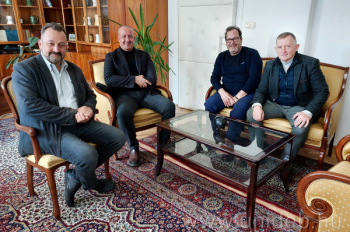
The International Centre for Advanced Mediterranean Agronomic Studies (CIHEAM) in Bari, Italy, has entered a formal partnership with the Faculty of Agriculture, Food Sciences and Environmental Management at Debrecen. This collaboration adds a Mediterranean perspective to the university’s programs and expands its outreach to over 200 partner institutions across 13 Mediterranean countries.
Key Areas of Cooperation
- Water‑and‑soil management strategies adapted to drier climates.
- Advanced plant protection techniques that are resilient to heat stress.
- Integrated coastal zone management to safeguard agricultural productivity near the sea.
- Promotion of organic agriculture and sustainable food systems.
Such focus areas are particularly relevant for Hungary, where understanding Mediterranean adaptation can inspire more resilient German‑Hungarian research practices.
Research Impact and Long‑Term Experiments
Debrecen’s Agricultural Research Institute (AKIT) boasts more than nine decades of field experiments on sandy soils. Combined with CIHEAM’s experience in drought‑prone regions, joint projects are poised to deliver actionable insights into climate‑change adaptation. Recent studies conducted by Dr. István Komlósi’s doctoral school have demonstrated novel irrigation scheduling models that reduce water usage by up to 18% in marginal soils.
Case Study: Drought Management Initiative
In a pilot program, students from both universities applied a dual‑crop rotation system in a test plot located in southern Italy. The initiative monitored soil moisture, crop yield, and pest incidence over one growing season, revealing a 12% increase in resilience against heat spikes when compared to traditional monocultures.
Educational Opportunities for Students and Researchers
Students enrolled in Debrecen’s Master of Science in Agricultural Systems can now opt for a double degree that includes a semester in Bari, exposing them to Mediterranean agronomy. The faculty also hosts annual workshops on sustainable agriculture, inviting scholars from CEIHIAM and other Mediterranean partners to share best practices.
For researchers, the partnership opens access to shared databases on Mediterranean crop genetics, providing a robust platform for interdisciplinary studies that integrate Hungarian varieties with Mediterranean germplasm.
Future Directions and Institutional Growth
By participating in CIHEAM’s global network, the University of Debrecen is strategically positioned to attract international funding streams earmarked for climate resilience. Official statements from Dean László Stündl emphasize the role of shared expertise in shaping national policy on sustainable agriculture.
The institute also plans to launch a series of online courses on integrated pest management, targeting far‑off communities willing to adopt European techniques.
Take Action: How You Can Get Involved
- Submit your application today to join our MSc programme in Agricultural Sciences and experience the Mediterranean perspective firsthand.
- Schedule a free consultation with our admissions office to learn how you can benefit from our joint initiatives.
- Have questions about the partnership or specific course content? Write to us at [email protected] and we’ll reply promptly.
- Explore related articles in our Newsroom to stay updated on upcoming research opportunities.
Engaging with the University of Debrecen’s Mediterranean cooperation means contributing to a research ecosystem that prioritizes sustainable agriculture not only in Hungary but across the Southern European and Mediterranean landscape.