
Groundbreaking Research on Hofbauer Cells at the University of Debrecen
The University of Debrecen has achieved a significant scientific breakthrough in understanding the cells of the placenta, specifically focusing on Hofbauer cells. This research, conducted by an international team of scientists, could revolutionize our understanding of pregnancy processes and complications, potentially leading to new therapeutic approaches for maternal and fetal health.
What Are Hofbauer Cells and Why Are They Important?
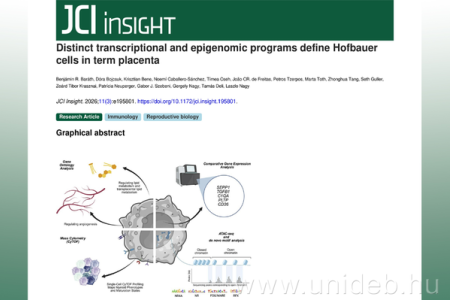
Hofbauer cells (HBCs) are a unique population of immune cells found in the human placenta that originate from the fetus. These specialized cells play crucial roles in placental development and function, yet their genetic and functional characteristics remained largely unknown until now. The University of Debrecen research team has become the first to provide a comprehensive genetic picture of these cells, marking a milestone in placental research.
The significance of this research cannot be overstated. Understanding Hofbauer cells could lead to better management of pregnancy complications and improved outcomes for both mothers and babies. The findings were published in the prestigious international journal JCI Insight, highlighting the global importance of this Hungarian research achievement.
The Journey to Discovery: From Initial Challenges to Success
The research journey began in the early 2000s when the Nuclear Receptor Research Group at the University of Debrecen first became interested in Hofbauer cells. However, initial attempts to isolate these cells with high purity proved challenging, causing the project to be temporarily shelved. Professor László Nagy, from the Institute of Biochemistry and Molecular Biology, explained that the team had to put the topic “on the back burner” due to technical limitations.
Two decades later, the idea resurfaced, and the team decided to restart the Hofbauer project with renewed determination. This time, they received crucial support from Yale University researchers Seth Guller and Zhonghua Tang, who provided a cell isolation protocol they had developed. This collaboration proved to be the key that unlocked the door to successful research.
Collaborative Excellence: The Power of International Research
The success of this project is a testament to the power of international collaboration in scientific research. The University of Debrecen team worked closely with researchers from Yale University, the Szeged Biological Research Center, and the St. Petersburg campus of Johns Hopkins University. This global network of expertise enabled the team to overcome technical challenges and achieve results that would have been impossible working in isolation.
Ph.D. student Benjámin R. Baráth played a crucial role in coordinating the theoretical and practical aspects of the study. The research also benefited from the involvement of clinical experts, including Tamás Deli, Head of the Obstetrics and Gynecology Clinic, and Zoárd Krasznai, Associate Professor and Director of the Department of Obstetrics and Gynecology at the University of Debrecen Clinical Center.
Key Findings: Understanding Hofbauer Cell Functions
The research team compared the gene expression and chromatin accessibility profiles of Hofbauer cells with those of other tissue-resident macrophages. This comparison revealed genes that are characteristically highly and lowly expressed in Hofbauer cells, providing insights into their unique functional characteristics.
According to the findings, Hofbauer cells play important roles in several critical processes:
- Placental vascularization
- Circulation regulation
- Intercellular structure formation
- Placental lipid metabolism
Perhaps most excitingly, the research revealed that several nuclear receptors have significant regulatory roles in Hofbauer cells, particularly in relation to lipid metabolism. This discovery opens up new avenues for understanding how these cells contribute to placental function and fetal development.
Clinical Applications and Future Research Directions
The research primarily involved expectant mothers who had undergone planned C-sections without obstetric complications. The team examined as many as twenty-five placentas, providing a robust dataset for their analysis. The researchers emphasize that these studies can serve as a valuable basis for future projects investigating the role of Hofbauer cells in pregnancy complications.
The University of Debrecen’s Obstetrics and Gynecology Clinic offers unique advantages for this type of research. As a regional center, the clinic not only provides placenta samples and patient populations but also offers comprehensive understanding of the clinical background of pregnancies. The ability to include pathological cases such as pregnancy toxemia (preeclampsia) and gestational diabetes in the study adds significant value to the research.
One of the key advantages mentioned by the researchers is predictability. Scheduled C-sections allow precise timing of both sampling and laboratory processing, ensuring that the placenta can be examined immediately while still fresh. This is a significant competitive advantage even by international standards.
Beyond Hofbauer Cells: Expanding the Research Horizon
This recently published article represents just the first phase of an ongoing research project. The team is currently conducting experiments on another cell type: trophoblasts. Additionally, a series of experiments investigating the interaction between Hofbauer cells and trophoblasts has been underway for more than twelve months as part of an American collaboration at the St. Petersburg, Florida campus of Johns Hopkins University.
This expansion of research scope demonstrates the University of Debrecen’s commitment to advancing our understanding of placental biology and its implications for maternal and fetal health. The ongoing nature of this research suggests that even more significant discoveries may be on the horizon.
The Impact of University of Debrecen Research on Global Science
The publication of this research in JCI Insight, a highly ranked US-based journal focusing on clinical discovery research, underscores the international significance of the University of Debrecen’s work. This achievement represents an outstanding example of effective cooperation between scientific workshops and patient care units, achieving results that resonate on the global stage.
The success of this project highlights the University of Debrecen’s growing reputation as a center of excellence in biomedical research. It demonstrates how Hungarian researchers are contributing to solving fundamental questions in human biology and potentially developing new therapeutic approaches for pregnancy-related conditions.
Looking Forward: The Future of Placental Research
As this research continues to evolve, the potential applications are vast. Understanding the genetic and functional characteristics of Hofbauer cells could lead to:
- New diagnostic tools for pregnancy complications
- Targeted therapies for placental dysfunction
- Improved outcomes for high-risk pregnancies
- Better understanding of fetal development processes
The University of Debrecen’s research team continues to push the boundaries of what we know about placental biology. Their work serves as an inspiration for researchers worldwide and demonstrates the importance of sustained investment in basic scientific research.
For those interested in learning more about this groundbreaking research or exploring opportunities in biomedical research at the University of Debrecen, the university’s research departments welcome inquiries from potential collaborators and students. This breakthrough represents not just a scientific achievement, but a beacon of hope for improved maternal and fetal health outcomes globally.