University of Debrecen Announces New Partnership with Hong Kong University for Education Exchange
Overview of the New Collaboration
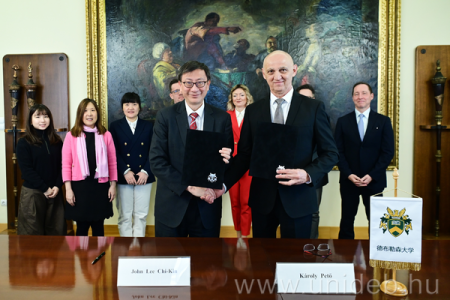
The University of Debrecen has taken a significant step forward in its global outreach by signing a cooperation agreement with the Education University of Hong Kong. This partnership, formalized on March 26, 2026, marks the first time a Hungarian higher‑education institution has entered into such an arrangement with a university located in the Far East. The agreement lays the groundwork for faculty and student exchanges, joint research initiatives, and the development of co‑published academic works.
Why Hong Kong Matters for International Collaboration
Hong Kong’s strategic position as a gateway between Mainland China and the rest of Asia makes it an attractive partner for institutions seeking to broaden their international network. The Education University of Hong Kong (EdUHK), although relatively young—founded in 1994—has rapidly risen to prominence. In the latest QS World University Rankings, EdUHK sits among the top ten institutions globally in the Education category, reflecting its strong academic reputation and commitment to research excellence.
For the University of Debrecen, aligning with a university that already enjoys strong recognition in the Asia‑Pacific region enhances the visibility of Hungarian scholarship abroad and opens doors to new funding opportunities, joint grant applications, and collaborative projects that address global challenges in education, linguistics, psychology, and beyond.
Key Components of the Agreement
Faculty and Student Exchange Programs
Under the new pact, visiting professors from each institution will have the opportunity to teach short courses or deliver guest lectures at the partner university. Likewise, students—including undergraduate, master’s, and doctoral candidates—can spend a semester or academic year studying abroad, earning credits that are recognized by both universities.
Joint Research and Publication Initiatives
The agreement specifically highlights collaboration in the humanities, with a focus on education, linguistics, and psychology. A jointly edited journal issue on the topic of “shadow education” is already in preparation, involving experts from both universities and other international authorities. This publication will serve as a flagship output of the partnership, showcasing the combined research strengths of the two institutions.
Scholarship Opportunities for Doctoral Candidates
Doctoral students from the University of Debrecen will be eligible to apply for the Hong Kong PhD Fellowship program, which provides financial support and mentorship while allowing them to pursue their research under dual supervision—one advisor from Debrecen and another from EdUHK. This arrangement not only enriches the doctoral experience but also fosters long‑term academic ties between the two faculties.
Future Expansion into Additional Disciplines
During the signing discussions, leaders from both universities expressed interest in broadening the scope of cooperation to include sports, economics, law, and early childhood education. The inclusion of early childhood education is particularly natural given that the Education University of Hong Kong already incorporates “education” in its official name, creating a seamless alignment of academic priorities.
Impact on the University of Debrecen’s International Strategy
This partnership reinforces the University of Debrecen’s commitment to becoming a globally engaged institution. By adding a Hong Kong university to its network, Debrecen expands its reach into a region that is increasingly influential in higher education policy and innovation. The collaboration supports several strategic goals:
- Increasing the number of outbound mobility opportunities for students and staff.
- Enhancing the university’s research profile through international co‑authorship.
- Strengthening ties with industrial partners in Asia, potentially leading to joint technology transfer projects.
- Boosting the institution’s visibility in global rankings and accreditation processes.
Practical Steps for Prospective Participants
How Students Can Get Involved
Students interested in participating in the exchange program should:
- Contact their faculty’s International Office to learn about eligibility criteria and application deadlines.
- Prepare a motivation letter that outlines how the experience aligns with their academic and career goals.
- Secure any required language proficiency certificates (English is the primary language of instruction at both universities).
- Apply for available scholarships or grants, including the Hong Kong PhD Fellowship for doctoral candidates.
How Faculty Can Contribute
Faculty members wishing to engage in joint research or teaching activities should:
- Reach out to the Coordination and Strategy Directorate of the Rector’s Office to express interest.
- Identify potential collaborators at EdUHK through existing networks or by attending upcoming virtual meet‑and‑greet sessions.
- Draft a project proposal that outlines objectives, expected outcomes, and a timeline for completion.
- Seek internal funding or apply for external grant programs that support international collaboration.
Looking Ahead: The Future of Debrecen‑Hong Kong Academic Ties
The signing of this agreement is just the beginning. Both universities have committed to reviewing progress annually and exploring new avenues for cooperation. Planned activities for the coming academic year include:
- A summer school program in 2026 where psychology students from Debrecen will attend lectures and workshops at the Education University of Hong Kong.
- A plenary lecture delivered by Professor Balázs Venkovits, Director of the Institute of English and American Studies, at EdUHK’s summer school.
- Joint conferences and symposia that bring together scholars from Europe and Asia to discuss contemporary issues in education and social sciences.
By nurturing these relationships, the University of Debrecen aims to create a sustainable pipeline of talent, knowledge, and innovation that benefits both institutions and contributes to the broader goal of fostering cross‑cultural understanding in higher education.
Takeaway
The University of Debrecen’s new partnership with the Education University of Hong Kong exemplifies how strategic international collaboration can enhance educational quality, expand research horizons, and provide valuable mobility experiences for students and staff. As the agreement moves from paper to practice, stakeholders across both campuses can look forward to a vibrant exchange of ideas that will shape the future of academia in Europe and Asia.
Explore More Opportunities
If you are interested in learning about similar international programs, consider the following actions:
- Submit your application today for upcoming exchange cycles.
- Schedule a free consultation with the International Office to discuss eligibility.
- Have questions? Write to us! – our team is ready to assist.
- Share your experiences in the comments below if you have previously participated in an exchange program.
- Explore our related articles for further reading on global education initiatives.