University of Debrecen Hosts International Conference on Urban History of Central European Towns in Hungary
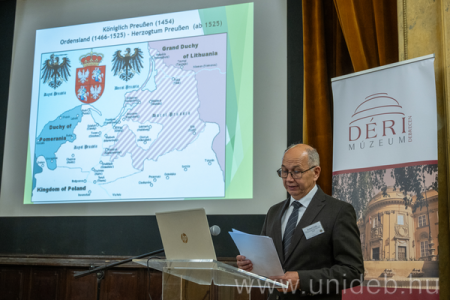
Cities record every crisis their residents survive and every solution they invent. That record took center stage in Debrecen this September, when the Institute of History at the Faculty of Humanities of the University of Debrecen, together with the Déri Museum, organized an international conference titled “Towns in Transition in a Changing World — Central European Towns in the Early Modern Period.” Over two days, September 17–18, historians from Austria, the Czech Republic, Poland, Germany, Romania, and Slovakia joined researchers from Hungarian institutions in Budapest, Debrecen, and Eger to examine how urban communities across the region navigated the turbulent sixteenth, seventeenth, and eighteenth centuries—and what their experiences can still teach us.
If early modern history and Central European urban studies match your own academic interests, take the time to review the history and humanities programs offered at the University of Debrecen, an institution whose own roots are woven into the urban story it studies.
A Forum for International Research on Central European Towns
The Institute of History at the University of Debrecen has built a steady tradition of invitation-only conferences that give historians a platform to present their latest findings to an international audience. This year’s edition reinforced that reputation. Participants arrived not only from across Hungary but also from six neighboring countries, reflecting the genuinely cross-border character of Central European urban history as a research field.
The cooperation with the Déri Museum, one of Debrecen’s most significant cultural institutions, added further depth to the event. Conferences of this kind show how universities and museums can work together to connect academic research with the wider public and with the material heritage preserved in regional collections.
Why the Early Modern Period Matters for Urban History
The sixteenth to eighteenth centuries were among the most disruptive eras in Central European history. The Reformation redrew religious loyalties, Ottoman expansion reshaped trade routes and settlement patterns, and emerging centralized states redefined the relationship between towns and their rulers. The conference approached this complex period from multiple angles—education, science, culture, the economy, and social life—rather than treating cities as isolated subjects.
László Pósán, professor at the Institute of History and the conference’s main organizer, summarized the guiding idea of the event. Speakers examined where and how challenges and crises emerged in the cities of the broader Central European region, what responses were developed to them, and whether those responses lived up to the hopes placed in them. His point of departure was a classical maxim: “Historia est magistra vitae”—history is the teacher of life. As he argued, the solutions devised by earlier generations remain a source of practical lessons for a twenty-first-century world facing its own pressures.
Highlights from the Conference Program
Economic Change and Demographic Pressures in Early Modern Cities
The opening lecture set a high standard. Professor Roman Czaja, an honorary doctorate recipient of the University of Debrecen and professor at Nicolaus Copernicus University in Toruń, analyzed the economic development of Prussian cities during the transitional period of the fifteenth and sixteenth centuries. His presentation demonstrated how commercial centers adapted when political frameworks and trade networks shifted around them.
Demographic questions received equally rigorous attention. Professor Andreas Weigl of Austria examined population dynamics in early modern cities through an unusual but revealing source: cemetery data. Burial records, he showed, can expose patterns of mortality, migration, and social structure that written narratives often conceal.
Attila Tózsa-Rigó of the University of Debrecen broadened the geographic frame by assessing the role of cities in northwestern Hungary within Europe’s wider economic life, connecting local developments to continental flows of goods and capital.
Education, Printing, and Cross-Border Academic Exchange
Education emerged as a recurring theme throughout the conference. A presenter from Poland traced academic exchange among Polish cities as reflected in educational institutions and in the circulation of books and newspapers—early evidence of how printed matter created intellectual networks across political borders.
Another lecture examined the school system of the Austrian provinces and its direct ties to Hungary. The connection is concrete: the Ratio Educationis, issued by Maria Theresa in 1777, was the first comprehensive educational decree to regulate public education in the Kingdom of Hungary at the state level. Réka Bozzay complemented this theme with a study of Debrecen’s early modern network of international relations as a “school city,” showing how educational reputation functioned as a form of diplomacy in its own right.
Culture, Theater, and Religious Life
Cultural institutions also claimed their place in the program. One presentation analyzed the role of the Bratislava City Theater in the eighteenth century—its function in society and its broader significance. The topic carries clear relevance for Hungarian history as well, since Bratislava, known in Hungarian as Pozsony, served as the seat of the Hungarian Diet until the Compromise of 1867.
Religious life received dedicated treatment as well. Annamária Jeney-Tóth presented research on religious life in Kolozsvár (Cluj-Napoca), illustrating how confession shaped urban communities in Transylvania and how those communities fit into the larger Central European picture.
Debrecen as an Early Modern Urban Powerhouse
For local audiences, one lecture carried special weight. Professor László Pósán presented the economic structure of Debrecen itself in the seventeenth and eighteenth centuries. His findings were striking: at the time, Debrecen was the most populous and wealthiest city in Hungary, with a population that surpassed even that of Buda and Pest.
Several factors explain this success. The city’s Calvinist heritage supported a strong intellectual culture anchored by the Reformed College. A printing press operated in the city, and its handicrafts gained international renown. As Pósán explained, Debrecen’s reputation spread far beyond Europe.
This history offers useful perspective for anyone considering the city today. The same qualities—educational institutions, publishing, and skilled production—that made early modern Debrecen exceptional continue to shape its identity. The University of Debrecen, whose lineage reaches back to that Calvinist educational tradition, now stands among the largest and most internationally oriented universities in Hungary, welcoming students and researchers from around the world.
Lessons from Early Modern Towns for the Twenty-First Century
What can contemporary readers gain from a conference on sixteenth-to-eighteenth-century towns? More than nostalgia, the presentations suggested three durable lessons.
First, cities that weather crises successfully tend to diversify. Debrecen’s combination of education, printing, and skilled crafts cushioned it against shocks that undermined single-industry towns. Second, institutions matter. Educational frameworks such as the Ratio Educationis show that systematic investment in schooling reshaped entire societies within a generation. Third, openness pays. The towns studied at the conference prospered most when they maintained cross-border academic, commercial, and cultural ties—precisely the kind of international exchange that the Humaniora program, which supported this conference, promotes today through the internationalization of the humanities.
If these questions resonate with you, consider sharing your own perspective: which historical urban lessons do you find most relevant for modern cities? Contribute your thoughts in the comments below.
Studying History and the Humanities at the University of Debrecen
For prospective students and early-career researchers, the conference offered a window into the working culture of the Institute of History at the Faculty of Humanities. Regular invitation-only conferences, international partners, and publications that appear both online and in print create an environment where students can observe—and eventually join—serious scholarship.
Debrecen itself strengthens the case. As Hungary’s second-largest city, it combines a lower cost of living than the capital with a dense academic and cultural infrastructure, including the Déri Museum. Students of urban history quite literally study their subject in one of Central Europe’s most instructive examples—a city whose early modern prosperity, educational heritage, and reinvention over the centuries remain visible in its streets.
To find out whether a history degree in Hungary fits your goals, contact the Faculty of Humanities through the University of Debrecen’s official website, or subscribe to the university’s news service for updates on admissions, conferences, and publications.
Conference Proceedings and Future Research Opportunities
The value of the event will extend well beyond its two days. The organizers announced that the conference proceedings will soon be published both online and in print, giving scholars, students, and interested readers access to the full range of research presented. For anyone researching Central European towns, early modern education, economic history, or urban religious life, the upcoming volume promises to be a resource worth tracking.
Carrying the Conversation Forward
The Debrecen conference confirmed a simple principle: understanding how Central European towns endured the early modern period equips us to think more clearly about how cities can respond to change today. History does not repeat itself exactly, but it rewards those who read it carefully.
If you found this overview useful, explore our related articles on academic life and research in Hungary, and share this piece with colleagues or classmates who study urban history. Have questions about the conference, the proceedings, or studying at the University of Debrecen? Write to us—we are glad to help.