
Vitapric Program: Pioneering Space Plant Research
The Vitapric program represents the first Hungarian initiative to grow plants aboard the International Space Station (ISS). By combining expertise from the Faculty of Agricultural and Food Sciences and Environmental Management with the national HUNOR astronaut program, researchers were able to germinate radish, wheat, and paprika seeds in microgravity. The program’s name, derived from the world’s first functional food – paprika cream created by Albert Szent‑Györgyi – underscores the link between space science and agricultural innovation.
From Concept to International Space Station
Initial experiments began in the late 1970s, when samples that had spent time in orbit were returned to Earth for analysis. These early studies laid the groundwork for the more ambitious DESPACE project, established in the 2000s to coordinate space‑related research at the university. The Vitapric program built on this legacy, integrating 3D‑printed growth chambers, specialized nutrient solutions, and real‑time telemetry to monitor plant development in microgravity.
Key Scientific Achievements
- Successful germination of radish, wheat, and paprika seeds on the ISS.
- Development of low‑water‑use plant varieties with high nutritional value.
- Demonstration that space‑grown crops can meet stringent quality standards for human consumption.
These results confirm that the theoretical models developed by University of Debrecen researchers are viable under real‑life space conditions, opening new avenues for both extraterrestrial and terrestrial agriculture.
The Role of University of Debrecen in Advancing Agricultural Innovation
Research Infrastructure and Collaboration
University of Debrecen’s commitment to interdisciplinary research is evident in its partnerships with the University of Pécs, national space agencies, and private industry. The use of 3D printing to produce custom implements for the Vitapric experiment showcases the university’s capacity to blend engineering, biology, and data science. Moreover, the faculty’s investment in state‑of‑the‑art laboratories ensures that future projects can be launched with minimal lead time.
Impact on Earth‑Based Agriculture
Beyond the excitement of space, the program’s findings have direct implications for climate‑resilient farming. The modified plant varieties require less water while delivering higher yields, addressing the dual challenges of water scarcity and food security. By publishing open‑access data and protocols, the university enables other researchers and farmers to adopt these innovations in diverse environments.
Commemorating Success: The Time Capsule Ceremony
Ceremony Highlights
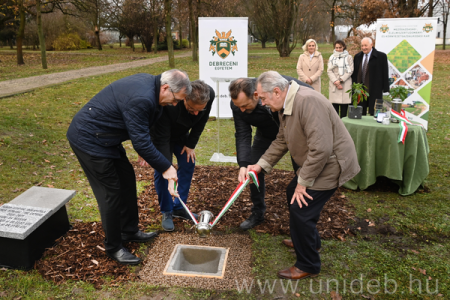
On Tuesday, a ceremony was held at the Böszörményi úti campus to place time capsules that contain seeds, documents, and 3D‑printed tools collected during the Vitapric mission. The event was attended by the university’s chancellor, Zoltán Bács, and Hungary’s first astronaut, Bertalan Farkas, who shared reflections on the program’s significance.
Messages for Future Generations
According to Professor Emeritus Miklós Fári, the capsules serve as a message to future researchers: “We have put wheat, corn, vegetable, and ornamental plant seeds in the containers to show future generations what we represented in this era and why we were interested in these plants.” The inclusion of 3D‑printed implements further demonstrates the university’s technological prowess and its vision for sustainable agriculture.
Future Directions and Opportunities
Expanding Space Agriculture
The success of Vitapric has sparked plans to establish a National Laboratory for Extreme Environment and Space Agriculture. This facility would support long‑term studies on crop adaptation to microgravity, radiation, and other extraterrestrial conditions, positioning Hungary as a leader in space‑agriculture research.
Educational and Career Pathways
Students interested in this frontier can pursue degrees in agricultural science, bioengineering, or space systems engineering at the university. Internships with the HUNOR program and collaborations with international space agencies provide practical experience and networking opportunities.
How You Can Get Involved
Academic Programs
Enroll in the Faculty of Agricultural and Food Sciences and Environmental Management to gain hands‑on experience with plant genetics, precision agriculture, and space‑related research projects. The curriculum emphasizes interdisciplinary teamwork and real‑world problem solving.
Research Projects
Researchers can apply for grants to investigate plant responses to microgravity, develop low‑water‑use crop varieties, or design autonomous growth systems. The university’s open‑access data repositories facilitate collaboration across disciplines.
Industry Partnerships
Companies in the agri‑tech sector can partner with the university to pilot new technologies, access cutting‑edge research, and tap into a skilled talent pool. Joint ventures can accelerate the commercialization of space‑derived agricultural innovations.
For students and professionals eager to explore these opportunities, submit your application today and join a community that is shaping the future of food and space research.
To learn more about how the Vitapric program can influence your career or research interests, schedule a free consultation with our admissions office.
Have questions? Write to us!
Explore our related articles for further reading on space agriculture, climate‑resilient farming, and the latest innovations from the University of Debrecen: Explore our related articles.