
University of Debrecen Faculty of Informatics Advances Innovation Networking in Shenzhen’s Artificial Intelligence Ecosystem
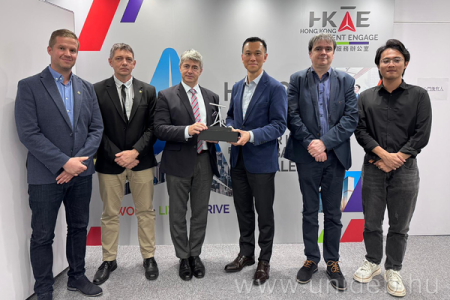
International academic collaboration has become essential for universities seeking to remain competitive in technology research and development. The University of Debrecen, Hungary, has taken concrete steps in this direction by sending representatives from its Faculty of Informatics to participate in innovation networking activities in Shenzhen, China—one of the world’s most dynamic technology hubs. This initiative demonstrates how European academic institutions can engage with leading global innovation ecosystems to create meaningful research partnerships and student mobility opportunities.
Understanding Shenzhen’s Position in Global Innovation
Shenzhen has transformed from a manufacturing center into a leading global technology and innovation hub within just a few decades. The city is now home to numerous multinational technology companies, ambitious startups, and world-class research institutions. As part of China’s Greater Bay Area, Shenzhen benefits from close proximity to Hong Kong, Macau, and other major cities, creating an interconnected region where talent, capital, and ideas flow freely across borders.
The Greater Bay Area innovation ecosystem is characterized by the tight integration of university research, technology entrepreneurship, talent development programs, and industrial applications. Unlike many Western innovation clusters where academia and industry often operate in separate spheres, the Shenzhen model emphasizes direct collaboration from the earliest stages of research. This approach accelerates the translation of laboratory discoveries into commercial products and services.
For institutions like the University of Debrecen, understanding this ecosystem firsthand provides valuable insights that can inform strategic decisions about international partnerships and research priorities. The Faculty of Informatics delegation observed these dynamics during their visit, gaining practical knowledge about how university-industry collaboration functions at scale in a leading innovation center.
The Chinese-Hungarian AIM Summit: Bridging Two Innovation Cultures
The delegation from the University of Debrecen participated in the Chinese-Hungarian AIM (Artificial Intelligence Management) Summit, a joint initiative founded by Corvinus University of Budapest and the Chinese University of Hong Kong. This summit serves as a platform for dialogue between Hungarian and Chinese researchers, entrepreneurs, and policymakers working in artificial intelligence and related fields.
The University of Debrecen was represented by András Hajdu, Dean of the Faculty of Informatics; Márton Tamás Bérczes, Deputy Dean of Economic and External Relations; and Balázs Harangi, Deputy Dean for Research and Grants. Their participation reflects the faculty’s commitment to building international research networks that benefit both faculty members and students.
Such bilateral initiatives are particularly valuable because they create structured opportunities for ongoing collaboration rather than one-time encounters. The AIM framework provides continuity, allowing relationships developed during summit activities to mature into joint research projects, student exchanges, and industrial partnerships over time.
Key Institutions and Companies Visited During the Study Tour
The University of Debrecen delegation visited several strategically important institutions during their time in China, each offering distinct perspectives on innovation networking and artificial intelligence development.
Hong Kong Science Park and the Centre for Perceptual and Interactive Intelligence
Hong Kong Science Park serves as a major innovation and technology development hub, hosting numerous research centers and technology companies. Within this ecosystem, the Centre for Perceptual and Interactive Intelligence (CPII) operates as the artificial intelligence research center affiliated with the Chinese University of Hong Kong.
CPII’s research portfolio spans several critical areas: computer vision, speech and language technology, human-machine interaction, artificial intelligence in healthcare, smart city applications, and industrial automation. These research domains align closely with the Faculty of Informatics’ strengths at the University of Debrecen, creating natural opportunities for collaborative projects.
The visit to CPII demonstrated how a university-affiliated research center can maintain strong connections to both academic research and commercial applications. Researchers at CPII work on fundamental scientific questions while simultaneously addressing practical challenges faced by industry partners.
Qianhai EHub Startup and Innovation Park
In Shenzhen, the delegation visited Qianhai EHub, a startup and innovation park designed to support young entrepreneurs, technology companies, and cross-border innovation collaborations. This facility represents the infrastructure dimension of innovation ecosystems—the physical spaces where startups, established companies, and researchers can interact and collaborate.
Qianhai EHub provides incubation services, mentorship programs, and access to investor networks for early-stage companies. For the University of Debrecen delegation, observing this infrastructure in action offered practical insights into how startup support systems can be structured to maximize success rates and facilitate technology transfer.
CUHK Research Institutes and InnoHub for New Quality Industries
The Chinese University of Hong Kong maintains research institutes in Shenzhen that function as research and development and technology transfer hubs. These institutes focus heavily on artificial intelligence (approximately 70% of activities), healthcare (20%), and robotics (10%).
The delegation also visited the CUHK InnoHub for New Quality Industries, which concentrates on high-value-added industries. During this visit, representatives from the University of Debrecen met with incubated high-tech companies, including several unicorn startups such as Tuya Smart (IoT platforms), LaSense Technology Limited, Manifold Tech, CocoRobo, and VoiceAI. These companies represent the commercial output of the innovation ecosystem—successful ventures that originated from or were accelerated by university research and incubation programs.
Schedule a free consultation to learn more about international research collaboration opportunities at the University of Debrecen.
Opportunities Identified for Future Collaboration
Based on their observations and discussions, the University of Debrecen representatives identified several categories of opportunity for future collaboration between the Faculty of Informatics and institutions in the Shenzhen-Hong Kong innovation region.
Joint Research and Development Projects
The overlapping research interests between University of Debrecen faculty and Chinese researchers create foundations for joint R&D projects. Areas of potential collaboration include artificial intelligence algorithms, data-driven technologies, industrial digitalization, and computer vision. Such projects could involve shared funding, complementary expertise, and access to different datasets and testing environments.
International research collaborations also strengthen grant applications, as many funding bodies prioritize projects with genuine international dimensions. The connections established during this visit could therefore support the Faculty of Informatics’ research funding strategy.
Student and Faculty Mobility Programs
Mobility programs allow students and faculty members to spend time at partner institutions, gaining exposure to different research cultures, methodologies, and professional networks. For students, international experience significantly enhances employability and provides perspectives that cannot be obtained through coursework alone.
The discussions with Hong Kong Talent Engage (HKTE), the talent attraction and support office of Hong Kong’s local government, specifically addressed how talented young Hungarians might integrate into the Chinese innovation ecosystem. Conversely, these conversations explored how Chinese companies expanding into Hungary and Europe could benefit from local talent and institutional partnerships.
Industrial Partnerships and Technology Transfer
The meetings with companies like Tuya Smart, VoiceAI, and other technology firms opened possibilities for direct industrial partnerships. Such partnerships can take various forms: sponsored research projects, internship placements for students, consulting arrangements for faculty members, or licensing agreements for university-developed technologies.
Technology transfer—the process of moving research findings from universities to commercial applications—remains a challenge for many academic institutions. Observing how Shenzhen’s innovation ecosystem facilitates technology transfer provided the University of Debrecen delegation with models and strategies that could be adapted to the Hungarian context.
Startup Incubation Collaboration
The visit to Qianhai EHub and discussions with incubated startups highlighted the importance of startup support infrastructure. The University of Debrecen could explore partnerships with Shenzhen-based incubators to create pathways for Hungarian startups to access Chinese markets, or to bring Chinese startup methodologies to Hungary.
Such cross-border incubation programs remain relatively rare but offer significant potential value. Startups that can navigate both European and Chinese markets possess competitive advantages that purely domestic ventures cannot match.
Submit your application today to join the Faculty of Informatics at the University of Debrecen and participate in international research initiatives.
Why Innovation Networking Matters for Hungarian Higher Education
Hungary’s higher education system faces structural challenges that make international innovation networking particularly important. As a medium-sized European country with limited domestic market scale, Hungary cannot develop world-class technology sectors solely through internal resources. Strategic international partnerships allow Hungarian universities to punch above their weight in research impact and student opportunities.
The University of Debrecen’s Faculty of Informatics has recognized this reality and has actively pursued internationalization as a core strategic priority. The Shenzhen visit represents one element of a broader approach that includes partnerships with European universities, participation in international research consortia, and recruitment of international students and faculty.
Innovation networking also serves pedagogical purposes. Faculty members who engage with leading international research centers bring back updated knowledge, new methodologies, and professional connections that benefit their teaching. Students who participate in mobility programs or collaborative projects gain practical experience that complements theoretical coursework.
Lessons from the Shenzhen Model for European Universities
While European and Chinese innovation systems differ in significant ways—reflecting different political, economic, and cultural contexts—European universities can extract valuable lessons from observing the Shenzhen model.
First, the tight integration of university research with industrial application deserves attention. Many European universities maintain strong research capabilities but struggle to translate findings into commercial impact. The Shenzhen ecosystem demonstrates how physical proximity, shared spaces, and institutional structures can facilitate this translation.
Second, the scale of investment in innovation infrastructure—research parks, incubators, talent programs—exceeds what most European regions can match. However, the principles underlying these investments—creating spaces for interaction, providing comprehensive support for startups, actively attracting talent—can be applied at smaller scales.
Third, the emphasis on cross-border collaboration within the Greater Bay Area offers a model for European regions seeking to build innovation networks that transcend national boundaries. Just as Shenzhen, Hong Kong, and neighboring cities coordinate their innovation activities, European regions might benefit from more deliberate coordination across borders.
Have questions about international research opportunities at the University of Debrecen? Write to us!
Practical Steps for Researchers Seeking International Collaboration
Based on the University of Debrecen’s experience in Shenzhen, researchers interested in building international innovation networks can consider several practical steps:
Identify alignment before initiating contact: Meaningful collaboration requires genuine overlap in research interests and complementary capabilities. Researchers should thoroughly investigate potential partners’ work before reaching out, ensuring that proposed collaborations offer mutual benefit.
Leverage existing institutional relationships: Individual researcher-to-researcher connections are valuable, but institutional frameworks provide stability and continuity. The Chinese-Hungarian AIM initiative, for example, creates an ongoing platform that supports multiple individual collaborations over time.
Plan for multiple interaction types: Effective international networks involve various interaction modes: in-person visits, virtual meetings, joint publications, student exchanges, and collaborative grant applications. Researchers should plan for this diversity rather than expecting a single type of interaction to sustain a partnership.
Consider the full innovation ecosystem: Academic collaboration becomes more impactful when it connects to industrial partners, startup ecosystems, and policy frameworks. Researchers should look beyond university-to-university connections to understand the broader ecosystem in which potential partners operate.
Invest in relationship building: Trust and mutual understanding develop over time through repeated interactions. Researchers should approach international networking as a long-term investment rather than seeking immediate returns from initial contacts.
The Future of University of Debrecen’s China Engagement
The Shenzhen visit appears likely to catalyze extended collaboration between the University of Debrecen’s Faculty of Informatics and Chinese institutions. Dean András Hajdu noted that the visit reinforced the assumption that significant opportunities exist for international cooperation in computer science, artificial intelligence, data-driven technologies, and industrial digitalization.
The specific outcomes of this engagement will depend on follow-up activities: detailed discussions about joint research topics, negotiations about student exchange agreements, and development of specific project proposals. However, the foundation has been laid for what could become a productive long-term relationship.
For the University of Debrecen, this initiative represents a broader trend in European higher education toward strategic internationalization. Rather than pursuing international partnerships randomly or reactively, leading universities are identifying priority regions and sectors, then investing systematically in relationship development. China’s technology sector, with its rapid growth and substantial resources, naturally attracts attention from European institutions seeking to expand their international research networks.
Explore our related articles for further reading on international academic collaboration and innovation ecosystems.
Conclusion
The University of Debrecen Faculty of Informatics’ innovation networking activities in Shenzhen demonstrate how European academic institutions can engage productively with leading global technology hubs. By participating in the Chinese-Hungarian AIM Summit, visiting key research centers and startup incubators, and meeting with technology companies, the delegation gained practical insights into the Shenzhen-Hong Kong innovation ecosystem.
The opportunities identified—joint research projects, student and faculty mobility, industrial partnerships, and startup incubation collaboration—reflect the diverse ways that international academic engagement can create value. For researchers and students at the University of Debrecen, these connections may open doors to new research directions, career opportunities, and professional networks that would otherwise be inaccessible.
As artificial intelligence and related technologies continue to reshape industries and societies worldwide, the importance of international research collaboration will only increase. Institutions that build strong international networks now will be better positioned to participate in and influence the technological developments that define the coming decades. The University of Debrecen’s engagement in Shenzhen represents a concrete step in this direction.
Share your experiences with international academic collaboration in the comments below.