
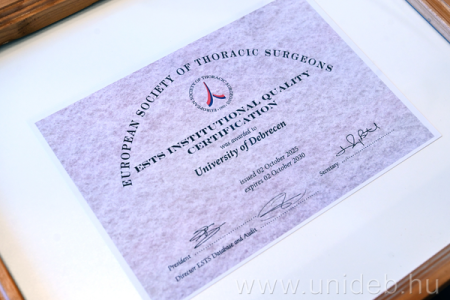
Why Accreditation Matters for Patients and Professionals
The European Society of Thoracic Surgeons (ESTS) accreditation is more than a badge; it is a rigorous audit that confirms a center’s adherence to the highest standards of safety, outcomes, and continuous improvement. For patients in Hungary and beyond, the certification signals that the University of Debrecen’s Thoracic Surgery Department (TSD) delivers care that meets or exceeds the benchmarks set across Europe.
Key Features of the University of Debrecen’s Thoracic Surgery Program
- Long‑standing European Recognition – First Eastern‑European institution to receive ESTS accreditation in 2012, with renewal every five years.
- High Volume of Complex Cases – Over 500 operations annually, including lung cancer, esophageal disease, and chest wall deformities.
- Minimally Invasive Expertise – More than 80% of procedures performed using video‑assisted or robotic techniques.
- Multidisciplinary Collaboration – Joint procedures with cardiology, vascular surgery, neurosurgery, and head‑and‑neck teams.
- Innovative Technologies – Adoption of indocyanine green (ICG) imaging, motorized suturing, and electric cutting systems.
Benefits of Minimally Invasive Thoracic Surgery
Patients who opt for minimally invasive procedures experience:
- Reduced postoperative pain and shorter hospital stays.
- Lower risk of infection and complications.
- Faster return to daily activities and work.
- Improved cosmetic outcomes due to smaller incisions.
In Hungary, the University of Debrecen performs approximately 80% of thoracic surgeries using these techniques, far above the European average of 30‑32%. This high adoption rate reflects the department’s commitment to staying at the forefront of surgical innovation.
Case Study: Video‑Assisted Lobectomy
In 2023, the TSD performed the country’s first fully video‑assisted lobectomy for a patient with early‑stage lung cancer. The procedure involved a single small incision, a thoracoscopic camera, and robotic instruments. The patient was discharged after 48 hours and returned to normal activities within two weeks—an outcome that would have taken several weeks with traditional open surgery.
Case Study: Nuss Procedure for Pectus Excavatum
The department also pioneered the endoscopic Nuss procedure in Hungary, offering a less invasive alternative for correcting chest wall deformities. Patients benefit from minimal scarring and a quicker recovery, often returning to school or work within a month.
How the ESTS Accreditation Process Works
Accreditation requires:
- Comprehensive data collection on surgical outcomes, complications, and mortality.
- Peer review by independent ESTS experts.
- Verification of staff qualifications, equipment standards, and postoperative care protocols.
- Continuous quality improvement plans and patient safety initiatives.
By meeting these criteria, the University of Debrecen demonstrates a culture of excellence that benefits every patient and staff member.
Choosing the Right Thoracic Surgery Center in Hungary
When evaluating a thoracic surgery provider, consider the following factors:
- Accreditation Status – Look for ESTS or equivalent certifications.
- Surgeon Experience – Check the number of procedures performed annually and the surgeon’s specialization.
- Technology Adoption – Verify the use of minimally invasive tools and advanced imaging.
- Patient Outcomes – Review published data on success rates, complication rates, and patient satisfaction.
- Multidisciplinary Support – Ensure access to anesthesiology, oncology, and rehabilitation services.
The University of Debrecen excels in each of these areas, making it a top choice for patients across Hungary and neighboring countries.
What Patients Can Expect During Their Surgical Journey
From the initial consultation to postoperative care, the TSD follows a structured pathway:
- Pre‑operative Assessment – Comprehensive imaging, lab work, and risk stratification.
- Informed Consent – Detailed discussion of benefits, risks, and alternatives.
- Surgical Planning – Use of 3D modeling and simulation for complex cases.
- Recovery Protocols – Early mobilization, pain management, and nutrition plans.
- Follow‑up Care – Regular imaging and clinical visits to monitor healing and detect recurrence.
Patients often report high satisfaction scores, citing clear communication and a supportive care team.
Future Directions in Thoracic Surgery at the University of Debrecen
The department is actively exploring:
- Robotic‑assisted thoracic procedures to further reduce invasiveness.
- Integration of artificial intelligence for predictive analytics in surgical outcomes.
- Expanded collaboration with international research centers to publish cutting‑edge studies.
- Enhanced patient education platforms, including virtual reality simulations for pre‑operative counseling.
These initiatives position the University of Debrecen as a leader in thoracic surgery innovation.
Take the Next Step Toward Quality Thoracic Care
Patients interested in exploring minimally invasive thoracic surgery can schedule a consultation with the University of Debrecen’s thoracic surgery team. The department offers personalized assessments, detailed treatment plans, and transparent outcome data.
For medical professionals seeking collaboration or continuing education, the TSD hosts workshops and joint research projects that align with ESTS guidelines.
To learn more about the University of Debrecen’s thoracic surgery services, visit the official website or contact the Clinical Center’s patient liaison office.
Call to Action
Ready to discuss your surgical options? Schedule a consultation today and experience the benefits of European‑standard thoracic care.
Have questions about minimally invasive procedures? Explore our patient resources for detailed guides and FAQs.
Share your experience or ask for more information in the comments below—our team is here to support you.
For healthcare professionals interested in partnership opportunities, contact our research office to learn about joint projects and training programs.