
Óbuda University Hosts Central European AI Summit in Budapest, Hungary: Boost Your Career in Artificial Intelligence
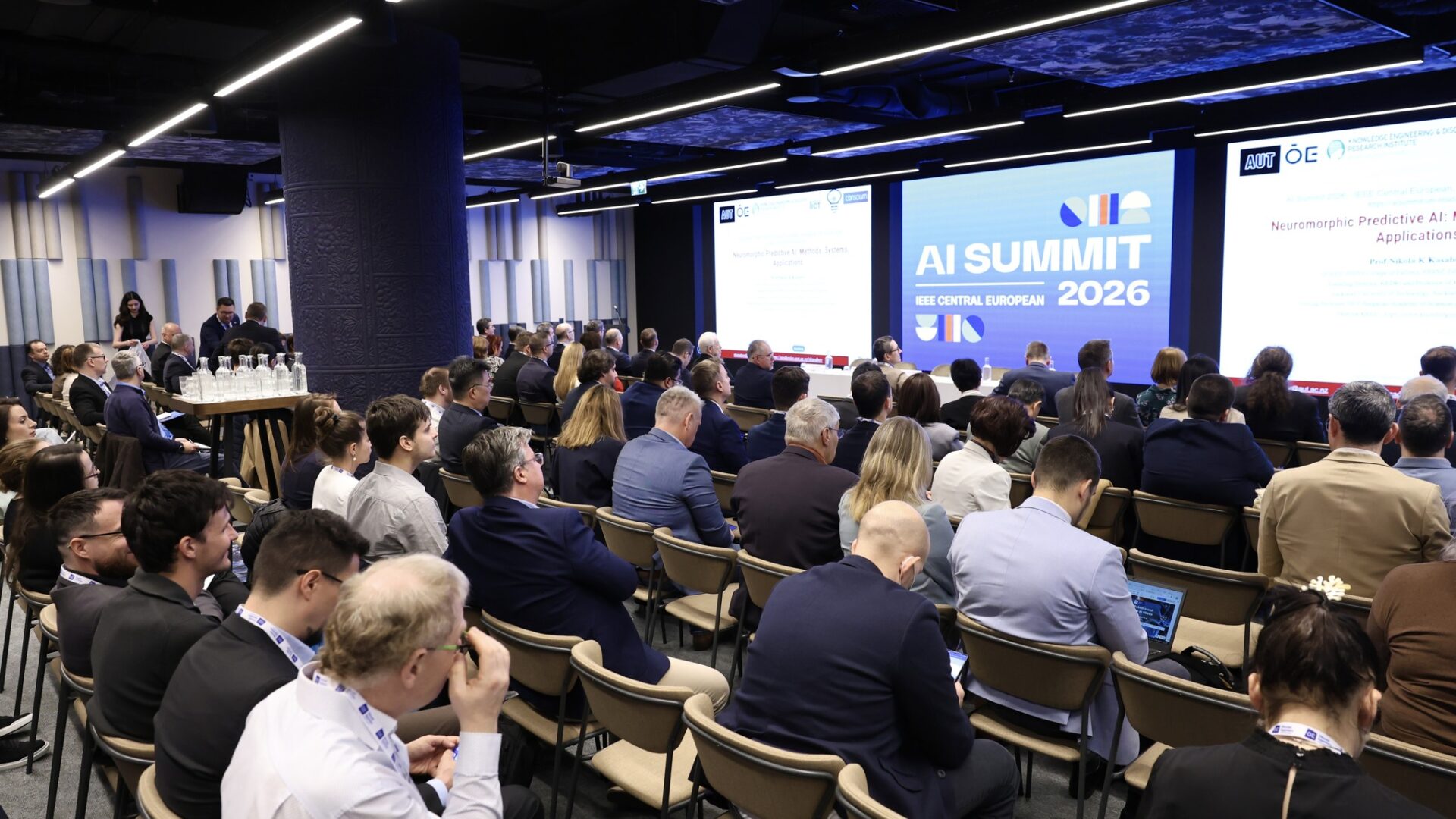
Overview of the Central European AI Summit in Budapest
The IEEE Central European Artificial Intelligence Summit recently took place in Budapest bringing together over a hundred speakers and 350 participants from academia industry and government. Organized with the support of Óbuda University IEEE Hungary Section the John von Neumann Computer Society IEEE Standards Association and the HUN‑REN Institute for Computer Science and Control the event highlighted how Budapest and the surrounding region are becoming active shapers of the global AI ecosystem.
Key Highlights from the Summit
Opening remarks were delivered by Laszlo Palkovics Government Commissioner for Artificial Intelligence Clara Neppel of IEEE Europe Professor Jozsef Bokor of HUN‑REN SZTAKI and Daniel Drexler President of the IEEE Hungary Section. Plenary lectures featured Nicola Kasabov from Auckland University of Technology discussing neuromorphic predictive AI and Oussama Khatib from Stanford University presenting visions of human‑robot collaboration.
Parallel sessions covered topics ranging from the theoretical foundations of AI to cutting‑edge industrial applications including Large Language Models space‑based AI medical technology and digital humanism. Panel discussions addressed AI regulation governance and the societal impacts of an AI‑powered space economy.
The Birth of the CE AI Hub
During the summit the CE AI Hub Initiative was launched spontaneously by IEEE with participation from the IEEE AI Coalition. The hub creates an open platform for Central and Eastern European universities and research centers to jointly discuss AI challenges share experiences and establish collaborations. Signatories included rectors from Óbuda University the Technical University of Kosice the University of Miskolc the University of Debrecen and University North along with representatives from HUN‑REN SZTAKI and the Adriatic Aerospace Association of Croatia.
This new platform aims to strengthen cooperation knowledge sharing and active participation in the international AI community positioning Central Europe as a dominant player on the global AI map.
AI in Space A Spotlight Session
The second day featured a plenary talk by David Alexander of Rice University on AI‑powered space AI adoption in a commercial space economy. The Strix2025 Award ceremony celebrated Hungary’s first AI competition recognizing outstanding domestic innovations. Subsequent panels explored Space Technology & AI Large Language Models MedTech and Scientific Applications showcasing how AI drives research across disciplines.
Why Budapest Is Becoming an AI Hotspot
Budapest’s vibrant academic community strong engineering tradition and growing network of international partners make it an ideal location for AI advancement. The city’s universities including Óbuda University offer specialized programs that blend theory with hands‑on projects preparing students for careers in AI research development and application.
How to Get Involved AI Education at Óbuda University
If you are inspired by the summit and want to build a career in artificial intelligence Óbuda University provides several pathways:
- Bachelors and Masters programs in Computer Science Electrical Engineering and Informatics
- Information on admission requirements and application deadlines
- Details on the Stipendium Hungaricum scholarship for international students
- Opportunities to join industry‑linked research projects and innovation labs
Actionable Advice for Aspiring AI Professionals
- Stay updated on emerging trends by following conferences like the CE AI Summit and subscribing to AI newsletters.
- Gain practical experience through internships hackathons or university‑linked labs such as Initium Venture Labs.
- Develop a strong foundation in mathematics programming and ethics core competencies highlighted by summit speakers.
- Network with professionals at events and online communities to learn about job openings and collaborative projects.
- Consider interdisciplinary studies AI applications span space technology healthcare finance and digital humanism.
Next Steps
Whether you are a student evaluating study options or a professional looking to upskill the momentum generated by the CE AI Summit shows that Budapest is a promising place to pursue AI excellence. Take the first step today by exploring the programs and resources available at Óbuda University.
Explore AI‑related programs at Óbuda University
Schedule a free consultation with our admissions team
Download our brochure on AI studies and scholarships