
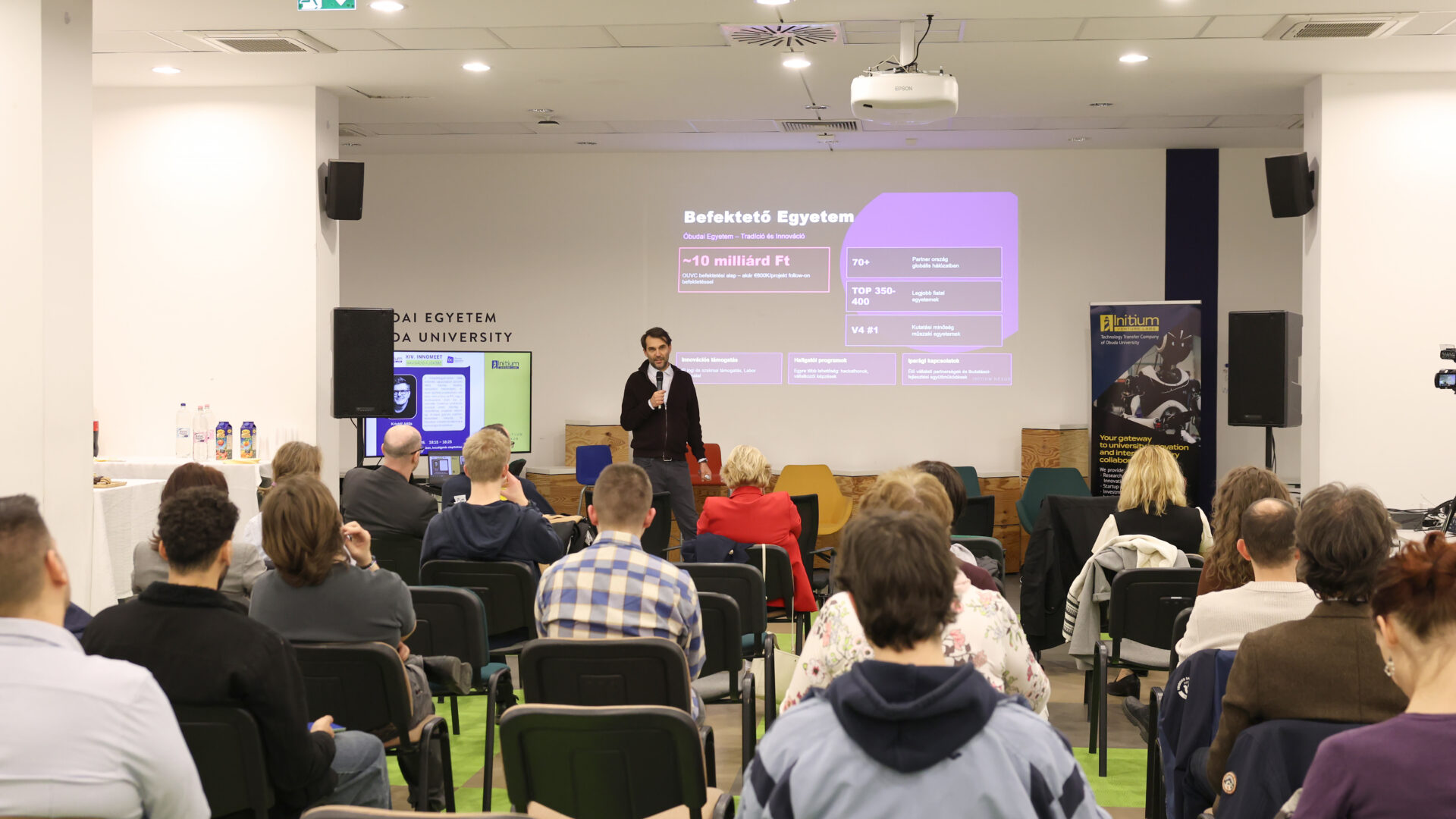
Technology continues to reshape every aspect of modern society, from how businesses operate to how we create art and entertain ourselves. However, with this rapid transformation comes a critical question: what boundaries, if any, should guide technological development? The 14th INNOMEET, hosted by Óbuda University in Hungary, brought together industry leaders, researchers, and innovators to explore these very questions.
The Role of Universities in Technological Innovation
Universities occupy a unique position in the innovation ecosystem. They serve as incubators for new ideas, training grounds for future talent, and bridges between academic research and commercial applications. Óbuda University has established itself as a key player in Hungary’s technology landscape through its innovation platform and technology transfer initiatives.
The event was organized by Initium Venture Labs Zrt., the technology transfer company of Óbuda University. This connection highlights how higher education institutions are increasingly taking an active role in fostering entrepreneurship and commercializing research outcomes. Rather than remaining isolated academic environments, universities are becoming integral parts of the innovation value chain.
Dr. habil. István Szabó, Head of the Talent Management Office at Óbuda University, addressed the role of futures studies in the corporate world during the event. This perspective is crucial because it reminds us that technological advancement cannot be viewed in isolation—it must be considered within broader social, economic, and environmental contexts. Futures studies provides frameworks for anticipating challenges and opportunities that emerging technologies may create.
The NEXUS Program: Supporting Startups Through Critical Phases
One of the central themes at the 14th INNOMEET was the challenge facing startups as they attempt to bring innovative technologies to market. Zoltán Kátay, Investment Director at Initium Venture Labs, presented the NEXUS program—a joint corporate innovation initiative between Óbuda University and Initium.
The program addresses a significant problem known as the “Valley of Death”—a term describing the difficult period when startups lack the capital, expertise, and market access needed to survive. Many promising technologies fail during this phase simply because young companies cannot secure sufficient resources to develop their innovations beyond the prototype stage.
The NEXUS program tackles this challenge through a structured approach. Companies first identify problem maps, trends, and future challenges within their industries. Teams are then formed through open calls, bringing together entrepreneurs with the skills needed to address specific problems. Finally, selected teams receive capitalization through Proof of Concept grants and other funding mechanisms.
This model demonstrates how universities can actively contribute to economic development beyond their traditional educational role. By connecting startups with corporate partners and providing early-stage funding, Óbuda University is helping to bridge the gap between academic innovation and commercial viability.
Artificial Intelligence: Transforming Creative Industries
The impact of artificial intelligence on creative fields was another major topic at the event. Attila Kristóf, Production Director of Umbrella TV—one of the first companies to participate in the NEXUS program—shared insights into how AI is transforming filmmaking and content creation.
This discussion is particularly relevant as generative AI tools become increasingly sophisticated. The entertainment industry is experiencing significant disruption, with AI now capable of generating scripts, creating visual effects, and even producing entire films. These developments raise important questions about the future of creative work and the role of human artists in an AI-dominated landscape.
The conversation at INNOMEET reflected a broader recognition that technological advancement must be accompanied by thoughtful consideration of its social implications. Innovation is not simply about what is technically possible—it must also consider what is desirable from societal, ethical, and cultural perspectives.
Social Innovation and Collective Future-Shaping
Tibor Remete, founder of the Social Alliance (Társadalmi Szövetség), emphasized the significance of collective future-shaping at the event. The Social Alliance was established to catalyze social innovation by linking knowledge networks and collaborative platforms.
This perspective reminds us that technological advancement does not occur in a vacuum. The direction of innovation is shaped by social forces, and technology itself can be a tool for addressing social challenges. The Social Alliance’s approach of connecting different stakeholders—researchers, businesses, civil society organizations, and government agencies—reflects a growing recognition that complex challenges require collaborative solutions.
The emphasis on collective future-shaping also highlights the importance of inclusive innovation processes. When diverse voices are included in discussions about technological development, the resulting innovations are more likely to address broad societal needs rather than serving narrow interests.
Industry Perspectives on the Boundaries of Progress
The evening concluded with a panel discussion featuring prominent representatives from major Hungarian and international companies. Julianna Nagy, ESG Director at KPMG, brought insights on environmental, social, and governance considerations in technological development. Béla Szabó, Brand and Communications Director at Magyar Telekom, represented one of Hungary’s largest telecommunications companies. Tamás Hoffer, Head of Digitalization at AUDI Hungary, provided an automotive industry perspective on technological transformation.
The panel engaged in a substantive debate about the boundaries and boundlessness of progress. A key question emerged: while companies appropriately use their resources to explore markets, scout for new technologies, and attract talent, who is responsible for defining the limits of technological development?
The participants concluded that higher education institutions, students, and researchers also have a critical role to play in asking difficult questions and testing the boundaries of what is acceptable. This represents a fundamental responsibility for universities—not just to advance technology, but to critically examine its implications.
Building Trust and Curiosity in Innovation Ecosystems
A key insight from the panel discussion was the importance of building trust, curiosity, and attractiveness within innovation ecosystems. The participants noted that the great explorers and researchers who drive progress forward have always been idealists who think in terms of teams and ecosystems rather than individual achievement.
This observation has important implications for how innovation ecosystems are structured. Success requires not just technical capability, but also the ability to collaborate effectively, build relationships across organizational boundaries, and maintain a sense of-purpose that extends beyond profit maximization.
The networked mindset that the panel emphasized is particularly relevant in the context of regional development. Hungary, as a smaller European economy, can leverage its position within broader European innovation networks. Events like INNOMEET facilitate the connections that make such networking possible.
Conclusion: The Ongoing Conversation About Technology and Society
The 14th INNOMEET at Óbuda University demonstrated that the conversation about technological advancement and its boundaries is ongoing and multifaceted. Industry leaders, academic researchers, and innovation practitioners all have valuable perspectives to contribute.
As technology continues to evolve at an accelerating pace, the need for thoughtful reflection on its implications becomes increasingly urgent. Universities like Óbuda University play a vital role in this process by providing spaces for dialogue, conducting research on emerging technologies, and training the next generation of innovators to think critically about the social implications of their work.
The insights from this event in Hungary contribute to a broader global conversation about how we can harness technological advancement for the benefit of society while being mindful of its potential risks and limitations.
Explore more about Óbuda University’s innovation initiatives and upcoming events
Discover educational programs at Óbuda University
Contact the International Education Office for more information