
Review Óbuda University’s Role as an Innovation Partner at the Times Higher Education Summit
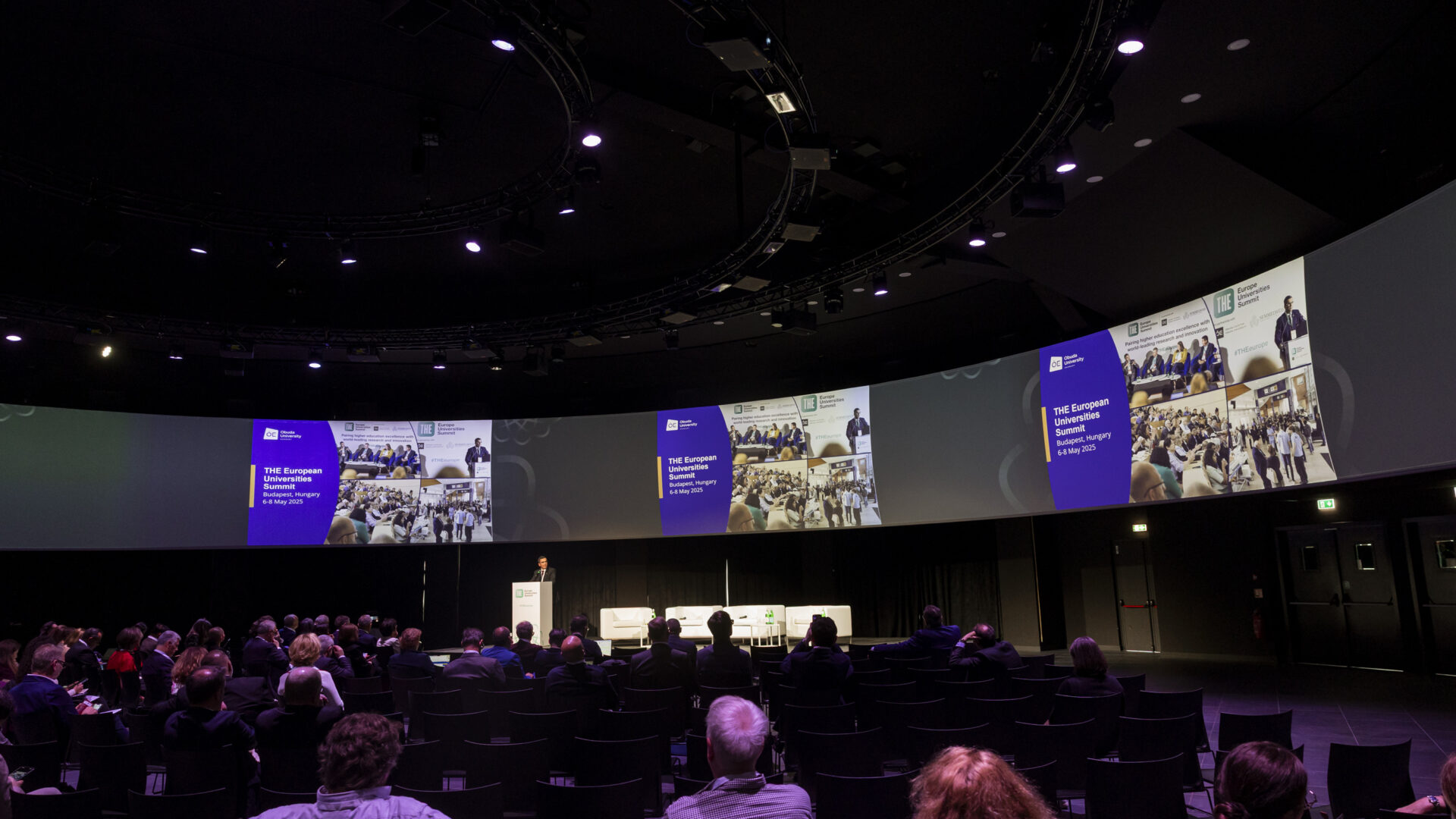
European higher education stands at a critical crossroads, shaped by rapid technological transformation, shifting geopolitical landscapes, and an increasing demand for actionable innovation. At the center of these discussions is the Times Higher Education (THE) Europe Universities Summit, a premier gathering that brings together academic leaders, policymakers, and industry experts. Serving as a distinguished innovation partner at this recent summit, Óbuda University demonstrated exactly how Central European institutions are driving the future of higher education. For prospective students, academic researchers, and international partners, understanding the strategies presented at this summit provides a clear window into what makes a modern technical university successful.
How European Universities Are Addressing Technological Transformation
The recent THE Europe Universities Summit focused heavily on the overarching challenges and opportunities facing the continent’s higher education sector. Discussions moved beyond traditional academic metrics to address how universities can reinforce their roles in the global knowledge and innovation space. Key themes included the integration of advanced technologies into curricula, the necessity of cross-border academic collaborations, and the financial sustainability of research institutions.
European universities are increasingly required to act as dual engines of both fundamental research and economic development. This shift demands a restructuring of how institutions operate, moving away from isolated academic departments toward interconnected, entrepreneurial ecosystems. The summit highlighted that institutions failing to adapt to these technological and geopolitical realities risk falling behind in international competitiveness. Schedule a free consultation to learn more about how Óbuda University integrates these global trends into its academic programs.
Analyzing Óbuda University’s Rankings and Research Performance
To understand the significance of Óbuda University’s presence as an innovation partner at the summit, one must look at its consistent academic performance. Operating from its campuses in Hungary, Óbuda University has secured the top position among technical universities in the Times Higher Education rankings for both ‘research quality’ and ‘research environment’ categories for four consecutive years. Furthermore, it currently holds the 2nd position overall among Hungarian universities in national rankings.
These metrics are not merely symbolic; they reflect a sustained, institutional commitment to high-level research output and a highly supportive infrastructure for academics. For prospective students considering studying in Hungary, these rankings indicate a learning environment deeply embedded in current scientific inquiry. When a university consistently ranks at the top for its research environment, students gain direct access to functioning laboratories, active research groups, and a culture that prioritizes scientific inquiry over rote memorization. Submit your application today to join a top-ranked Hungarian technical university and experience this research-driven environment firsthand.
The Entrepreneurial University Model Explained
During the summit, Rector Prof. Dr. Levente Kovács delivered a pivotal presentation titled ‘The Óbuda University Model of the Entrepreneurial University.’ This concept is central to understanding how the institution differentiates itself from traditional academic models. An entrepreneurial university does not simply teach business courses; it operates with an entrepreneurial mindset embedded in its core administrative and academic functions.
Bridging Academic Research and Market Applications
A major barrier in traditional higher education is the ‘valley of death’—the gap between theoretical academic research and viable market applications. Rector Kovács detailed how Óbuda University addresses this through a structured innovation ecosystem, prominently supported by Obuda Venture Capital. This dedicated venture arm allows the university to directly fund and support spin-off companies and research projects that have commercial potential.
By utilizing internal venture capital structures, the university provides researchers and students with the financial backing necessary to prototype, patent, and pitch their ideas to industry partners. This infrastructure ensures that innovative ideas generated on campus do not remain trapped in academic journals but are actively transformed into social and market value, both in Hungary and internationally.
Involving Students in the Innovation Ecosystem
A critical component of the entrepreneurial model is the early integration of students into the innovation process. Rather than waiting for postgraduate studies to engage with real-world problems, students are encouraged to participate in research and development initiatives, hackathons, and startup incubators like the Initium Venture Labs. This early exposure builds practical skill sets, fosters professional networks, and instills a proactive mindset that is highly attractive to future employers. Explore our related articles for further reading on how student-led innovation ecosystems function in Central Europe.
Preparing Graduates for a Rapidly Changing Labor Market
Following his keynote, Rector Kovács participated in a high-level panel discussion regarding the future of graduate employability. He was joined by representatives from the Université de Toulouse (France), the State Agency for Science and Higher Education (Azerbaijan), and Bocconi University (Italy). The panel addressed a pressing concern for European universities: how to prepare students for a labor market that evolves faster than traditional degree cycles.
The consensus among the panelists was that university leadership must define clear strategic directions that account for the dual needs of students and employers. Degrees can no longer be designed in a vacuum; they require continuous input from industry advisory boards and labor market data. Institutions must pivot toward flexible, modular learning pathways that allow students to upskill rapidly as new technologies emerge.
Addressing the Impact of Artificial Intelligence on Degrees
A particularly nuanced discussion point was the widespread use of Artificial Intelligence among students and its effect on employer confidence in the value of degrees. With AI tools capable of generating essays, writing code, and solving complex equations, there is a valid concern among employers that a high GPA no longer guarantees foundational competency.
Rector Kovács highlighted that the responsibility of universities in this era is to pivot away from assessing rote knowledge and instead foster critical thinking and competitive, uniquely human skills. This requires a fundamental overhaul of pedagogical solutions. Universities must implement assessment methods that cannot be easily bypassed by AI, such as oral examinations, project-based evaluations, and hands-on practical demonstrations. Furthermore, cultivating a lifelong learning mindset is essential. When students are taught how to learn and adapt, rather than merely how to recall information, the disruptive impact of AI on degree valuation is significantly mitigated.
Building International Partnerships in the European Higher Education Area
Beyond the presentations and panel discussions, Óbuda University utilized the summit to solidify its international presence through a dedicated exhibition stand. For any modern university, visibility within the European Higher Education Area (EHEA) is vital for attracting international talent, securing Erasmus+ partnerships, and participating in Horizon Europe research grants.
The exhibition allowed the university to showcase its specific educational and research achievements to a captive audience of international academic leaders. Building these strategic collaborations is necessary for maintaining research performance, especially during periods marked by financial and institutional challenges across the continent. By sharing resources, exchanging faculty, and collaborating on joint research initiatives, European universities can sustain their global competitiveness far more effectively than they could in isolation.
The decision to invite Óbuda University as an innovation partner reflects a broader recognition within the THE community that the future of European higher education relies heavily on the contributions of dynamic, technically focused institutions in Central Europe. These universities often serve as practical bridges between Western European academic networks and Eastern European industrial applications.
Conclusion
The participation of Óbuda University as an innovation partner at the Times Higher Education Summit underscores its position as a forward-thinking leader among European universities. By championing the entrepreneurial university model, integrating venture capital into its research pipeline, and directly addressing the challenges posed by AI to graduate employability, the institution provides a working blueprint for modern higher education. For students and researchers seeking an environment where academic rigor meets practical, market-driven application, the developments showcased at this summit confirm that Hungary’s technical higher education sector offers substantial, tangible opportunities. Have questions about studying in Hungary or the programs offered at Óbuda University? Write to us! Share your experiences with international higher education in the comments below.