Review Óbuda University’s Leadership at IEEE Convene 2026 and International Scientific Events in Hungary
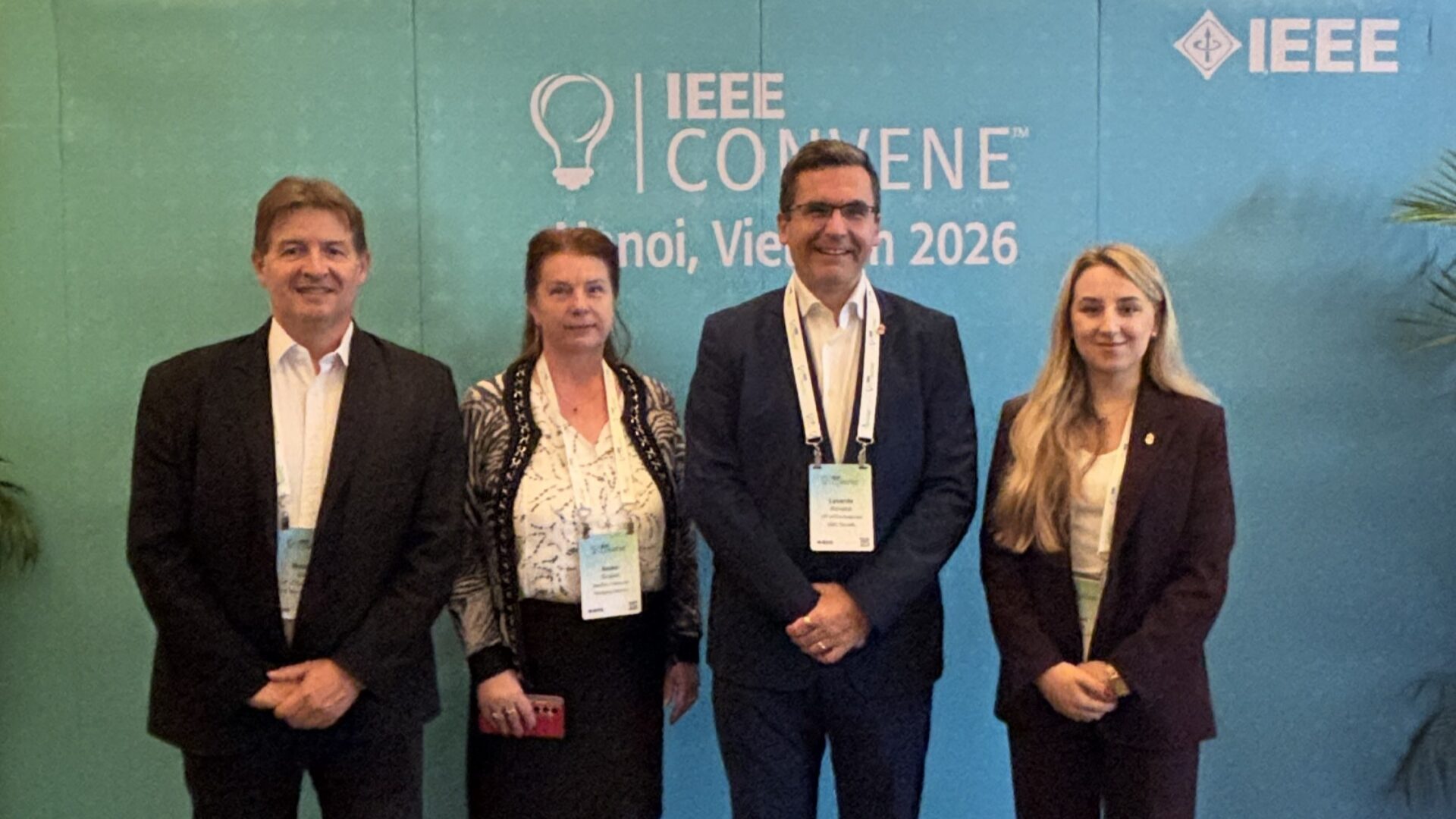
Organizing and participating in top-tier academic gatherings requires precise coordination, rigorous peer review standards, and a commitment to fostering global knowledge exchange. IEEE Convene 2026, currently taking place in Hanoi, Vietnam, serves as the primary forum for addressing these exact challenges. As the annual international conference for the Institute of Electrical and Electronics Engineers (IEEE)—the world’s largest technical professional organization—this event gathers the leaders responsible for orchestrating over 2,000 global conferences annually. Representing Hungary at this prestigious gathering is Prof. Dr. Levente Kovács, Rector of Óbuda University, who is attending in his official capacity as the Vice President for Conferences and Meetings of the IEEE Systems, Man, and Cybernetics Society (IEEE SMC).
This active participation underscores the critical role that Óbuda University plays in shaping the future of international scientific events. For academics, researchers, and aspiring engineering students, understanding how universities engage with these global networks provides valuable insight into where the most significant research opportunities and career advancements originate. Schedule a free consultation to learn more about how international networking can impact your academic trajectory.
Understanding IEEE Convene 2026 in Hanoi
Unlike standard academic conferences where researchers present individual papers, IEEE Convene operates as a meta-conference. The attendees are the architects of the scientific event world—conference organizers, committee chairs, and society leaders. Their objective in Hanoi is to review the experiences and insights derived from the massive portfolio of IEEE conferences held across 39 distinct professional societies.
Discussions at IEEE Convene 2026 focus on the logistical, technical, and ethical challenges of running international scientific events. Topics typically include adapting to hybrid presentation formats, maintaining the integrity of the peer-review process at scale, and improving accessibility for researchers from developing nations. By bringing these leaders together in Vietnam, IEEE ensures that the standards for global technical conferences continue to evolve, adapting to new technological realities and the shifting geographical landscape of engineering research.
The Role of Óbuda University in Global IEEE Conferences
Prof. Dr. Levente Kovács’s presence at IEEE Convene 2026 is not merely ceremonial; it represents a strategic operational role. As the Vice President for Conferences and Meetings within the IEEE SMC, he holds direct influence over how one of IEEE’s most prominent societies plans, executes, and manages its global events. The IEEE Systems, Man, and Cybernetics Society focuses heavily on complex systems engineering, computational intelligence, and human-machine interactions—areas where Óbuda University has established considerable academic strength in Hungary.
For many years, Óbuda University has functioned as a primary hub for organizing and hosting international IEEE conferences. The university consistently leverages the expertise gained from these high-level organizational roles to elevate its own domestic and regional scientific events. When a university’s leadership holds strategic positions within global organizations like IEEE, the institution benefits from early access to industry trends, advanced organizational frameworks, and a vastly expanded professional network. This operational excellence directly translates into higher-quality conference experiences for researchers and students attending events hosted on Óbuda University’s campuses in Budapest. Explore our related articles for further reading on the university’s research initiatives.
How International Collaboration Shapes Research at Hungarian Universities
Attending a conference in Southeast Asia to discuss event management might seem removed from the daily work of an engineering student in Budapest, but the downstream effects are highly tangible. International collaboration is the mechanism through which Hungarian universities integrate into the global research ecosystem. When representatives from Óbuda University engage with counterparts from Asia, the Americas, and other parts of Europe, they are laying the groundwork for joint research projects, faculty exchanges, and co-authored publications.
These connections facilitate access to international funding mechanisms, such as Horizon Europe and various bilateral research grants. Furthermore, the visibility generated by holding leadership positions in IEEE ensures that when international researchers are looking for partners in fields like cybernetics, artificial intelligence, or biomedical engineering, Óbuda University remains a recognized and trusted name. The flow of information and collaboration moves in both directions: the university imports best practices and cutting-edge methodologies, while exporting its own innovations and hosting international scholars who contribute to the local academic environment. Have questions? Write to us! to understand how these partnerships benefit students directly.
Benefits of High-Standard Scientific Events for Academics and Students
The rigorous standards discussed at IEEE Convene ultimately dictate the quality of the scientific events that academics and students attend. For a Master’s or PhD student, presenting at an IEEE-affiliated conference is a significant career milestone. These events require strict peer review, meaning that acceptance carries academic weight and enhances a researcher’s professional credibility.
High-standard scientific events provide several distinct advantages:
- Publication Opportunities: Top-tier conferences often result in papers being indexed in major databases like IEEE Xplore, ensuring long-term visibility and citation potential.
- Networking with Industry Leaders: IEEE conferences bridge the gap between academia and industry, allowing students to meet potential employers, collaborators, and investors.
- Feedback and Refinement: Presenting research to a global audience of experts provides critical feedback that significantly improves the quality of a student’s thesis or dissertation.
- Exposure to Emerging Technologies: Conference programs highlight the newest trends in engineering, keeping students and faculty ahead of the curve in rapidly evolving fields like machine learning and automation.
By actively participating in the governance of these events, Óbuda University ensures its students have regular access to these high-caliber opportunities locally, reducing the barrier to entry for international academic engagement.
Strategies for Engaging with International Technical Societies
For aspiring engineers and researchers, waiting until the final year of a degree to engage with international societies is a missed opportunity. Building a profile within organizations like IEEE requires proactive, sustained effort. Students should consider joining their local IEEE student branch, which provides foundational networking opportunities and access to specialized technical chapters.
Volunteering to assist with the organizational committees of scientific events offers a behind-the-scenes understanding of how these complex gatherings operate. This experience is highly valued by employers and can lead to invitations to join international organizing committees later in one’s career. Additionally, students should actively submit their term papers, thesis chapters, and early research findings to smaller, specialized IEEE conferences to gain confidence in the peer-review and presentation process. Utilizing university resources—such as writing centers, research methodology courses, and faculty mentorship programs—is essential for preparing submissions that meet international standards. Submit your application today to join an institution that actively supports these student-driven initiatives.
Plan Your Academic Future with Global Opportunities
The participation of Óbuda University’s leadership at IEEE Convene 2026 in Hanoi highlights a fundamental truth about modern higher education: a university’s strength is measured not just by its local curriculum, but by the depth and breadth of its international integration. The ability to bring global conference standards back to Hungary, to foster international collaboration across borders, and to provide students with access to world-class scientific events are direct benefits of the university’s active global strategy.
For prospective students evaluating engineering programs, investigating a university’s involvement in international technical societies provides a clear indicator of the institution’s research vitality and industry connections. Choosing a university that actively shapes the global academic landscape ensures that your education is connected to the broader world of engineering and technology. Share your experiences in the comments below regarding how international conferences have influenced your academic or professional career.