Óbuda University Excellence Scholarship Team-Building Camp Strengthens Interdisciplinary Research Networks in Hungary
Building Collaborative Foundations at Óbuda University
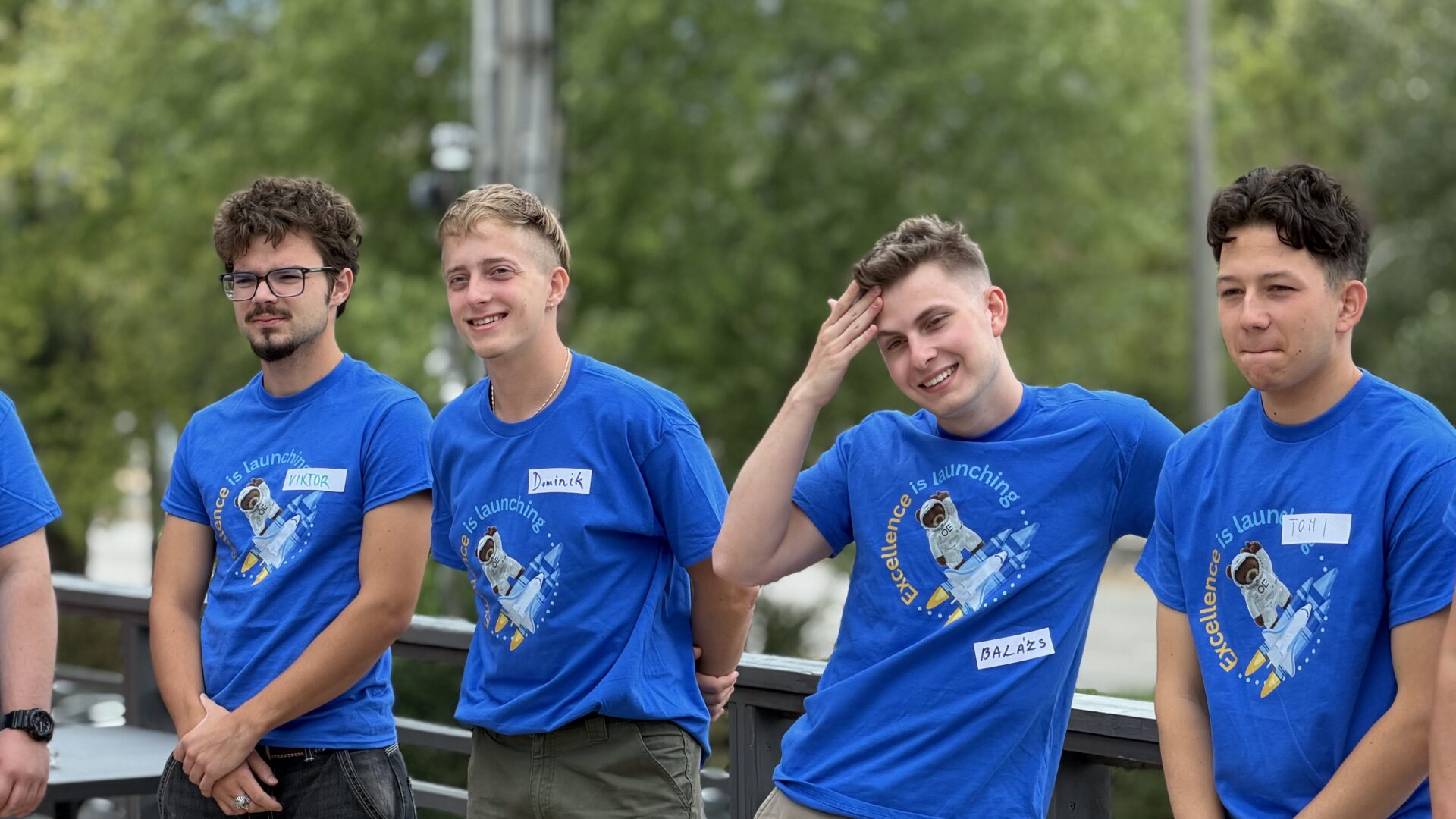
Óbuda University in Hungary continues to distinguish itself through innovative approaches to scholarship education. The recent Excellence Obuda team-building camp represents a strategic investment in developing the next generation of researchers and professionals who can work effectively across disciplinary boundaries. This initiative brings together scholarship recipients from diverse academic backgrounds to foster collaboration skills that prove essential in modern research environments.
The camp structure reflects Óbuda University’s commitment to practical, experience-based learning that complements traditional classroom instruction. Participants engage in carefully designed activities that challenge assumptions, build trust, and develop communication strategies applicable to complex research projects.
Excellence Obuda Scholarship Program Overview
The Excellence Obuda Scholarship program attracts high-achieving students to Óbuda University’s faculties across engineering, natural sciences, economics, and information technology. The scholarship provides financial support alongside enriched educational opportunities designed to accelerate academic and professional development.
Scholarship recipients gain access to specialized mentoring, research project participation, and international conference attendance. The team-building camp serves as a cornerstone experience that connects scholars with peers and faculty mentors early in their academic journey at the university.
Interdisciplinary Focus Drives Innovation
Modern research challenges rarely confine themselves to single disciplines. Climate change mitigation, artificial intelligence ethics, sustainable urban development, and healthcare technology advancement all require expertise spanning multiple fields. Óbuda University recognizes this reality and structures the Excellence Obuda program accordingly.
The team-building camp deliberately mixes participants from different faculties and research areas. Engineering students collaborate with economics scholars. Computer science researchers work alongside environmental science specialists. This intentional diversity mirrors the interdisciplinary research centers operating within Óbuda University, including the University Research and Innovation Center and the Cyber Medicine Competence Centre.
Camp Structure and Methodology
The multi-day camp takes place at a dedicated facility outside Budapest, removing participants from their usual academic environments. This physical separation creates space for relationship-building without the pressures of coursework deadlines or laboratory schedules.
Day One: Foundation Building
Opening activities focus on personal narrative sharing and skill inventory exercises. Participants articulate their research interests, methodological approaches, and collaboration preferences. Faculty facilitators guide discussions about disciplinary vocabularies and epistemological differences that can create barriers to effective interdisciplinary work.
Evening sessions include informal networking structured around shared meals and guided conversation prompts. These unstructured interactions often generate the most productive future collaboration ideas.
Day Two: Challenge-Based Learning
Participants form mixed-discipline teams to address complex problem scenarios drawn from actual research projects at Óbuda University. These challenges require integration of technical, economic, social, and ethical considerations. Teams must leverage each member’s expertise while developing shared language and decision-making processes.
Faculty mentors observe team dynamics and provide real-time feedback on collaboration patterns. Debrief sessions examine what worked, what failed, and why. This reflective practice builds metacognitive awareness of team processes.
Day Three: Application and Commitment
The final day shifts toward concrete application. Participants develop personal collaboration action plans identifying specific researchers, labs, or projects they intend to engage with during their scholarship period. Faculty advisors help refine these plans for feasibility and strategic value.
Closing ceremonies include commitment ceremonies where scholars publicly declare their interdisciplinary collaboration goals to peers and mentors. This social accountability mechanism increases follow-through rates significantly.
Measurable Outcomes and Impact
Óbuda University tracks several metrics to evaluate camp effectiveness. Post-camp surveys consistently show increased confidence in cross-disciplinary communication. Longitudinal tracking reveals that camp participants initiate interdisciplinary research projects at three times the rate of non-participating scholarship recipients.
Joint publications between camp alumni appear in university research databases within 18 months of program completion. Several have secured competitive research funding from Hungarian national agencies and European Union programs including Horizon Europe successors.
Alumni Success Stories
Recent camp alumni have launched collaborative projects spanning the university’s Science and Innovation Parks. One team combining mechanical engineering, data science, and healthcare management expertise developed a predictive maintenance system for medical equipment now being piloted at partner hospitals.
Another group merging environmental engineering, economics, and policy analysis produced a comprehensive assessment framework for green energy transitions in Central European municipalities. Their work attracted attention from the Hungarian Ministry of Innovation and Technology.
Integration with Broader University Ecosystem
The team-building camp does not exist in isolation. It connects directly to Óbuda University’s broader innovation ecosystem including the Obuda University Venture Capital fund and Initium Venture Labs. Camp participants receive priority consideration for venture incubation support when their collaborative projects demonstrate commercial potential.
The university’s STEAM Office coordinates follow-up programming throughout the academic year, including interdisciplinary seminar series, hackathons focused on societal challenges, and international research exchange opportunities through Erasmus and CEEPUS networks.
Faculty Development Component
Recognizing that faculty mentors also need interdisciplinary collaboration skills, the camp includes a parallel track for participating professors. This track addresses supervision strategies for cross-disciplinary student teams, grant writing for interdisciplinary funding calls, and curriculum design for integrated programs.
This dual-track approach ensures that the camp’s impact extends beyond individual student cohorts to influence institutional culture and teaching practices across faculties.
Practical Information for Prospective Applicants
Students interested in the Excellence Obuda Scholarship should monitor Óbuda University’s admission pages for application deadlines and required documents. The scholarship application typically requires academic transcripts, research interest statements, and letters of recommendation addressing both disciplinary excellence and collaboration potential.
International applicants should review visa information and dormitory options early in the process. The university’s International Education Office provides comprehensive support for incoming scholarship recipients, including Hungarian language courses and cultural integration programming.
Application Timeline and Requirements
Applications generally open in early spring for the following academic year. The selection process evaluates academic achievement, research proposal quality, and demonstrated interest in interdisciplinary work. Shortlisted candidates participate in interviews with faculty panels representing multiple disciplines.
Successful applicants receive notification by early summer, allowing time for visa processing and relocation arrangements before the academic year begins. The team-building camp typically occurs during the first semester, serving as an intensive orientation to the scholarship community.
Strategic Importance for Hungarian Higher Education
Óbuda University’s approach addresses a recognized gap in Hungarian higher education. While disciplinary depth remains strong across the national university system, structured interdisciplinary training at the graduate level remains less developed. The Excellence Obuda program models a scalable solution.
Other Hungarian institutions have begun adopting similar camp-based approaches for their excellence programs. The Hungarian Rectors’ Conference has highlighted Óbuda University’s model in discussions about national graduate education reform.
European and Global Context
The program aligns with European Higher Education Area priorities emphasizing transversal skills, interdisciplinary competencies, and research-based learning. Óbuda University’s participation in European University alliances amplifies the camp’s impact through shared best practices and joint programming with partner institutions across Europe.
Global research funding trends increasingly favor interdisciplinary consortia. The European Research Council, Horizon Europe, and major private foundations structure calls around complex societal challenges requiring integrated expertise. Camp alumni enter this funding landscape with demonstrated collaboration capabilities.
Future Development Directions
Óbuda University plans several enhancements based on participant feedback and outcome analysis. Virtual reality collaboration simulations will supplement physical camp activities, allowing practice in distributed team environments increasingly common in international research.
Industry partnership expansion will bring private sector R&D leaders into camp activities, exposing scholars to applied research contexts and potential career pathways. The university’s innovation ecosystem partners have expressed strong interest in participating.
Alumni Network Formalization
A formal alumni association for Excellence Obuda Scholars is under development. This network will maintain connections across graduation cohorts, facilitate ongoing collaboration, and provide mentorship for incoming scholars. Digital platforms will support continuous engagement regardless of geographic dispersion.
Annual reunion events coinciding with the university’s research conferences will strengthen community bonds and showcase collaborative achievements. These gatherings also serve as recruitment showcases for prospective applicants.
Conclusion
The Excellence Obuda team-building camp represents a sophisticated approach to scholarship education that recognizes collaboration as a learnable skill rather than an innate talent. By investing in structured interdisciplinary relationship-building, Óbuda University prepares scholars for the collaborative realities of contemporary research and innovation.
The program’s measurable outcomes—increased interdisciplinary project initiation, joint publications, competitive funding success—validate the investment. As research complexity continues growing, universities that systematically develop collaboration capabilities will produce graduates best positioned for impact.
For students considering graduate study in Hungary, the Excellence Obuda Scholarship offers not just financial support but entry into a deliberately cultivated community of interdisciplinary researchers. The team-building camp serves as the gateway to this community and the collaborative opportunities it enables.
Explore available programs at Óbuda University to learn more about scholarship opportunities and admission requirements.
Review Stipendium Hungaricum options for additional funding pathways for international students.
Start your application process today and take the first step toward joining Hungary’s leading interdisciplinary research community.
Contact the International Education Office with specific questions about visa requirements, housing, and arrival logistics.
Discover the Distinguished Program for additional excellence initiatives at Óbuda University.