Navigate Academic Relations Between Hong Kong and the University of Debrecen Faculty of Humanities
Understanding the Strategic Importance of Hong Kong-Hungary Academic Relations
Establishing robust international networks is a fundamental requirement for modern higher education institutions. For students and researchers in Hungary, the growing academic relations between Hong Kong and local universities present significant advantages. Hong Kong serves as a vital bridge between Eastern and Western academic traditions, offering a unique environment for cross-cultural research and study. The University of Debrecen has recognized this strategic value, actively working to build partnerships that provide direct benefits to its academic community.
International collaboration in higher education goes beyond simply exchanging students; it involves aligning research methodologies, sharing pedagogical frameworks, and co-authoring publications that address global challenges. By connecting with institutions in Hong Kong, Hungarian scholars gain access to a distinct regional perspective on topics such as global migration, educational policy, and social psychology. This bilateral relationship enhances the academic rigor of both regions and fosters a more interconnected global research community.
Schedule a free consultation to learn more about how international partnerships can influence your academic career path.
Recent Developments in University of Debrecen International Collaboration
The University of Debrecen has taken concrete steps to solidify its presence in Asia. Earlier this year, the institution formalized a cooperation agreement with The Education University of Hong Kong (EdUHK). This agreement serves as a framework for joint research initiatives and publication projects, specifically involving the Faculty of Humanities. Such structural agreements are critical because they provide the legal and administrative foundation necessary to secure funding, exchange faculty members, and support long-term academic projects.
Beyond EdUHK, the University of Debrecen has also expanded its reach by signing agreements with Hong Kong Baptist University. Furthermore, discussions are currently underway to finalize a partnership with Hong Kong Metropolitan University. This multi-institutional approach ensures that students and faculty in Hungary have a variety of pathways to engage with Hong Kong’s higher education sector, depending on their specific academic focus and career objectives.
Highlighting the Education University of Hong Kong (EdUHK) Conference
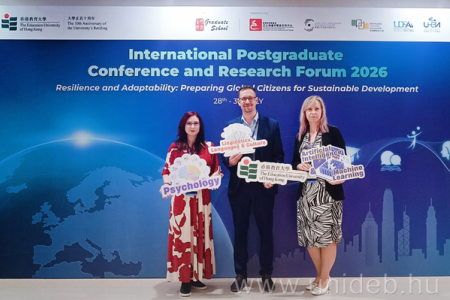
As a direct result of these emerging partnerships, delegates from the University of Debrecen recently participated in a major international conference hosted by EdUHK. Ranked 7th globally in the QS World University Rankings for Education and Training, EdUHK provided a high-caliber platform for academic discourse. The conference, which took place over four days in late July, attracted researchers from more than twenty countries.
The primary objective of this event was to provide doctoral candidates with a platform to present their research, connect with established scholars, and participate in roundtable discussions and workshops. For emerging researchers, attending a conference of this scale is an essential step in building a professional network and validating their research methodologies through peer feedback.
Keynote Addresses and Advanced Research Presentations
Representing the University of Debrecen, Balázs Venkovits—the acting dean’s commissioner for international and academic affairs and director of the Institute of English and American Studies—delivered a keynote presentation. His talk, titled “Restructuring Global Migration Trajectories: From Restrictions to New Diasporas and Heritage Preservation,” addressed highly relevant contemporary issues. Migration studies require a multidisciplinary approach, combining historical context with current socio-political analysis. Presenting this research in Hong Kong allowed for a valuable exchange of ideas, particularly given the region’s complex demographic and migration history.
Keynote presentations at international conferences do more than share findings; they establish the presenter’s institution as a credible contributor to global academic debates. By securing a keynote slot, the Faculty of Humanities demonstrated its capacity to produce research that resonates on an international scale.
Student Experiences in International Academic Forums
Faculty delegates were not the only representatives from the University of Debrecen. With support from the host university and the Pannonia Scholarship Program, two doctoral candidates—Flóra Csontos and Szilvia Hujber-Mitru from the Department of Social and Work Psychology—also attended the event. Their participation highlights the importance of integrating doctoral students into international collaborative environments early in their careers.
According to the delegates, the academic program covered diverse and emerging topics, including the integration of artificial intelligence in educational settings and the critical importance of mental health in modern societies. Engaging with these topics on an international stage allowed the students to situate their own psychological research within a broader, global context. Receiving professional feedback from international peers helps researchers refine their arguments and consider alternative methodological approaches.
Share your experiences in the comments below if you have attended international academic conferences during your studies.
The Value of Cultural Immersion Alongside Academic Work
Academic conferences offer more than just panel discussions and presentations; they provide an opportunity for deep cultural immersion. For the doctoral candidates, experiencing the environment of Hong Kong added a profound dimension to their trip. Visiting significant cultural sites, such as the Tsz Shan Buddhist Monastery, offered insights into the philosophical and historical underpinnings of the region.
For students in the humanities and social sciences, understanding the cultural context of the people they study is indispensable. Firsthand exposure to the social environment, urban dynamics, and cultural heritage of a region like Hong Kong enriches a researcher’s perspective, leading to more nuanced and culturally aware academic work. This blend of rigorous academic programming and cultural exploration is a hallmark of high-value international study trips.
Expanding the Network: Hong Kong Metropolitan University Discussions
Following the conclusion of the EdUHK conference, the University of Debrecen’s delegation continued its diplomatic efforts by visiting the campus of Hong Kong Metropolitan University (HKMU). These bilateral meetings focused on the practicalities of academic cooperation. Discussions between the management of HKMU and the University of Debrecen representatives covered potential student and faculty exchanges, the development of joint online courses, and long-term educational collaboration.
The proposal to launch joint online courses is particularly relevant in the current educational landscape. Online collaborations allow institutions to bypass geographical constraints, enabling students in Hungary to learn directly from professors in Hong Kong without leaving their home campus. This model of virtual exchange is an efficient way to scale international collaboration, making it accessible to a larger number of students.
Explore our related articles for further reading on how digital platforms are shaping the future of international education.
How Students Can Leverage These International Partnerships
For current and prospective students, the expansion of the University of Debrecen’s network into Hong Kong translates into tangible opportunities. Starting in the upcoming September semester, students will have the chance to travel to Hong Kong for study abroad programs. The Center for International Relations at the university notes a growing interest among the student body in the cultures and academic environments of the Far East, a demand that these new partnerships are explicitly designed to meet.
Students interested in education, social sciences, psychology, and migration studies stand to benefit the most from these specific partnerships, as the collaborating institutions in Hong Kong are leaders in these exact fields. Participating in a study abroad program in Hong Kong allows students to diversify their academic transcripts, build an international network, and develop cross-cultural competencies that are highly valued by employers in both the public and private sectors.
Submit your application today if you are interested in spending a semester abroad at one of our partner institutions in Asia.
Funding Opportunities for Studying and Researching Abroad
Financing international travel and study is often a primary concern for students. However, the University of Debrecen facilitates these experiences through the Pannonia Scholarship Program. This funding mechanism provides generous financial support to both students and staff, enabling them to travel to destinations around the world for conferences, research stays, and semester exchanges.
To take advantage of these opportunities, students must actively monitor application calls. The calls for the Pannonia Scholarship Program are routinely published on the university’s official mobility portal. Preparing a successful application requires a clear research proposal, a well-defined rationale for choosing the specific host institution, and an explanation of how the international experience will contribute to the applicant’s academic or professional development. Students are advised to begin preparing their applications well in advance of the deadlines and to consult with their academic advisors to strengthen their proposals.
Preparing for a Successful Academic Exchange in Hong Kong
Securing a spot in an exchange program is only the first step. To maximize the benefits of studying in Hong Kong, students should engage in thorough preparation before departure. Familiarizing oneself with the academic culture of the host institution is crucial. Hong Kong universities often emphasize independent research, rigorous assessment methods, and active participation in seminar-style discussions.
Additionally, students should take the time to learn about the local context. While English is widely used in academic settings in Hong Kong, gaining a basic understanding of Cantonese can significantly enhance the daily living experience and demonstrate respect for the local culture. Networking should also begin before arrival; reaching out to future classmates or academic supervisors via email can help establish a support system prior to landing in the city.
The active academic relations between Hong Kong and the Faculty of Humanities at the University of Debrecen represent a strategic expansion of Hungary’s global academic footprint. By establishing formal agreements, facilitating joint research, and supporting student travel through targeted scholarships, the university is providing its academic community with the resources necessary to compete and collaborate on a global stage.
Have questions? Write to us! Our international offices are ready to help you plan your academic journey.