
Kandó Summer University at Óbuda University Connects Hungarian Students with Sustainable Engineering Solutions
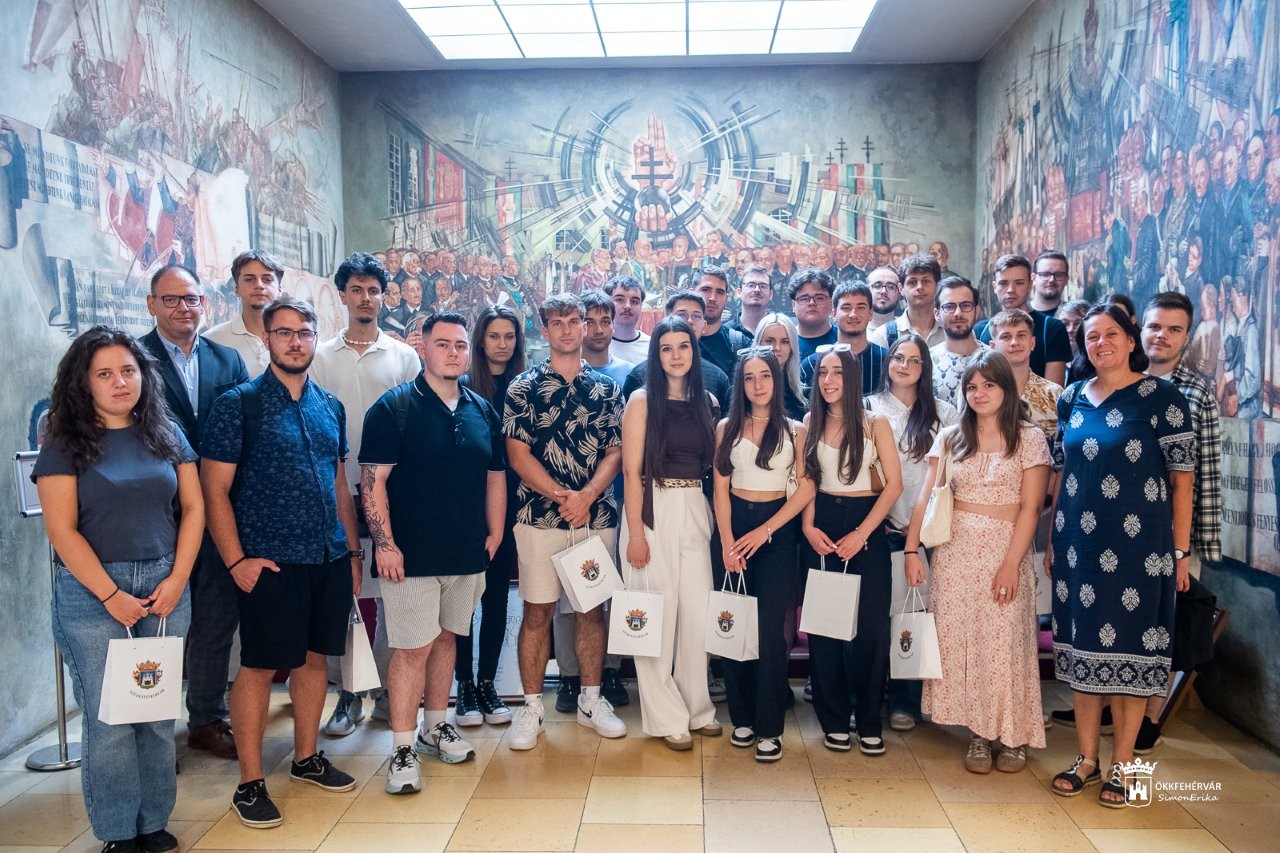
Every summer, a special kind of homecoming takes place in Hungary. Young engineers and engineering students whose families have lived for generations in neighbouring countries—Slovakia, Romania, Serbia, and beyond—travel to Hungary not only to reconnect with their cultural roots, but also to sharpen the technical skills that will define their careers. In its 36th edition, the Kandó Kálmán Summer University, hosted by Óbuda University, once again brought together nearly 30 Hungarian students from communities beyond Hungary’s borders for just over a week of intensive learning, industry exposure, and community building. This year’s central theme—sustainable engineering solutions—could not have been more timely.
In this article, we look at what makes the Kandó Summer University a unique institution within Hungarian higher education, what participants experienced during the 2026 programme in Zamárdi and Székesfehérvár, and how students of Hungarian heritage abroad can benefit from similar opportunities at Óbuda University.
A Thirty-Six Year Tradition of Supporting Hungarian Engineering Talent
The Kandó Summer University is not a one-off event or a short-lived initiative. Organised jointly by Óbuda University’s Kandó Kálmán Faculty of Electrical Engineering and the Alba Regia Faculty, the programme has now run for 36 consecutive years. That longevity matters. It means generations of Hungarian students from Upper Hungary (Felvidék), Transylvania, Partium, and Vojvodina (Délvidék) have passed through the programme, carrying back to their home communities not just new technical knowledge, but also a stronger connection to the Hungarian language and professional culture.
The programme pursues several clearly defined goals:
- Strengthening Hungarian identity among young people who study and often work outside Hungary’s borders.
- Developing professional Hungarian vocabulary—a critical asset for students who may have completed most of their schooling in the majority language of their home country.
- Supporting academic and professional development through lectures, lab visits, and contact with leading researchers.
- Providing insight into the current state of the Hungarian industry, from manufacturing giants to cutting-edge telecommunications research.
For students weighing whether such a programme is worth a week of their summer, the track record speaks for itself. Few summer initiatives combine language development, cultural connection, and genuine engineering content in a single package.
If you are a Hungarian student living abroad and want to learn more about study opportunities, summer programmes, and scholarship options at Óbuda University, the International Education Office welcomes your questions and can help you identify the path that fits your goals.
Sustainable Engineering Solutions: The Theme That Shaped the 2026 Programme
Each edition of the Kandó Summer University is built around a central professional theme, and the 2026 programme focused on sustainable engineering solutions. This focus reflects a broader shift across the global engineering sector, where sustainability is no longer a niche specialisation but a core requirement in electrical engineering, automotive development, telecommunications, and robotics.
For participants, the theme provided a practical lens through which to view every lecture and site visit. Questions that concern engineers everywhere—how to power electric bus fleets, how to build energy-efficient 5G and 6G networks, how robots can reduce waste in industrial production—were explored in a Hungarian context, using Hungarian terminology and drawing on Hungarian research and industry examples.
This approach carries real value for students from diaspora communities. Sustainability vocabulary, standards, and regulations differ from country to country. Experiencing how Hungarian engineers and companies approach these challenges gives participants a comparable professional reference point in their mother tongue—knowledge they can apply whether they eventually work in Hungary, in their home country, or anywhere in the European Union.
Who Participates and Where Students Come From
The 2026 programme welcomed nearly 30 students from four historic Hungarian-inhabited regions beyond the current borders of Hungary:
- Upper Hungary (Felvidék) – southern Slovakia, home to a large Hungarian-speaking community.
- Transylvania (Erdély) – the historic heart of Hungarian intellectual and academic life in Romania.
- Partium – the region along Romania’s northwestern border with Hungary.
- Vojvodina (Délvidék) – the northern province of Serbia with a long-established Hungarian population.
Bringing together students from these different regions is itself a meaningful outcome. A student from Transylvania may attend university in Romanian, a student from Vojvodina in Serbian, and a student from Felvidék in Slovak. The Kandó Summer University gives them a shared professional space where Hungarian is the working language—something many of them experience rarely, if at all, in their regular studies.
Inside the Professional Programme: From Supercomputers to Robotics
The academic content of the 2026 Kandó Summer University was notably broad, spanning several of the most dynamic areas of modern engineering. Participants rotated through lectures and demonstrations covering topics such as:
Environmental Research and Freshwater Science
A presentation on the work of the Balaton Limnological Research Institute connected the programme’s sustainability theme to one of Hungary’s most important natural assets, Lake Balaton. Understanding how scientific research supports the protection of freshwater ecosystems gave students a concrete example of applied environmental engineering.
High-Performance Computing
A session on the role of supercomputers introduced students to the computational infrastructure behind modern engineering and scientific research—from climate modelling to materials simulation. For students accustomed to standard university computing resources, exposure to large-scale research infrastructure is often eye-opening.
Mobile Network Development: 5G and 6G
Telecommunications remains a flagship field for the Kandó Kálmán Faculty of Electrical Engineering, and the programme’s sessions on 5G and 6G mobile network development highlighted both current deployment challenges and the research directions shaping the next generation of connectivity. Energy efficiency in network design is one of the central sustainability questions in this field, tying the topic directly to the programme theme.
Electric Vehicle Engineering
The challenges of developing electric buses offered participants a look at one of the most visible applications of sustainable engineering: public transport electrification. Hungary’s automotive and vehicle manufacturing sector is deeply engaged in this transition, making the topic highly relevant for students considering careers in the region’s industry.
Industrial Robotics at the Alba Regia Faculty
On 3 September, the group travelled to Székesfehérvár, where Dr. habil. Éva Hajnal Nagy, Associate Professor, and Bálint Farkas, Assistant Lecturer introduced participants to the world of industrial robotics at Óbuda University’s Alba Regia Faculty campus. Hands-on demonstrations of robotic systems give summer programme students a realistic sense of university-level engineering education—valuable insight for anyone considering a full degree programme in Hungary later.
Beyond the Classroom: Industry Visits and Cultural Experiences
A distinctive strength of the Kandó Summer University is how it balances technical content with direct industry exposure and cultural programming.
A Day in Székesfehérvár
The Székesfehérvár day combined history, industry, and academia. Guided by Attila Mészáros, Deputy Mayor of Székesfehérvár, students explored the city’s history and landmarks—one of Hungary’s most historically significant cities and a former royal capital. The group then visited Videoton Holding Zrt., one of Hungary’s largest and most successful electronics manufacturing and contract manufacturing companies. Seeing a major Hungarian industrial employer from the inside gives students a tangible picture of the career landscape awaiting engineering graduates in Hungary.
Media and Technology Heritage in Budapest
In Budapest, participants visited the studio of Retro Rádió and the Huniverzum exhibition, adding a cultural and historical dimension to the week. These visits remind students that engineering heritage and national culture are intertwined—the technologies of past generations shaped the world Hungarian communities live in today, and today’s students will engineer the solutions of the next.
Would you like to experience Óbuda University’s laboratories and research environment first-hand? Explore the university’s open days, campus visit options, and faculty pages to see where a summer introduction can lead.
Why Programmes Like This Matter for Hungarian Students Abroad
For young Hungarian engineers in the diaspora, the challenges are specific and well documented. Many complete their technical education largely in another language, which can leave them without confident command of professional Hungarian terminology. Career opportunities in Hungary or in Hungarian-speaking professional environments may feel distant. And the connection between their cultural identity and their professional future can weaken over time.
The Kandó Summer University addresses all three challenges at once:
- Language: A week of lectures, discussions, and site visits conducted in Hungarian builds technical vocabulary faster than any textbook.
- Networks: Students meet professors, researchers, industry professionals, and peers who share their background and ambitions.
- Direction: Direct exposure to Hungarian industry and university research helps students make informed decisions about further study or career moves to Hungary.
The programme also strengthens Hungary’s long-term position. Students who experience Hungarian higher education first-hand—even briefly—are far more likely to consider full degree programmes, exchange semesters, or research collaborations in the future.
From Summer Programme to Full Degree: Study Options at Óbuda University
For many participants, the Kandó Summer University serves as a first encounter with Óbuda University—one of Hungary’s leading technical universities, based in Budapest with campuses including the Alba Regia Faculty in Székesfehérvár. The university offers a wide range of engineering programmes across its faculties, from electrical engineering and mechatronics to computer science and environmental engineering, at both bachelor’s and master’s levels.
Hungarian students from beyond the borders should also be aware of dedicated funding pathways. The Hungarian Diaspora Scholarship is designed specifically for students with Hungarian heritage living abroad, while the Stipendium Hungaricum programme supports a broader international applicant pool. Exchange frameworks such as Erasmus+ and the Pannónia Scholarship Programme additionally allow enrolled students to build mobility into their studies.
If you are considering applying, a sensible preparation sequence looks like this:
- Review available programmes and identify the faculties and degree structures that match your background.
- Check application deadlines and required documents early, as scholarship schemes often close months before the academic year begins.
- Contact the relevant office—the International Education Office for degree programmes, or the International Mobility Office for exchange and short-term opportunities.
- Attend a summer programme or open event to validate your choice before committing to a full degree.
Ready to take the next step toward studying in Hungary? Submit your application today or schedule a consultation with the International Education Office to discuss scholarships, entry requirements, and programme options tailored to your situation.
Final Thoughts: An Invitation to the Next Generation of Engineers
The 36th Kandó Kálmán Summer University demonstrated, once again, that sustainable engineering solutions are not just a global trend—they are a field where Hungarian talent, language, and industry are actively engaged. For the nearly 30 students who spent the week in Zamárdi, Budapest, and Székesfehérvár, the programme delivered exactly what it promises: professional growth in Hungarian, genuine insight into Hungarian industry and research, and a community of peers that stretches from Felvidék to Vojvodina.
For students reading this who could not attend this year’s edition, the opportunity will return. Programmes like this reward early planning, so start researching now, and do not hesitate to reach out with questions—university offices respond well to motivated applicants.
Have you participated in a summer university in Hungary, or are you planning to apply? Share your experiences and questions in the comments below, and explore our related articles on studying engineering in Hungary, diaspora scholarships, and student life in Budapest.