Join the University of Debrecen International Summer Academy for Global Cultural Exchange in Hungary
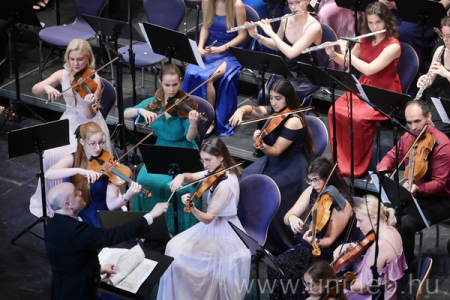
Finding the right environment to advance your musical proficiency requires more than just practicing alone in a room. Aspiring musicians need immersive experiences that challenge their technical abilities, broaden their artistic perspectives, and introduce them to diverse interpretive traditions. The University of Debrecen in Hungary addresses these exact needs through its highly regarded International Summer Academy. This program brings together young artists from around the world to form the Zoltán Kodály World Youth Orchestra, fostering intensive musical growth and profound cultural exchange.
Submit your application today to secure your place in upcoming international music programs and take your performance skills to the next level.
Build International Musical Networks at the Zoltán Kodály World Youth Orchestra
Participating in a professional-caliber ensemble is a critical step for any serious music student. The Zoltán Kodály World Youth Orchestra provides exactly this opportunity, but with a unique twist: the musicians often meet for the first time just days before taking the stage. During the most recent iteration of the International Summer Academy, students had merely thirteen days of intensive rehearsals to transform a group of strangers into a cohesive artistic community.
This accelerated timeline forces musicians to develop rapid communication skills. You must learn to read the body language of a new conductor, adjust your intonation to match unfamiliar section mates, and blend your tone with players who come from entirely different educational backgrounds. This process of cultural exchange happens naturally in the rehearsal room, proving that music truly is a universal language that transcends national borders.
Develop Professional Skills Through Intensive Rehearsals in Hungary
Attend a summer music program in Hungary, and you will quickly realize that the discipline required goes far beyond standard practice routines. The International Summer Academy operates on a rigorous schedule designed to simulate professional orchestra life. Students engage in master classes, sectionals, and full orchestral rehearsals, learning how to manage their physical stamina and mental focus over a continuous, multi-day period.
The Vice Rector for General Affairs at the University of Debrecen, Dénes Páll, emphasized that these intensive periods represent much more than simply playing notes on a page. They require dedicated effort, facilitate professional growth, and build lasting friendships. For a young musician, learning to balance the joy of joint creation with the strict discipline of orchestral performance is a vital professional skill that translates directly to future auditions and ensemble placements.
Master Classical Repertoire Under Expert Musical Direction
The repertoire chosen for the Zoltán Kodály World Youth Orchestra is deliberately diverse, testing the versatility of the young musicians. Under the musical direction of conductor Zoltán Bolyky, the ensemble recently tackled a demanding program. This included Gioachino Rossini’s “Overture to The Barber of Seville,” which demands crisp articulation and energetic precision from the strings and winds.
The program also featured Emmanuel Chabrier’s “España,” a work that challenges the orchestra to execute bold, rhythmic motifs and rich, colorful harmonies. Furthermore, performing Zoltán Kodály’s “Dances of Galánta” on Hungarian soil adds a layer of historical and cultural weight to the experience. Musicians must grasp the distinct Hungarian folk idioms and asymmetrical rhythms that define Kodály’s compositional voice, guided by mentors who inherently understand this stylistic tradition.
Schedule a free consultation to learn more about how intensive repertoire study can accelerate your musical development and prepare you for professional auditions.
Celebrate 25 Years of Cultural Exchange at the University of Debrecen
Institutions that endure for decades do so because they consistently deliver value to their students. The International Summer Academy for Young Musicians recently marked its twenty-fifth anniversary, a milestone that speaks to the enduring need for international collaborative spaces in the arts. According to Artistic Director Judit Váradi, the academy was founded twenty-five years ago with a specific dream: to create a meeting place where young artists from various countries could produce music together, inspire one another, and learn from masters.
Over the past quarter-century, generations of young musicians from sixty-two different countries have participated in this cultural exchange in Hungary. The anniversary serves not just as a look back at past achievements, but as a commitment to future artistic discoveries. The academy continues to act as a bridge, linking diverse communities and generations through a shared dedication to musical excellence.
Learn from Renowned Maestros and Mentors
A significant draw of the International Summer Academy is the direct access students have to experienced maestros and educators. The recent concluding concert also served as a homage to Tamás Vásáry, the founding conductor of the Zoltán Kodály World Youth Orchestra and an influential figure in the academy’s history. Vásáry’s artistic legacy—rooted in the belief that music represents discipline, freedom, and community simultaneously—continues to influence the pedagogical approach of the program.
Working closely with such mentors allows students to absorb interpretive nuances that cannot be learned from textbooks. They learn how to phrase a melodic line in the style of Leonard Bernstein’s “Overture to Candide,” or how to capture the sophisticated, jazzy atmospheres of George Gershwin’s “An American in Paris.” These interactions are the cornerstone of the master class format, providing personalized feedback that accelerates a student’s artistic maturity.
Have questions? Write to us! We can provide additional details on the faculty, audition requirements, and daily schedules of international summer music programs.
Evaluate the Long-Term Benefits of International Music Programs
When evaluating whether to invest time and resources into a summer music academy, students should consider the long-term career benefits. First, the networking opportunities are unparalleled. The colleagues you meet in the Zoltán Kodály World Youth Orchestra will eventually populate professional orchestras, chamber ensembles, and teaching faculties around the globe. Maintaining these international connections can lead to future gig opportunities and collaborative projects.
Second, the experience of adapting to different conducting styles and ensemble cultures builds resilience. Musicians who have successfully navigated the intense, fast-paced environment of a summer academy are often better equipped to handle the pressures of trial weeks in professional orchestras. Furthermore, the city of Debrecen itself offers a vibrant cultural atmosphere. Local leaders, such as Deputy Mayor István Puskás, have noted that the academy strengthens the city’s cultural values and provides local youth with the chance to engage with international trends without leaving Hungary.
Apply for Future Summer Music Academies in Debrecen
The high caliber of the training provided by the University of Debrecen is evident in the performance destinations of its students. Following their intensive preparation in Debrecen, the Zoltán Kodály World Youth Orchestra traveled to the capital city to perform at the Grand Hall of the Liszt Academy of Music. Securing a performance slot in such a prestigious venue is a testament to the rigorous standards maintained by the International Summer Academy.
For aspiring musicians looking to test their abilities against international peers, studying in Hungary presents a highly effective path forward. The combination of rigorous orchestral training, exposure to varied and challenging repertoire, and the rich cultural exchange that defines the Zoltán Kodály World Youth Orchestra creates an environment where tangible professional growth occurs. Start planning your next steps early, prepare your audition materials meticulously, and position yourself to take advantage of these intensive educational opportunities.
Share your experiences in the comments below if you have ever participated in an international summer music program or performed in a youth orchestra.
Explore our related articles for further reading on selecting the right music faculty and preparing for international orchestral auditions.