
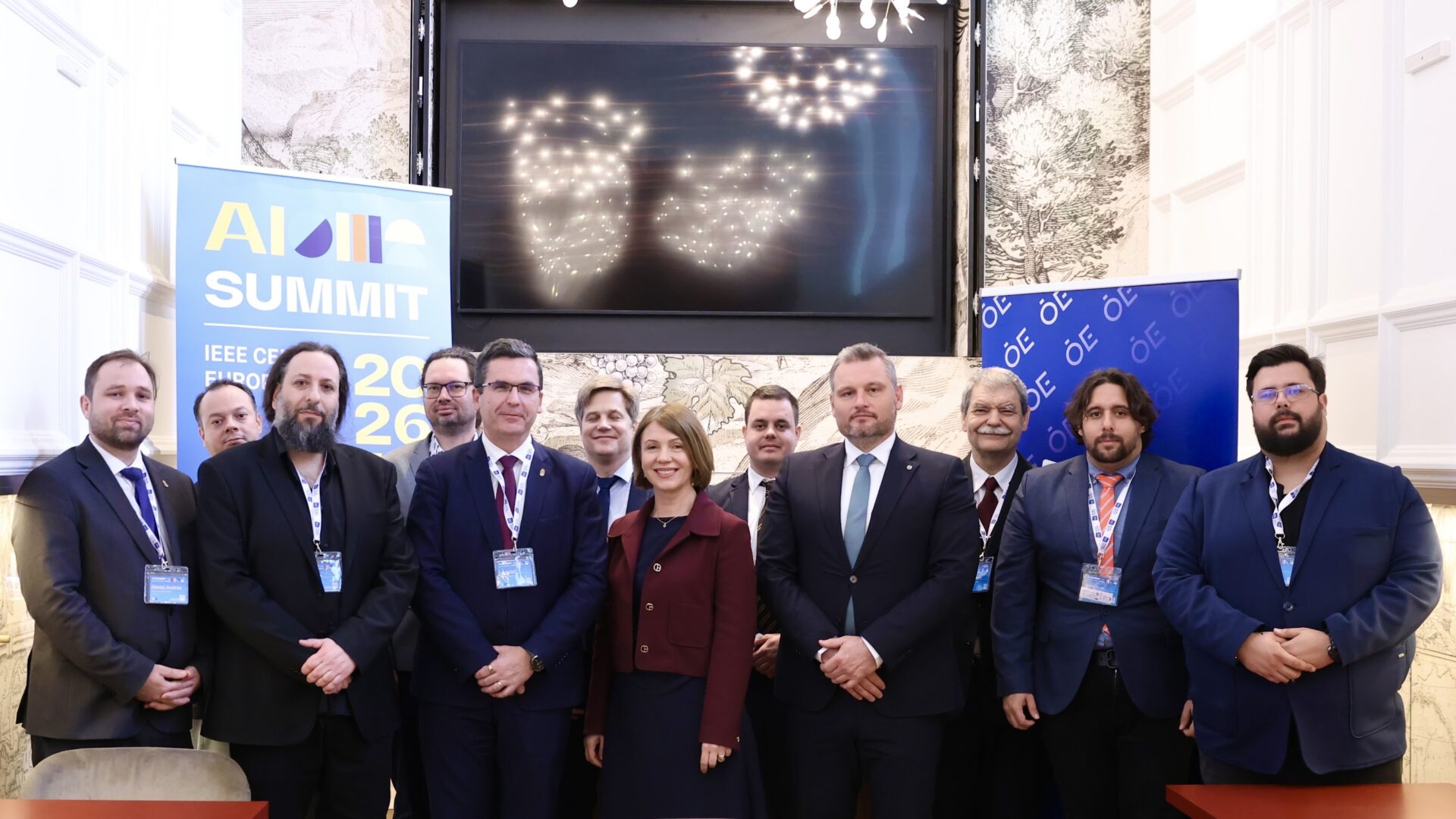
The IEEE Central European AI Summit 2026, held in Budapest, brought together researchers, industry leaders, and policymakers from across the region to discuss the future of artificial intelligence. Hosted by Óbuda University, the event underscored Hungary’s growing role as a hub for AI innovation and demonstrated how coordinated efforts can accelerate technological progress in Central Europe.
Setting the Stage for Regional AI Cooperation
From the opening ceremony, speakers emphasized that AI is not merely a technical challenge but a societal opportunity. Levente Kovács, Rector of Óbuda University, highlighted the institution’s commitment to fostering interdisciplinary research that bridges academia and industry. László Palkovics, Government Commissioner for Artificial Intelligence, outlined national strategies aimed at attracting talent and investment to the Hungarian AI ecosystem.
The summit’s agenda covered a broad spectrum of topics, including AI governance, large language models, medical AI, space applications, cybersecurity, and digital humanism. Each panel provided a platform for experts to exchange insights, identify common challenges, and explore collaborative solutions.
Key Takeaways from the Panel Discussions
- Governance and Regulation: Panelists stressed the need for harmonized policies across Central European states to facilitate cross‑border data flows while protecting citizen privacy.
- Scientific and Industrial Applications: Case studies demonstrated how AI is optimizing manufacturing processes, improving diagnostic accuracy in healthcare, and enabling smarter energy grids.
- Large Language Models: Discussions focused on responsible deployment, bias mitigation, and the potential for multilingual models to serve the region’s diverse linguistic landscape.
- Medical and Space Technologies: Innovations such as AI‑driven imaging analysis and autonomous satellite navigation were showcased as examples of high‑impact research.
- Cybersecurity and Data Governance: Experts warned of emerging threats and advocated for shared threat‑intelligence platforms and robust data‑management frameworks.
Launch of the Central European AI Hub (CE AI Hub)
One of the summit’s most concrete outcomes was the formal initiation of the Central European AI Hub. Backed by the IEEE AI Coalition and supported by international contributors such as Ming Hou and Clara Neppel, the CE AI Hub aims to:
- Strengthen research cooperation among universities and research institutes.
- Align funding opportunities and joint grant applications.
- Foster a coordinated innovation ecosystem that accelerates technology transfer from labs to market.
The signing ceremony featured representatives from Óbuda University, the Technical University of Košice, the University of Miskolc, the University of Debrecen, University North, HUN‑REN SZTAKI, and the Adriatic Aerospace Association. This broad institutional engagement signals a shared commitment to long‑term collaboration.
How the CE AI Hub Can Benefit Stakeholders
For academics, the hub offers access to joint research calls, shared laboratory facilities, and mobility grants that enable student and faculty exchanges. Industry partners can tap into a pool of talent, participate in pilot projects, and influence the direction of pre‑competitive research. Policymakers gain a structured dialogue channel to shape regulations that reflect the latest technological developments.
Celebrating Emerging Talent: The Strix 2025 Award
Parallel to the main summit, the Strix 2025 Award ceremony marked Hungary’s first national AI competition. The award recognized outstanding student projects that demonstrated creativity, technical rigor, and societal impact. Winners received mentorship opportunities, seed funding, and invitations to present their work at future IEEE events.
This initiative highlights the summit’s dedication to nurturing the next generation of AI professionals. By providing visibility and support to early‑stage innovators, the event helps build a sustainable pipeline of talent for the region’s AI ecosystem.
Practical Steps for Getting Involved
If you are a researcher, student, or industry professional interested in contributing to Central Europe’s AI advancement, consider the following actions:
- Join the CE AI Hub Community: Register on the hub’s portal to receive updates on joint funding calls, workshops, and networking events.
- Attend Future IEEE Summits: Mark your calendar for the next edition of the IEEE Central European AI Summit, typically held annually in Budapest.
- Explore Óbuda University’s AI Programs: The university offers undergraduate and graduate specializations in artificial intelligence, machine learning, and data science. Visit the Available Programs page for details.
- Collaborate on Research Projects: Reach out to the University Research and Innovation Center (link) to discuss potential partnerships.
- Participate in Student Competitions: Keep an eye on the Strix award announcements and other hackathons hosted by the STEAM Office (link).
Leveraging the Summit’s Outcomes for Policy and Business
Policymakers can use the summit’s policy briefs—available on the IEEE Central Europe website—to inform national AI strategies. Business leaders should consider the following:
- Identify joint‑venture opportunities with universities participating in the CE AI Hub.
- Invest in upskilling programs that focus on the AI competencies highlighted during the summit (e.g., LLM ethics, AI‑driven cybersecurity).
- Participate in the hub’s innovation sandbox, which provides a controlled environment for testing new AI solutions before market launch.
Conclusion: A Milestone for Regional Collaboration
The IEEE Central European AI Summit 2026 has firmly established itself as a catalyst for AI-driven growth in Central Europe. Through high‑level dialogues, the launch of the CE AI Hub, and the recognition of emerging talent via the Strix award, the event demonstrated how coordinated action can translate vision into tangible results.
As the region continues to build its AI capabilities, stakeholders from academia, industry, and government have a clear roadmap: engage with the hub, contribute to joint research, and translate insights into policy and practice. By doing so, Central Europe can secure a competitive position in the global AI landscape while ensuring that technological progress benefits society at large.
Stay informed: Subscribe to Óbuda University’s newsletter for updates on upcoming AI events, research opportunities, and partnership initiatives.
Explore further: Download the summit proceedings and presentation slides from the Conferences and Workshops portal.
Get involved: Have questions about joining the CE AI Hub or collaborating with Óbuda University? Contact the International Education Office today.
Share your thoughts: We welcome your comments and experiences related to AI collaboration in Central Europe—please leave them below.
Keep learning: Browse our related articles on AI ethics, digital transformation, and innovation ecosystems to deepen your understanding of the field.