Hungarian University of Sports Science: Eszter Bara Competes at World Para Volleyball Championship
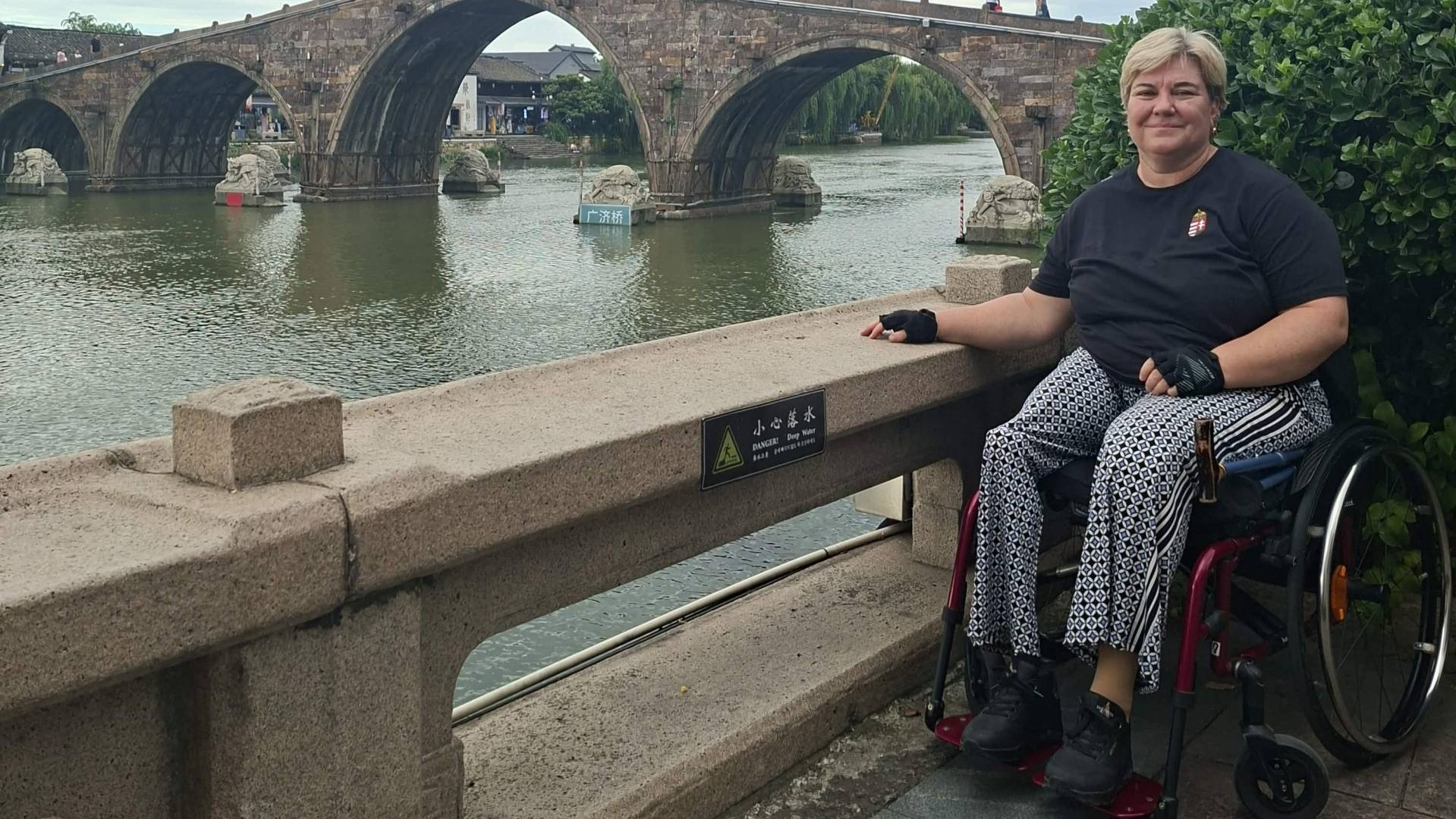
The intersection of academic careers and elite athletics represents one of the most demanding paths in professional sports. When Eszter Bara, a dedicated staff member at the Hungarian University of Sports Science, stepped onto the court at the World Para Volleyball Championship in Hangzhou, China, she carried with her not only the aspirations of the Hungarian women’s sitting volleyball national team but also the institutional pride of one of Central Europe’s most respected sports education institutions.
Balancing Professional Responsibilities and Elite Para-Athletics
Eszter Bara serves as a staff member in the Library and Archives at the Hungarian University of Sports Science, a role that demands precision, organization, and a deep commitment to supporting academic research and student success. Yet beyond the shelves and catalogues of the university library, Bara has cultivated an entirely different set of skills—those required to compete at the highest levels of international sitting volleyball.
This dual identity is not merely impressive; it is instructive. It demonstrates that the principles of discipline, time management, and sustained effort that define success in para-athletics translate directly into professional excellence. For students and aspiring athletes observing her career, Bara embodies the practical reality that athletic ambition need not come at the expense of professional development.
The Hungarian University of Sports Science has long championed the concept that academic and athletic pursuits can coexist and mutually reinforce one another. Bara’s presence on the world stage serves as tangible proof of this philosophy in action.
Schedule a free consultation to learn more about dual career programs at leading sports institutions.
The World Para Volleyball Championship: A Global Stage
Hosted in Hangzhou, China, from July 10 to 17, 2026, the World Para Volleyball Championship brought together the finest sitting volleyball teams from across the globe. For the Hungarian women’s national team, this marked their third consecutive appearance at the prestigious tournament—a testament to the program’s consistency and growing competitive foundation.
The championship concluded with the United States securing the gold medal, Brazil earning silver, and host nation China taking bronze. While Hungary finished in 15th place overall, the result represents far more than a numerical ranking. Each match played at this level provides invaluable experience, exposes athletes to diverse playing styles, and builds the collective knowledge base that will inform future training cycles.
Understanding Sitting Volleyball
Sitting volleyball is a Paralympic sport with specific rules that distinguish it from its standing counterpart. The court is smaller, the net is lower, and players must maintain contact with the floor at all times when playing the ball. These modifications create a game that demands exceptional upper body strength, rapid reflexes, and sophisticated tactical awareness.
For spectators unfamiliar with para-sports, sitting volleyball often provides a striking introduction. The speed of play, the intensity of rallies, and the technical proficiency of elite athletes consistently challenge preconceptions about disability and athletic performance.
Hungary’s Growing Presence in Para-Sports
Hungary has historically maintained a strong sporting culture, with particular emphasis on sports that require technical precision and tactical sophistication. The country’s investment in para-sports, while still developing compared to leading nations, has shown promising momentum in recent years.
The Hungarian women’s sitting volleyball team’s three consecutive World Championship appearances indicate sustained organizational commitment. Qualifying for these events requires consistent regional performance, adequate funding for training and travel, and a pipeline of athletes progressing through developmental programs. Bara’s club affiliation with Mozdulj SE reflects the grassroots infrastructure that supports elite para-athletes in Hungary.
Explore related articles for further reading on the development of para-sports infrastructure in Central Europe.
The Role of Sports Universities in Para-Athlete Development
Institutions like the Hungarian University of Sports Science play a critical role in the para-sports ecosystem that extends far beyond producing coaches and physical education teachers. These universities serve as research hubs where adaptive sports science can advance, as training facilities where para-athletes can access specialized equipment and expertise, and as cultural environments where disability is understood through the lens of athletic potential rather than limitation.
When a university’s own staff members compete internationally in para-sports, it creates a powerful feedback loop. The practical insights gained from elite competition can inform academic curriculum, research priorities, and institutional support structures. Conversely, the academic environment provides athletes with access to sports science knowledge that can enhance their competitive performance.
What Aspiring Para-Athletes Can Learn from Eszter Bara’s Journey
For individuals considering a path in competitive para-sports, several lessons emerge from Bara’s experience:
Seek environments that value multiple dimensions of identity. The Hungarian University of Sports Science did not view Bara solely as a library employee or solely as an athlete. The institution recognized and supported the full scope of her contributions and ambitions. Aspiring athletes should seek similar environments in their academic and professional lives.
Understand that competitive development is a long-term process. Hungary’s third consecutive World Championship appearance did not happen overnight. It resulted from years of sustained effort by athletes, coaches, and administrators. Progress in para-sports, as in all elite athletics, requires patience and persistence through periods of limited external recognition.
Embrace the representative responsibility. Competing under a national flag carries weight beyond individual performance. Bara represented not only herself but her university, her club, and her country’s para-sports community. Understanding and accepting this responsibility can provide motivation during challenging training periods.
Submit your application today if you are interested in combining academic study with high-performance athletics.
The Broader Impact of Para-Sports Representation
When para-athletes compete internationally, the impact extends well beyond the competition venue. Media coverage of events like the World Para Volleyball Championship introduces audiences to the capabilities of athletes with disabilities. For young people with disabilities who may be struggling to envision their future, seeing someone like Eszter Bara competing on a world stage can be genuinely transformative.
Representation also matters within institutional contexts. When the Hungarian University of Sports Science highlights Bara’s achievements, it sends a clear message to all students and staff: disability does not diminish one’s capacity for excellence. This institutional messaging contributes to a culture of inclusion that benefits everyone, not only those with disabilities.
Challenges Facing Para-Athletes in Hungary and Beyond
Despite positive developments, significant challenges remain for para-athletes in Hungary and across Central Europe. Funding for para-sports programs often lags behind able-bodied equivalents. Media coverage, while improving, remains inconsistent. Access to specialized training facilities and sports medicine professionals with para-sports expertise can be limited outside major urban centers.
Athletes like Bara who maintain professional careers alongside their athletic pursuits face additional pressures that their able-bodied, full-time counterparts may not experience. Managing work responsibilities, training schedules, competition travel, and recovery requirements demands extraordinary organizational skills and support systems.
Have questions about pursuing para-athletics while maintaining a career? Write to us!
Looking Ahead: The Future of Hungarian Sitting Volleyball
The experience gained at the 2026 World Para Volleyball Championship will serve as foundation for future competitive cycles. With each international appearance, the Hungarian women’s sitting volleyball team accumulates tactical knowledge, identifies areas for technical improvement, and builds the cohesion that comes from shared high-pressure experiences.
The role of the Hungarian University of Sports Science in this developmental trajectory should not be underestimated. As an institution that combines academic rigor with practical sports expertise, it is uniquely positioned to contribute to the advancement of sitting volleyball and para-sports more broadly in Hungary.
For Eszter Bara personally, the championship in Hangzhou represents another milestone in a career that continues to demonstrate the possibilities available to those who refuse to choose between professional fulfillment and athletic ambition. Her colleagues at the university library and her teammates on the national court both benefit from her commitment to excellence across these domains.
Supporting Para-Sports: How Readers Can Contribute
The growth of para-sports depends on sustained support from multiple stakeholders. Readers interested in contributing to this development can take several practical steps:
Follow and share coverage of para-sports events to increase visibility. Attend local and national para-sports competitions when possible. Advocate for inclusive sports programming in schools and community centers. Support organizations like Mozdulj SE that provide training environments for para-athletes. And engage with institutions like the Hungarian University of Sports Science that are working to integrate para-sports into their research and educational missions.
The story of Eszter Bara at the World Para Volleyball Championship is ultimately a story about what becomes possible when talent, determination, and institutional support align. It is a story still being written, with future chapters yet to unfold on courts and in communities across Hungary and beyond.
Share your experiences with para-sports in the comments below.