
Exploring Humanity and Artificial Intelligence: Insights from the University of Szeged’s EUGLOH Program
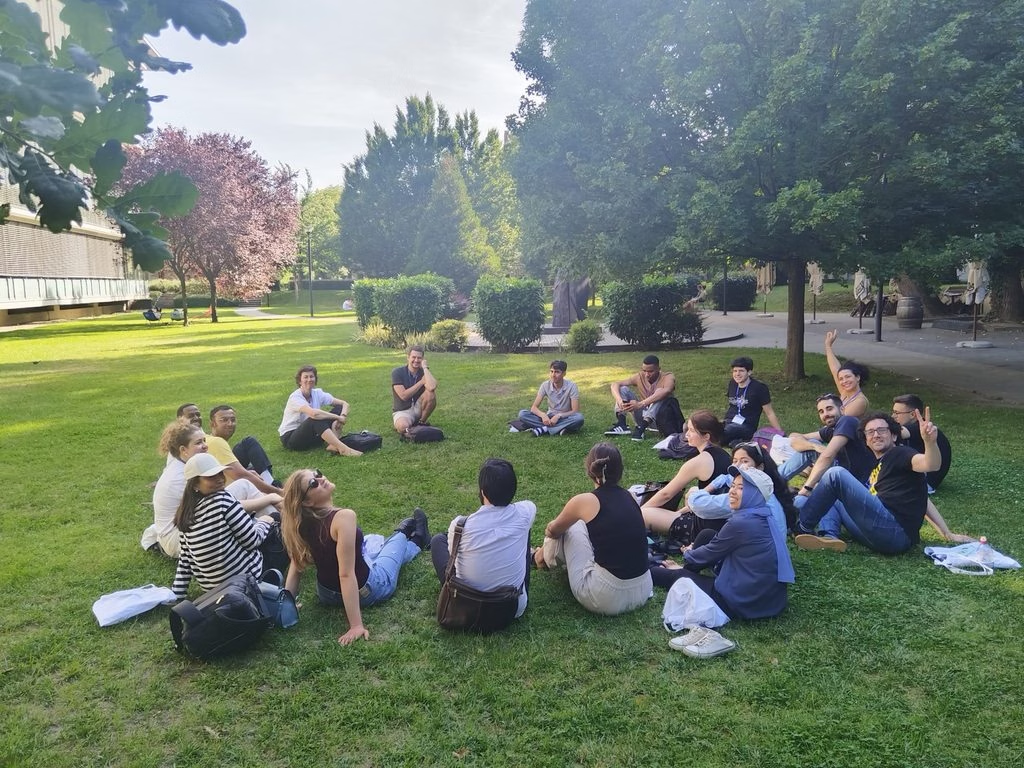
Understanding the Interplay of Humanity, AI, and Culture at the University of Szeged
The rapid development of artificial intelligence (AI) is reshaping many aspects of contemporary society, prompting crucial questions about what it means to be human in this new technological era. The University of Szeged in Hungary has taken a proactive role in addressing these questions through its innovative interdisciplinary initiatives. Most notably, the EUGLOH (European University Alliance for Global Health) program hosted a comprehensive course titled “AI and the Humanities” in spring 2025, which brought together students, academics, and industry experts from across Europe to explore the cultural, ethical, and societal implications of AI technology.
Bridging Disciplines: Humanities Meets Technology at Szeged
Traditional fields often view technology and humanities as separate domains. However, the Szeged course exemplified how cross-disciplinary dialogue enriches our understanding of AI’s impact beyond mere technical capabilities. The program aimed to provoke critical discussions on how AI influences creativity, meaning-making, authorship, and interpretation in art and literature.
Students and participants engaged in dynamic debates about the transformation of human labor, the evolving concept of authorship, and the cultural shifts driven by autonomous technologies. The course emphasized that understanding AI’s societal implications requires a nuanced, multidisciplinary approach—fusing insights from philosophy, arts, social sciences, and engineering.
Global Perspectives and Expert Contributions
The program was distinguished by its diverse lineup of international speakers and researchers. Participants learned from:
- António Coelho from the University of Porto, who discussed how extended reality (XR) technologies can enhance human capabilities.
- Szabolcs Prónay, a scholar from the University of Szeged and UC Berkeley, who presented insights on public acceptance of autonomous vehicles—highlighting societal adaptation to AI-driven innovations.
- Felicity Hammond, an artist based in London, showcased perception challenges through performative installations blending human and machine senses.
- Fruzsina Spitzer, a creative artist from Budapest, led workshops exploring AI’s role in generative art, emphasizing creative expression enabled by AI tools.
This diversity of perspectives fostered a comprehensive understanding of AI’s cultural implications, illustrating how technological advances intersect with human values, aesthetics, and societal norms.
Engaging Learning Experiences and Creative Pedagogy
Beyond conventional lectures, the Szeged course incorporated interactive and experiential activities. Participants engaged in urban field missions without smartphones to reflect on human reliance on technology, participated in playful AI-based learning sessions, and created digital art through generative algorithms. These hands-on activities created a space for vivid exploration and personal reflection.
Such innovative pedagogical approaches underline the importance of experiential learning in grasping complex issues surrounding AI. The course also emphasized stakeholder engagement—encouraging students to examine their own relationships with AI, fostering a reflective mindset that extends beyond academia into everyday life.
The Societal and Cultural Impacts of AI
The Szeged initiative highlighted that AI’s implications are not just technical but deeply embedded within cultural frameworks. For instance, AI-driven creative tools redefine artistic authorship and challenge traditional notions of originality. Similarly, autonomous vehicles and AI decision systems raise questions about accountability, societal trust, and acceptance.
Understanding these broader implications is vital for shaping policies and ethical guidelines. The course demonstrated that these discussions must be inclusive, international, and rooted in diverse cultural contexts to genuinely address the multifaceted challenge of AI integration into society.
Why Interdisciplinary Dialogue Matters
The University of Szeged’s approach underscores the necessity of integrating perspectives from humanities, social sciences, and technology. As AI continues to evolve, critical, ethical, and cultural considerations become more prominent. Addressing these challenges requires collaboration among scholars, policymakers, artists, and technologists.
Furthermore, the course exemplified how fostering reflective thinking and creative engagement prepares students to navigate and influence the future societal landscape shaped by AI advancements.
Take the Next Step in Exploring AI and Higher Education
As artificial intelligence advances, it is crucial to question and redefine our understanding of what it means to be human. The University of Szeged’s innovative multidisciplinary course exemplifies how academic institutions can lead these vital conversations. By blending insights from the humanities, arts, and sciences, we can navigate the cultural and ethical challenges posed by AI while enriching our collective understanding of human identity and society.
Interested in further exploring how AI influences culture and society? Fill out the form to receive personalized assistance from an expert counselor who can help you choose the right program, understand admission requirements, prepare the required documents, and guide you through the application process to increase your chances of receiving university acceptance.