Expand Your Academic Horizons: Óbuda University Explores Dual Degree Programs and AI-Driven Education with the University of Ulsan
Building International Partnerships in Higher Education
Developing robust international partnerships is a fundamental strategy for modern universities seeking to provide students with a competitive edge in the global workforce. For Óbuda University, maintaining a strong network of global partner institutions is not just an administrative goal, but a core component of its academic mission. Recent Óbuda University news highlights how the institution is actively forging connections that bring direct benefits to its student body and faculty. By prioritizing cross-border collaboration, the university creates avenues for knowledge exchange, research development, and cultural immersion that extend far beyond the traditional classroom setting in Hungary.
These partnerships are particularly critical in today’s rapidly evolving technological landscape. When universities with distinct regional strengths align their academic portfolios, students gain access to specialized knowledge and diverse industry connections. The ongoing efforts to internationalize the campus reflect a commitment to ensuring that graduates are prepared to operate in multinational environments, understand global market dynamics, and collaborate effectively with international peers. Explore our related articles for further reading.
Connecting Hungary and South Korea: The Recent OU Delegation Meeting
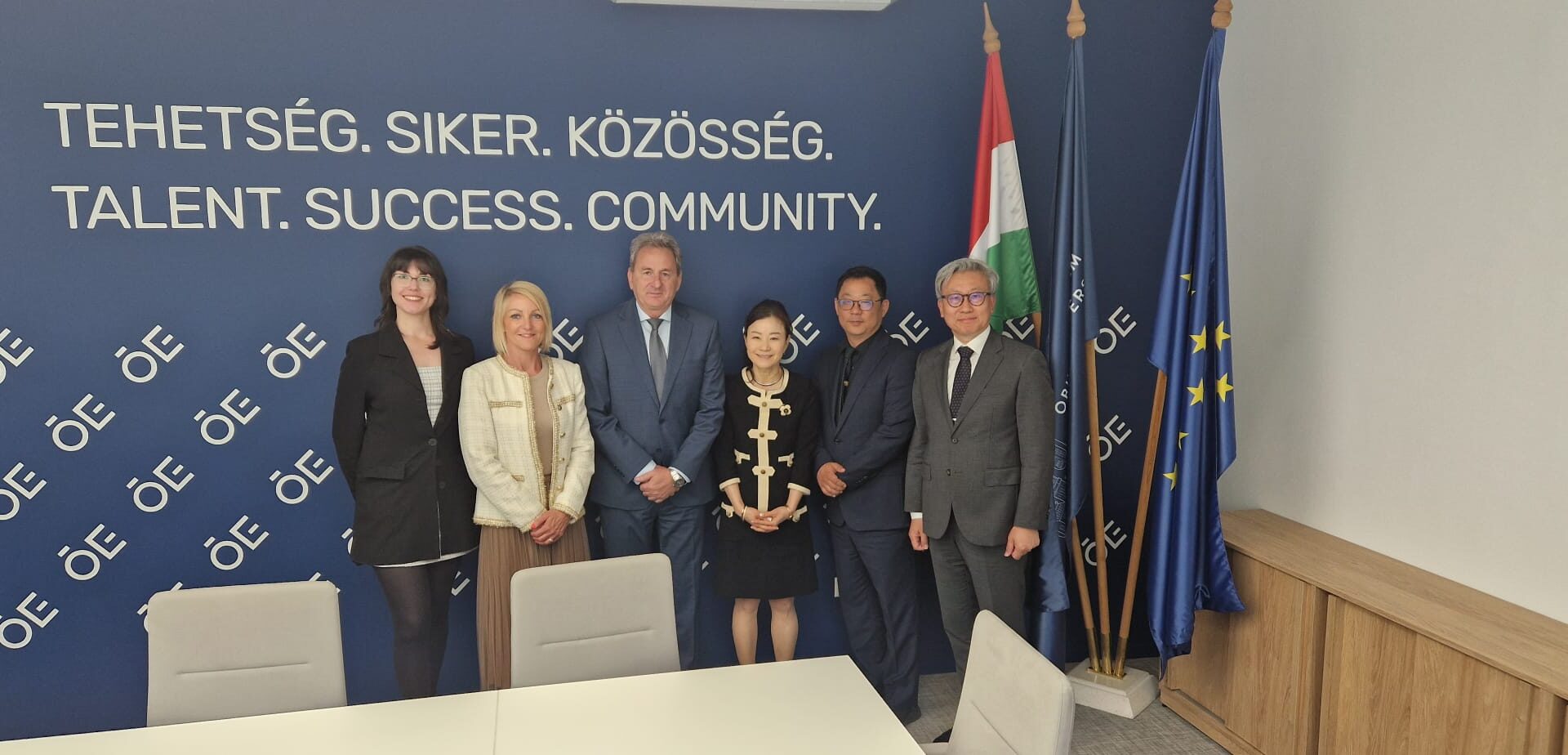
On June 15, Óbuda University welcomed a high-profile delegation from South Korea, marking a significant step in its internationalization strategy. The visit was initiated at the behest of Park Chul-min, the Ambassador of the Republic of Korea to Hungary. The delegation included prominent academic leaders from the University of Ulsan, specifically Kim Kang Yeon, Dean of the Office of Planning & Policy Development Affairs, and Lee Yeon Joo, Director of International Affairs & Global Education, alongside a professor from the Global Business department.
Representing Óbuda University were Prof. Dr. Mónika Garai-Fodor, Dean of the Keleti Károly Faculty of Business and Management, and Dr. Marcel Pop, Director of International Affairs. The presence of the Korean Ambassador underscores the diplomatic and economic importance of fostering educational ties between the two nations. During the meeting, the delegations conducted a thorough review of current collaboration opportunities, setting a strategic foundation for future bilateral cooperation in student mobility, joint research, and academic programming.
Profile of a Strategic Partner: The University of Ulsan
Understanding the context of this partnership requires a closer look at the University of Ulsan. Founded in 1970, this private institution is situated in Ulsan, South Korea—a city recognized as one of the country’s most critical industrial and economic hubs. Unlike traditional academic cities, Ulsan is the home of major global manufacturing conglomerates, most notably the Hyundai Group. This geographic and economic positioning allows the University of Ulsan to maintain exceptionally strong industrial partnerships.
Because of its close ties to companies like Hyundai, the University of Ulsan places a heavy emphasis on practice-oriented education and applied research and development (R&D). While the institution maintains a comprehensive multidisciplinary academic portfolio, it is particularly renowned for its engineering, natural sciences, and medical programs. The university actively hosts approximately 350 international students—primarily from Southeast Asia—and operates an extensive network of international relations. For students at Óbuda University, partnering with an institution so deeply embedded in global industry presents unique opportunities for practical training and exposure to advanced manufacturing and engineering processes.
Navigating Dual Degree Programs at Óbuda University
One of the most promising outcomes of the meeting was the detailed discussion surrounding dual degree programs. For prospective and current students, understanding the structure and benefits of these programs is essential for academic planning. A dual degree program allows students to study at two different institutions, fulfilling the requirements of both and ultimately graduating with two separate degrees. This approach effectively doubles the academic and professional credentials of a student without significantly extending the overall time required to complete their studies.
During the strategic discussions, several models of academic cooperation were explored to facilitate these dual degrees. These models include cost-neutral exchange frameworks, where students pay tuition to their home institution while studying abroad. Additionally, the delegations discussed full MA and MSc degree pathways that could be supported by the Stipendium Hungaricum scholarship program, which provides fully funded education for international students in Hungary. Short-term intensive programs were also on the agenda, serving as an excellent stepping stone for students who want to experience international education before committing to a longer dual degree programs track. Submit your application today to express your interest in upcoming international opportunities.
Implementing AI-Driven Education Across Borders
Beyond student mobility, a central theme of the collaboration between Óbuda University and the University of Ulsan is the integration of artificial intelligence into higher education. The application of AI-driven education is rapidly shifting from a theoretical concept to a practical necessity. Both institutions recognize that to remain competitive, they must adapt their curricula, research methodologies, and administrative processes to leverage machine learning, data analytics, and intelligent tutoring systems.
The Role of Artificial Intelligence in Modern Curricula
Implementing AI-driven education involves more than simply adding a data science course to a syllabus. It requires a fundamental rethinking of how students learn and how faculty deliver content. In engineering and business programs—the shared strengths of both OU and Ulsan—AI can be used to create personalized learning paths that adapt to the pace and learning style of individual students. Furthermore, AI tools can simulate complex industrial environments, allowing engineering students to test hypotheses and run digital twins of manufacturing processes in a safe, cost-effective virtual space before applying them in the real world.
The partnership aims to share best practices in digital education, exploring how AI can streamline administrative tasks, enhance academic advising, and provide predictive analytics to identify students who may need additional support. By collaborating with a South Korean institution that has direct pipelines to tech-forward companies like Hyundai, Óbuda University can ensure its AI integration strategies are aligned with the actual demands of the global technology sector. Schedule a free consultation to learn more about how OU integrates technology into its academic programs.
Enhancing Student Mobility and Global Career Prospects
The primary advantage of expanding institutional relations between Óbuda University and the University of Ulsan is the tangible enhancement of student mobility. Studying in South Korea offers Hungarian students a firsthand look at one of the world’s most dynamic economies, known for its rapid technological adoption and innovative corporate culture. Conversely, South Korean students coming to Budapest benefit from Hungary’s strategic position in the European Union, gaining access to Central European markets and a distinct European academic perspective.
The development of customized academic pathways ensures that mobility is not just a brief exchange, but a cohesive part of the student’s degree plan. Targeted scholarships will play a crucial role in democratizing access to these opportunities, ensuring that financial constraints do not prevent capable students from participating. For employers, graduates who have successfully navigated dual degree programs and international study experiences are highly sought after, as they demonstrate adaptability, cross-cultural communication skills, and a global mindset. Have questions? Write to us! if you want to know more about mobility options.
Scientific Collaboration and Joint Research Initiatives
Academic partnerships thrive when built on a foundation of shared scientific inquiry. The University of Ulsan hosts several high-profile international conferences annually, providing a ready-made platform for the faculty and researchers of Óbuda University to present their findings, network with global peers, and co-author papers. The primary areas of mutual interest identified during the June meeting clearly align with the future of industry: artificial intelligence applications, digital education methodologies, and advanced engineering.
Joint research initiatives between OU and Ulsan could lead to significant advancements in fields such as smart manufacturing, automotive engineering, and intelligent enterprise systems. By pooling resources and sharing data, researchers from both institutions can tackle complex problems that require diverse perspectives and large-scale data sets. This scientific collaboration not only elevates the academic reputation of both universities but also creates opportunities for students to participate in cutting-edge research projects during their studies.
Preparing for the Future of International Studies at OU
The discussions between Óbuda University and the University of Ulsan represent a clear indicator of where higher education is heading. Institutions can no longer operate in isolation. The future belongs to universities that build agile, strategic networks capable of responding to global industry trends and student demands for flexible, internationally recognized qualifications. Whether through AI-driven education, cost-neutral exchanges, or comprehensive dual degree programs, Óbuda University is actively structuring its academic offerings to meet the demands of the 21st-century economy.
For students in Hungary and prospective international applicants, staying informed about these developing partnerships is crucial. The programs currently in the negotiation phase will soon translate into concrete application deadlines, scholarship opportunities, and modified degree tracks. Keeping a close eye on Óbuda University news will ensure that you are ready to take advantage of these new pathways as they become officially available. Share your experiences in the comments below regarding what you look for in an international university partnership.