Connect Óbuda University with Shanghai: Advance Innovation Projects and Student Mobility in Hungary
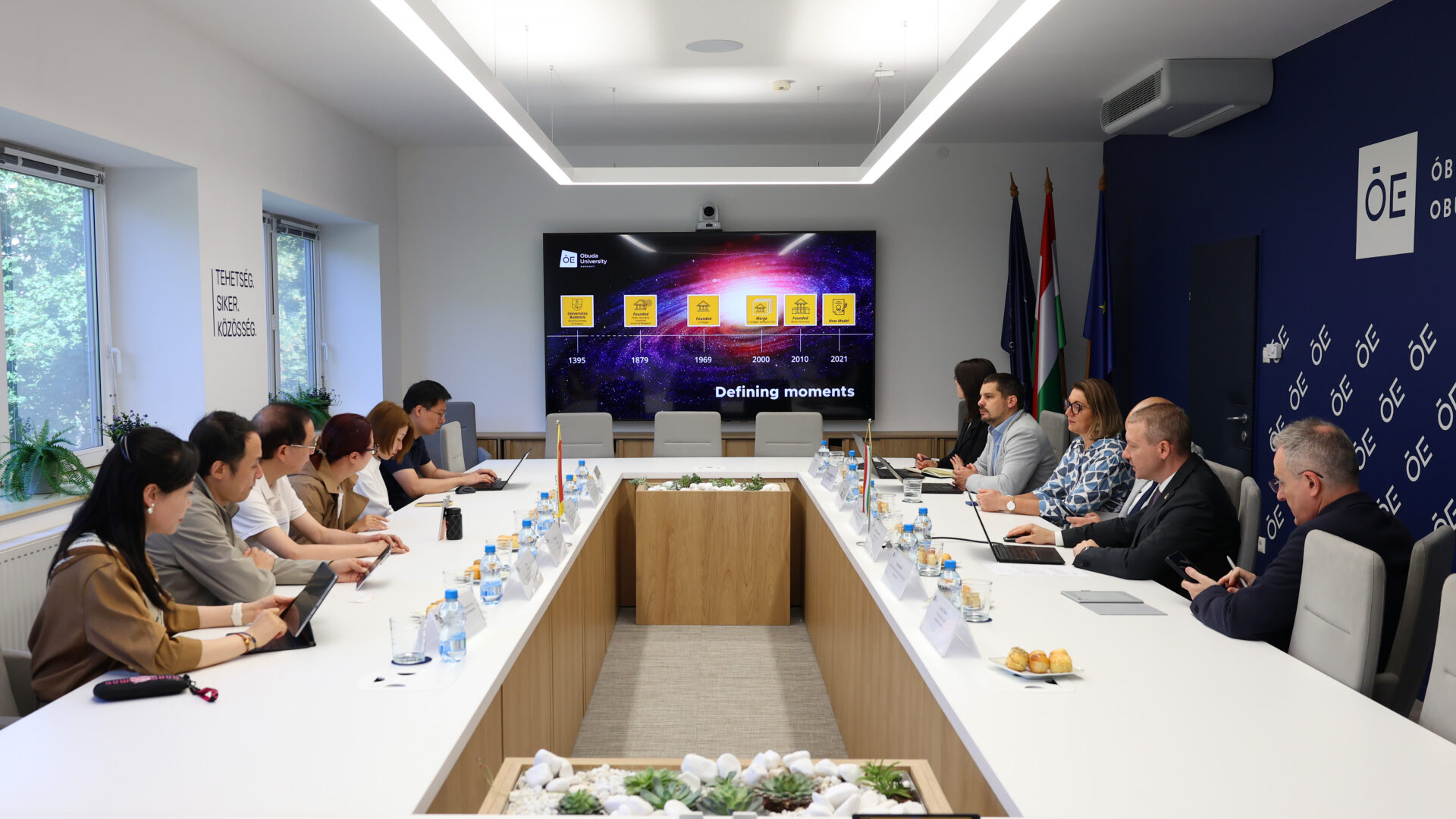
Building strategic international partnerships is essential for modern academic institutions aiming to provide high-value education and research opportunities. On June 9, Óbuda University in Hungary hosted a high-level delegation from Shanghai to discuss expanding academic and industrial ties. The meeting focused on establishing new frameworks for student mobility, long-term professional internships, and joint innovation projects. This developing Shanghai research collaboration represents a significant step forward for students and researchers looking to gain practical experience in one of the world’s leading technological hubs.
Expanding Hungary’s Reach in Global Technology Networks
Hungary has steadily positioned itself as a central hub for higher education and technological development in Central Europe. Óbuda University, recognized for its strong emphasis on engineering, informatics, and applied sciences, actively seeks to integrate its academic programs with global industry standards. By engaging directly with representatives from China’s most advanced innovation ecosystems, the university reinforces its commitment to providing students with access to international R&D networks.
The recent discussions at the Óbuda University headquarters were led by Prof. Dr. Péter Galambos, Vice-Rector for Innovation. The delegation from Shanghai brought forward proposals that align closely with the university’s strategic goals. For prospective and current students, these types of institutional agreements often translate directly into enhanced degree values, broader professional networks, and direct pipelines to international employment.
Schedule a free consultation to learn more about how international partnerships can impact your academic career.
Key Areas of the Shanghai Research Collaboration
The preliminary talks between Óbuda University, the Caohejing Hi-Tech Park, and the Shanghai Artificial Intelligence Research Institute (SAIRI) outlined several concrete areas for cooperation. Rather than remaining purely theoretical, the discussions centered on actionable programs that will directly benefit the student body and faculty researchers.
Student Mobility and Long-Term Internships
A primary focus of the meeting was the establishment of structured student mobility programs. The Shanghai delegation expressed a clear willingness to host Hungarian students for long-term internships. Unlike short-term study abroad stints, long-term internships allow students to integrate fully into a foreign corporate or research environment. This immersion helps build advanced technical competencies, cross-cultural communication skills, and a deep understanding of international project management.
For students studying in Hungary, securing an internship in a major Asian tech hub provides a distinct competitive advantage. It demonstrates adaptability and provides hands-on experience with cutting-edge technologies that are shaping global markets. The International Mobility Office at Óbuda University is typically the central point of contact for students looking to apply for these upcoming opportunities.
Joint Innovation Projects in AI and Robotics
Beyond student placements, the collaboration is set to foster joint innovation projects. The partner institutions in Shanghai are heavily focused on artificial intelligence, robotics, and life sciences. By pairing the academic rigor of Óbuda University’s John von Neumann Faculty of Informatics—represented at the meeting by Dean Prof. Dr. György Eigner—with the industrial scaling power of Shanghai’s tech parks, both sides aim to produce commercially viable technological solutions.
These innovation projects provide a unique opportunity for graduate students and postdoctoral researchers to co-author patents, publish in high-impact international journals, and participate in the creation of start-up spin-offs. The goal is explicitly to ensure that university research results are successfully translated into industrial applications.
Submit your application today to position yourself for upcoming international research and internship opportunities.
Understanding the Caohejing Hi-Tech Park and SAIRI
To fully grasp the value of this partnership, it is necessary to understand the caliber of the institutions involved. The Caohejing Hi-Tech Park is one of Shanghai’s premier innovation and artificial intelligence hubs. It operates within a robust industrial and research-and-development ecosystem that attracts numerous foreign companies and cutting-edge research centers. Working within this park means interacting with global tech leaders and operating in an environment designed to accelerate technological commercialization.
Alongside the tech park, the Shanghai Artificial Intelligence Research Institute (SAIRI) plays a pivotal role in this collaboration. SAIRI was among the first institutions in Shanghai to introduce an AI-focused incubation program. This means they possess established frameworks for taking AI concepts from the laboratory phase to market readiness. For the academic community at Óbuda University, partnering with an organization that has a proven track record in AI incubation significantly reduces the friction typically associated with commercializing academic research.
The relationship between OU and these Shanghai entities is already active. Several representatives from Óbuda University, including Prof. Dr. Tamás Haidegger, CEO of Initium Venture Labs Ltd., and Craig V. Johnson, Technology Transfer Expert, have visited SAIRI in recent months to lay the groundwork for these initiatives.
Bridging Academic Research and Industrial Application
A persistent challenge in higher education is the gap between theoretical research and practical, industrial application. The partnership with Shanghai directly addresses this issue. The involvement of Initium Venture Labs Ltd., the university’s venture capital and technology transfer arm, highlights the strategic approach being taken. By utilizing technology transfer experts in these discussions, Óbuda University ensures that legal frameworks, intellectual property rights, and commercialization strategies are built into the collaboration from the very beginning.
This structure benefits students who are interested in the business side of technology. Those participating in these programs will not only work on technical problems but will also gain exposure to how intellectual property is managed, how funding is secured for tech startups, and how cross-border business collaborations are negotiated. It is an interdisciplinary approach that combines engineering, informatics, and business management into a cohesive educational experience.
Contact the International Mobility Office to learn more about eligibility requirements for these programs.
What This Means for Future Students and Researchers at Óbuda University
For prospective students considering their options for higher education in Europe, the international strategy of a university should be a major deciding factor. The developing Shanghai research collaboration demonstrates that Óbuda University is proactive in securing tangible benefits for its community. Students who enroll in relevant faculties can expect a curriculum that is increasingly aligned with global industry demands.
To prepare for these types of opportunities, students should focus on building a strong technical foundation in their early semesters. Proficiency in programming, data analysis, robotics, or life sciences—depending on the specific degree track—will be essential. Additionally, developing a working proficiency in English, as the primary language of international business and research, is a prerequisite for participation in most mobility programs. Taking advantage of the university’s mentor programs and STEAM office resources early in your academic career can provide the necessary guidance to qualify for highly competitive international internships.
Next Steps for International Academic Partnerships
The discussions held in June mark the beginning of a structured, long-term partnership. As the legal and logistical frameworks are finalized, more specific details regarding application deadlines, internship durations, and the specific focus areas of the joint innovation projects will be released. The ultimate aim is to create sustainable avenues for joint research, development, and business collaboration that extend far beyond a single academic year.
Staying informed about these developments requires active engagement with the university’s official communications channels and attending informational sessions hosted by the International Education Office. For researchers, this is an invitation to begin identifying synergies between their current projects and the technological focus areas of the Caohejing Hi-Tech Park.
Share your experiences or questions about studying and researching internationally in the comments below.
International collaborations like this one define the modern academic landscape. By connecting Budapest with Shanghai, Óbuda University is creating concrete pathways for student mobility and establishing a foundation for innovation projects that have real-world industrial impact. For students and researchers ready to engage with global challenges, these partnerships provide the necessary infrastructure and opportunities to succeed.
Explore our related articles for further reading on international exchange programs and research initiatives at Óbuda University.