Advance Your Academic Career: How the University of Debrecen Hungary Leverages International Relations for Global Competitiveness
Choosing the right institution for advanced studies requires looking beyond basic curriculum offerings to evaluate a university’s global standing and network. The University of Debrecen in Hungary recognizes that modern higher education demands more than localized instruction; it requires a robust, interconnected web of global academic partnerships. Under the strategic direction of its leadership, the institution is actively redefining how international relations drive institutional competitiveness, research output, and student success in the global market.
Navigating the Global Higher Education Landscape in Hungary
The global higher education environment is undergoing a significant transformation. Universities today face mounting pressure to meet complex scientific, educational, economic, and social expectations while navigating tight funding constraints and shifting labor market demands. For a leading institution in Hungary like the University of Debrecen, remaining competitive means rejecting traditional, isolated operational models in favor of a highly integrated, global approach.
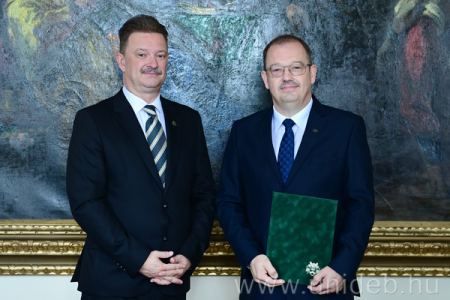
Attila Jenei, who recently assumed the role of Vice Rector for International Affairs and continues to direct the Coordinating Center for International Education, emphasizes that expanding the university’s network of international relationships is a fundamental prerequisite for future success. With over three decades of experience in organizing and coordinating educational activities, Jenei notes that a university’s international visibility directly correlates with its ability to attract top-tier talent, secure research funding, and provide high-value educational experiences.
Submit your application today to learn more about the available programs and join a globally connected academic community.
Expanding Academic Partnerships Beyond Traditional Borders
Building a competitive edge in higher education does not happen by simply increasing the number of international agreements. The University of Debrecen is prioritizing the qualitative transformation of its existing relationships, shifting the focus toward establishing deep, program-grounded academic partnerships. This means moving past superficial memorandums of understanding to create collaborative degree programs, joint research initiatives, and shared faculty resources.
A key component of this strategy involves maintaining and expanding vital connections in Asia, with China remaining a crucial partner through innovative off-campus educational programs. Furthermore, the university is strategically leveraging its geographic and economic position by involving major international corporations operating in Debrecen in research and development collaborations. By bridging the gap between academic theory and industrial application, the University of Debrecen ensures that its academic partnerships deliver tangible benefits to both students and the regional economy.
Schedule a free consultation to learn more about how these academic partnerships can benefit your specific field of study.
Strengthening Student and Researcher Mobility Programs
A truly internationalized university must prioritize mobility in both directions. While the University of Debrecen boasts the largest international student community in Central and Eastern Europe—with nearly 7,800 students from 139 countries—it is equally committed to providing outbound opportunities for its domestic Hungarian students. The institution’s management recognizes that participating in mobility programs such as the Pannonia Scholarship Program, ERASMUS+, and CEEPUS is essential for developing well-rounded, globally minded graduates.
Despite the university’s size and available opportunities, the proportion of Hungarian students studying abroad for one or two semesters remains relatively low. To address this, the university is actively working to increase access to short- and long-term mobility opportunities across Western Europe and beyond.
Equally important is the focus on faculty mobility and research development. Over the past two to three decades, there has been a notable decrease in young researchers moving abroad to build their academic careers post-graduation. To counter this trend and strengthen the faculty, the University of Debrecen plans to revive a mandatory postdoctoral program. This initiative would require recent graduates to spend six months to two years gaining professional experience at international institutions, a critical step for building a highly qualified, globally experienced academic staff.
Explore our related articles for further reading on how student mobility programs can accelerate your career trajectory.
Climbing Higher Education Rankings Through Strategic Performance
In the modern academic landscape, international students and researchers heavily rely on higher education rankings to assess and select institutions. Recognizing this reality, the University of Debrecen has made advancing in these rankings a central pillar of its international strategy. Improving a university’s position requires a targeted focus on specific, measurable indicators, particularly publications, citations, and overall citation impact.
To facilitate this, the university utilizes its Publication Research Support Program to assist faculty in maximizing the reach and impact of their research. Additionally, the institution is actively mapping out international research experiences and joining global research networks to increase collaborative output. The strategy also extends beyond the campus borders: by actively involving major companies, small and medium-sized enterprises (SMEs), and regional employers in the educational process, the university gathers critical feedback used to enhance the favorable perception of its graduates in the international labor market.
The Role of Research Infrastructure
Supporting these ranking objectives requires dedicated infrastructure. The establishment and maintenance of specialized centers, such as the Center for International Higher Education Rankings and the International R&D Center, provide the necessary data tracking, strategic planning, and operational support to ensure that the University of Debrecen’s research performance consistently meets global standards.
Building a Sustainable International Brand and Alumni Network
Academic performance and research output must be matched by effective communication to build a sustainable international brand. The University of Debrecen is currently developing a unified public relations strategy that goes beyond simply listing program portfolios. The goal is to establish a clear, consistent identity on the international stage that precisely demonstrates the institution’s values, its positioning in education and research, and the specific vision it offers to students, faculty, and partners.
A critical aspect of this branding effort involves answering the fundamental question: “Why UD?” Conveying a specific experience, a distinct identity, and a strong sense of community is essential for standing out in a crowded market. Developing a comprehensive international alumni system is also a top priority. By tracking the career progression of its graduates and leveraging their successes, the university can build credibility and generate organic recruitment opportunities worldwide.
Events like the annual International Food Day, which boasts a two-decade-long tradition, play a significant role in fostering this sense of community and showcasing the vibrant, multicultural environment that defines the University of Debrecen.
Share your experiences in the comments below regarding what you look for in a university’s international community and brand identity.
The Infrastructure Supporting International Success at the University of Debrecen
Executing a multifaceted international development plan requires more than just strategic vision; it demands coordinated operational support. The efforts of the Vice Rector for International Affairs are backed by a specialized network of centers designed to handle different aspects of global integration. This includes the Coordinating Center for International Education, the Center for International PR and Marketing, the Center for International Relations, and the International R&D Center.
These organizational units work in tandem to ensure that everything from student recruitment and faculty mobility to research partnerships and global branding is handled with professional precision. This structural coordination is what allows the University of Debrecen to implement a radical shift in mindset across its departments, ensuring that internationalization is not an isolated initiative but a core component of the institution’s overall operational DNA.
Conclusion: The Future of Studying in Hungary
Developing international relations is no longer an optional enhancement for universities; it is the key to survival and competitiveness in the 21st-century academic landscape. The University of Debrecen in Hungary is actively proving this through its comprehensive approach to global integration. By expanding academic partnerships, revitalizing researcher mobility, targeting higher education rankings, and building a distinct international brand, the institution is positioning itself as a highly attractive destination for global talent.
For prospective students and researchers, this strategic focus translates into a higher quality education, better research facilities, and a degree that holds weight in the international labor market. The university’s commitment to answering “Why UD?” with concrete actions rather than just marketing promises makes it a compelling choice for anyone looking to advance their academic and professional career in a truly international environment.
Have questions? Write to us! Our team is ready to help you navigate the application process and explore your options at the University of Debrecen.