
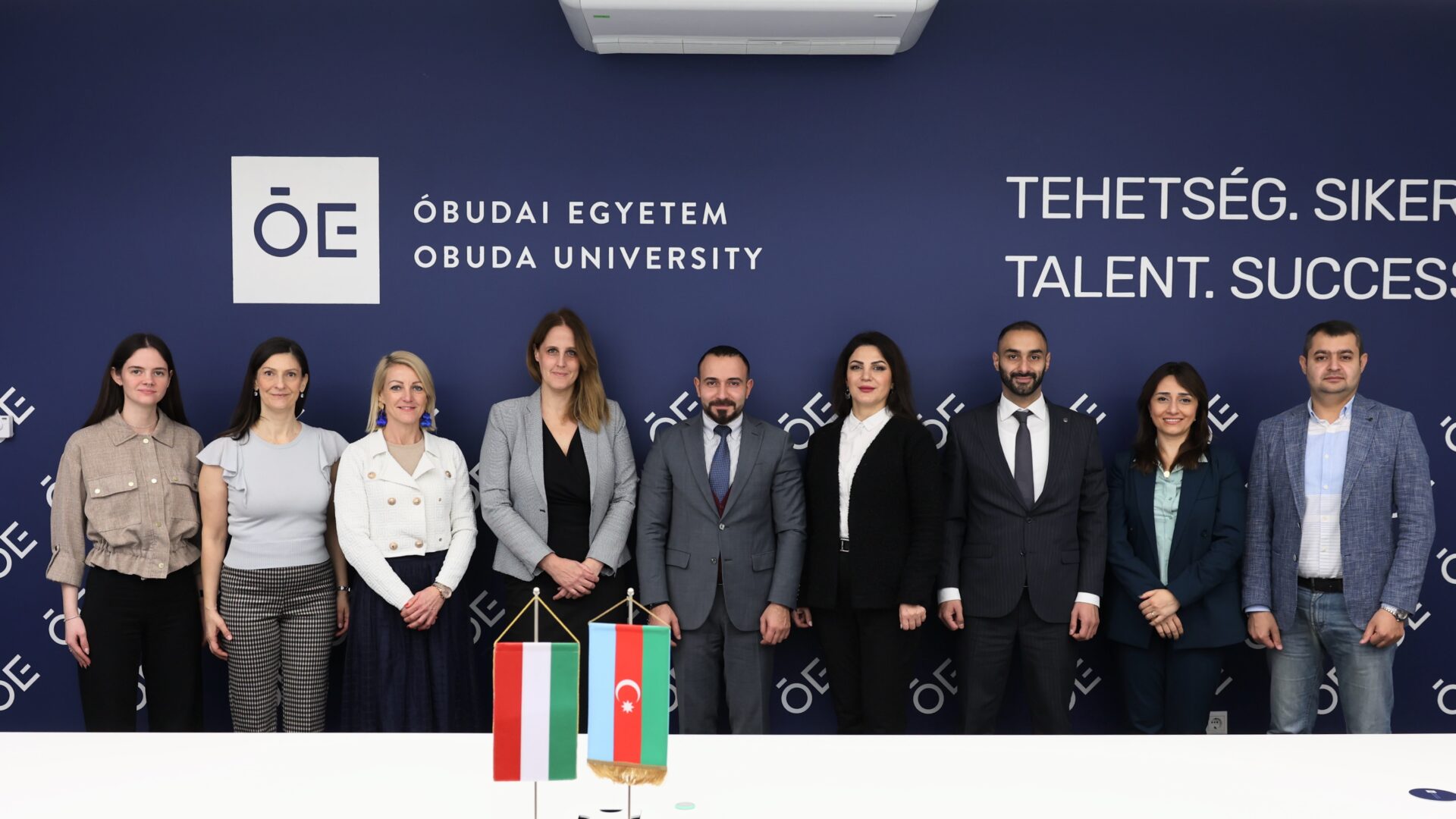
Building a Sustainable Partnership Between Óbuda University and UNEC
In December 2025, a delegation from the Azerbaijan State University of Economics (UNEC) visited Óbuda University in Budapest to evaluate existing ties and chart a roadmap for deeper collaboration. The meeting underscored the growing importance of international academic cooperation, especially in the fields of business, management, and sustainability research. For university leaders, faculty, and international relations professionals, the discussion offers a practical blueprint for expanding dual‑degree programs, joint research, and mobility initiatives.
Key Areas of Collaboration Identified
Dual‑Degree Programs
Both institutions expressed a strong interest in launching joint degree offerings. The first step involves aligning curricula, ensuring credit equivalence, and establishing a shared assessment framework. Faculty from Óbuda’s Keleti Károly Faculty of Business and Management highlighted successful models from other European universities, such as the Erasmus+ KA171 project, which facilitated 45 student exchanges in a single academic year.
Joint Research Initiatives
The universities agreed to convene an online workshop focused on sustainability‑related research. Topics include circular economy practices, green finance, and digital transformation in emerging markets. Joint PhD supervision was also proposed, allowing students to benefit from expertise on both campuses and access to diverse funding streams.
Academic Events and Conferences
UNEC’s experience in hosting international conferences positions it as a valuable partner for co‑organizing events. By combining resources, the universities can attract leading scholars, increase citation impact, and raise their global rankings.
Mobility Programs
Building on the successful 2022 Erasmus+ KA171 project, the parties discussed expanding staff and student exchanges, including short‑term programs. The existing Pannónia Program, which supports mobility between Hungary and neighboring countries, could serve as a foundation for a broader bilateral framework.
Practical Steps for Implementing Cooperation
Below is a step‑by‑step guide that universities can adapt to their specific contexts.
- Establish a Joint Steering Committee: Include senior administrators, faculty leads, and student representatives to oversee the partnership.
- Conduct a Needs Assessment: Identify complementary strengths, such as Óbuda’s expertise in digital health and UNEC’s focus on economic policy.
- Draft a Memorandum of Understanding (MoU): Outline objectives, governance structures, and resource commitments.
- Align Academic Programs: Map course equivalencies, set joint learning outcomes, and agree on assessment methods.
- Secure Funding: Explore EU Horizon Europe grants, national research funds, and private sector sponsorships.
- Launch Pilot Projects: Start with a small cohort of dual‑degree students or a single joint research paper to test the collaboration model.
- Monitor and Evaluate: Use KPIs such as student enrollment numbers, publication impact, and mobility statistics to refine the partnership.
Benefits for Stakeholders
For students, dual‑degree programs offer broader career prospects and exposure to diverse academic cultures. Faculty gain access to new research networks and funding opportunities. Universities enhance their international reputation, attract higher‑quality applicants, and improve their rankings in global university rankings such as the Shanghai Ranking and the Times Higher Education.
Challenges and Mitigation Strategies
While the potential rewards are significant, institutions must navigate several challenges:
- Accreditation Differences: Ensure that both universities’ accreditation bodies recognize the joint program. Early engagement with accreditation agencies can prevent delays.
- Language Barriers: Offer courses in English or provide language support to accommodate international students.
- Administrative Complexity: Use a shared digital platform for application processing, credit transfer, and student support services.
- Funding Sustainability: Diversify funding sources to avoid overreliance on a single grant or sponsor.
Next Steps for Interested Institutions
Universities looking to emulate Óbuda University’s approach can start by contacting their International Relations Office to explore potential partners. Engaging with regional networks, such as the European University Association, can also open doors to new collaborations.
Schedule a free consultation to learn more about establishing international academic partnerships.
Conclusion
The meeting between UNEC and Óbuda University demonstrates that strategic, well‑structured cooperation can yield tangible benefits for all parties involved. By following a clear roadmap—establishing governance, aligning curricula, securing funding, and monitoring outcomes—universities can create robust partnerships that enhance academic quality and global impact.
Submit your application today to join a dual‑degree program that bridges Hungary and Azerbaijan.
For more information on partnership opportunities, contact our International Relations Office or explore our related articles for further reading.
Share your experiences in the comments below and help build a community of institutions committed to international academic excellence.